

How to Build a Interior Design Website in 2026

An interior design website works when it does one job well: show the work fast and make it easy to start a conversation. You do not need a huge site or a long feature list. You need a clean portfolio, clear information about how you work, and a simple way for a visitor to reach out. Everything below is a loose sequence, not a rigid checklist, so adjust the order to fit your studio.
Start with a portfolio-first structure
Before picking colors or fonts, decide how projects will be organized. Most designers do well with a simple structure: a home page with a few standout images, a projects or portfolio page grouped by room type or project style, and individual project pages that tell a short story from before to after. Keep navigation shallow. Visitors browsing on a phone should reach any project in two taps.
Resist the urge to upload every photo you have ever taken. A tight set of well-chosen images per project reads as more professional than a long, unedited gallery. Group by kitchens, living spaces, full-home projects, or whatever categories match how you actually get hired.
Choose the right foundation
You have real options here, and the right one depends on how hands-on you want to be. Some designers prefer a hosted builder with drag-and-drop controls. Others want a content management system so a studio manager can add projects without touching code. A few want something closer to a custom application, especially if the site needs a client portal, a moodboard tool, or a booking flow beyond a basic contact form.
Whichever path you take, prioritize image handling. Interior photography is the product here, so the platform needs to load large photos quickly, support proper cropping and aspect ratios, and avoid stretching or distorting images on different screen sizes.
Design pages that sell the work
Each project page should answer three questions in order: what was the space, what was the brief, and what changed. A short paragraph of context does more work than a long essay. Pair it with images arranged so the eye moves naturally, wide shots first, detail shots after.
Your about page matters more than most designers expect. People hiring an interior designer are hiring a person and a point of view, not just a service. Explain your approach, the kinds of projects you take on, and what a client should expect from the process. Keep the tone direct and specific rather than generic.
A simple services page helps too. List the types of engagements you offer, such as full-room design, consultations, or project management, without pricing details if you prefer to quote per project.
Add credibility and conversion paths
Testimonials, press mentions, or a short list of the types of spaces you have worked on all build trust, but only include what you can honestly stand behind. Do not invent quotes or client names to fill space. If you do not have testimonials yet, a strong portfolio and a clear about page can carry the site until you do.
- Put a contact form on every page, not buried three clicks deep
- Keep the form short: name, email, project type, and a message field is usually enough
- Add a clear next step, such as booking a call or requesting a consultation
- Make sure the site works well on mobile, since many visitors will find you through social links
Launch, test, and maintain
Before launch, check every project page on a phone, a tablet, and a laptop. Confirm images load at a reasonable speed and that the contact form actually sends a message you receive. Ask a friend or colleague who has never seen the site to try finding a specific project and reaching out. Their confusion will tell you more than your own read-through.
After launch, treat the site as ongoing work rather than a one-time project. Add new work as it wraps, retire older projects that no longer represent your style, and revisit your about page whenever your practice shifts direction.
Where Sticklight fits
Sticklight is a vibe-coding platform for professional web creators. You describe what you want in plain language, and it turns that prompt into a production-ready result, going beyond a single website into apps, dashboards, small content systems, and internal tools. For an interior design studio that later wants a client portal, a moodboard builder, or a custom project tracker alongside the public site, that full-stack range is the difference between requesting a feature and building it directly.
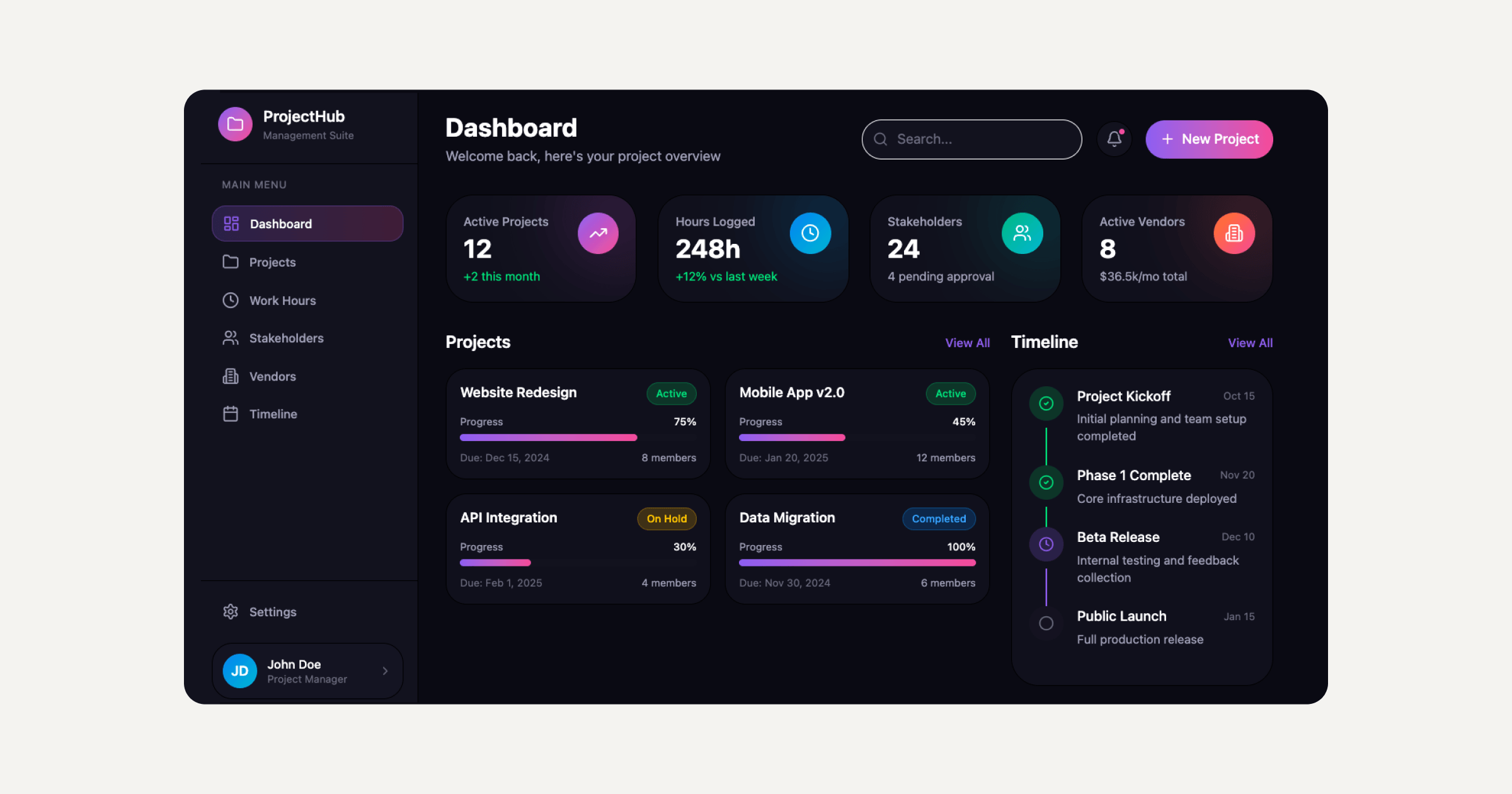
WordPress and Elementor remain solid, proven ways to build and extend a portfolio site, especially for studios that want a large ecosystem of themes, plugins, and freelancers familiar with the platform. Many interior designers will do fine starting there. Sticklight is a complementary option for studios that want to prompt their way to a working site or tool without waiting on a full development cycle, and to keep extending it well beyond what a typical website needs.
Frequently asked questions
How many projects should I show when I first launch an interior design website?
A small, well-edited set is usually stronger than a long list. Somewhere between six and twelve strong projects gives visitors enough range to judge your style without diluting the impact of any single one. You can always add more once the site is live.
Do I need a blog on an interior design website?
No. A blog can help with search visibility over time, but it is not required to launch. Many designers start with just a portfolio, an about page, and a contact form, then add articles later if they want an additional way to attract visitors.
Should pricing be listed on the site?
That depends on how you like to work. Interior design projects vary widely in scope, so many designers prefer to describe their services and process, then discuss pricing after an initial conversation. If your offers are more standardized, listing starting ranges can help filter inquiries.
What matters most for image quality on a portfolio site?
Consistency and clarity matter more than sheer resolution. Use well-lit, properly cropped photos with a similar tone across a project, and make sure the platform you build on does not stretch or compress images awkwardly on different screen sizes.
How often should an interior design website be updated?
Treat it as ongoing rather than finished at launch. Add new projects as they wrap, remove older work that no longer reflects your current style, and revisit the about page whenever your focus or process changes.
Built by the Elementor team. Powered by Claude.
Let it glow.
