

What Is A/B Testing?

What Is A/B Testing?
A/B testing is a method for comparing two versions of something, most often a webpage, email, or app screen, to see which one gets better results. One group of visitors sees version A, the original, and another group sees version B, a version with a single change. Whichever version performs better against a defined goal, such as more clicks, signups, or purchases, tells you what to keep.
The core idea is simple. Instead of guessing which headline, button color, or layout works best, real visitor behavior decides. That turns opinion-driven decisions into evidence-based ones, without requiring a large research team or specialized software.
How A/B Testing Works
An A/B test starts with a question worth answering, such as whether a shorter signup form increases completions. From that question comes a hypothesis: a specific, testable statement about what will happen and why. The team then builds the variant, the changed version, while the original stays untouched as the control.
Traffic is split between the two versions at random, usually right down the middle, so each visitor has an equal chance of landing on either one. The test runs until enough visitors have gone through both versions to trust the result, rather than stopping the moment one version pulls ahead. Ending a test too early is one of the most common mistakes, since early leads often reverse once more data comes in.
The Key Parts of an A/B Test
Every well-run A/B test shares a few core components:
- A hypothesis that states what is being changed, what result is expected, and why.
- A control and a variant, meaning the original page and the single changed version being tested against it.
- Random assignment, so each visitor is placed into one group without bias toward either version.
- A primary metric, a single measurable outcome, such as a conversion rate or click-through rate, that decides the winner.
- A sample size and duration large enough to produce a result that reflects real behavior rather than chance.
Skipping any one of these parts tends to produce a test that looks conclusive but is not. A change that only runs for a day, or one that is measured against three different goals at once, rarely gives a trustworthy answer.
Why A/B Testing Matters
A page can look polished and still underperform, and without testing there is often no clear way to know why. A/B testing replaces internal debate about which version is better with a direct answer drawn from how actual visitors respond. That matters most before a full site-wide rollout, since a change that seems reasonable in a meeting can still reduce signups or sales in practice.
Over time, the value compounds. A single test might raise a conversion rate only slightly, but a habit of testing consistently, one change at a time, adds up to a meaningfully better experience across a site or product. It also builds a record of what has already been tried, so teams stop re-testing the same ideas.
Common Uses and Where to Start
A/B testing shows up across most digital products. Marketing teams test headlines, calls to action, and page layouts. Product teams test onboarding flows, pricing pages, and checkout steps. Email teams test subject lines and send times. Even small details, like the wording on a single button, are common test subjects, since small elements often have an outsized effect on whether a visitor takes the next step.
The simplest way to start is to pick one page with enough traffic to produce a reliable result, choose one metric that matters, and test one change at a time. Write down the hypothesis before the test starts, let it run for a full, predetermined period, and resist the urge to call a winner early. From there, testing becomes a repeatable habit rather than a one-time project.
Where Sticklight fits
Sticklight is a vibe-coding platform for professional web creators, and A/B testing is a natural fit for that kind of workflow. Instead of manually building a second version of a page and wiring up the logic to split traffic between them, a creator can describe the variant in plain language and let Sticklight turn that prompt into a production-ready result. That range extends beyond a single landing page to full web apps, dashboards, CMS setups, and other tools, which is what makes Sticklight a full-stack creator rather than a single-purpose builder.
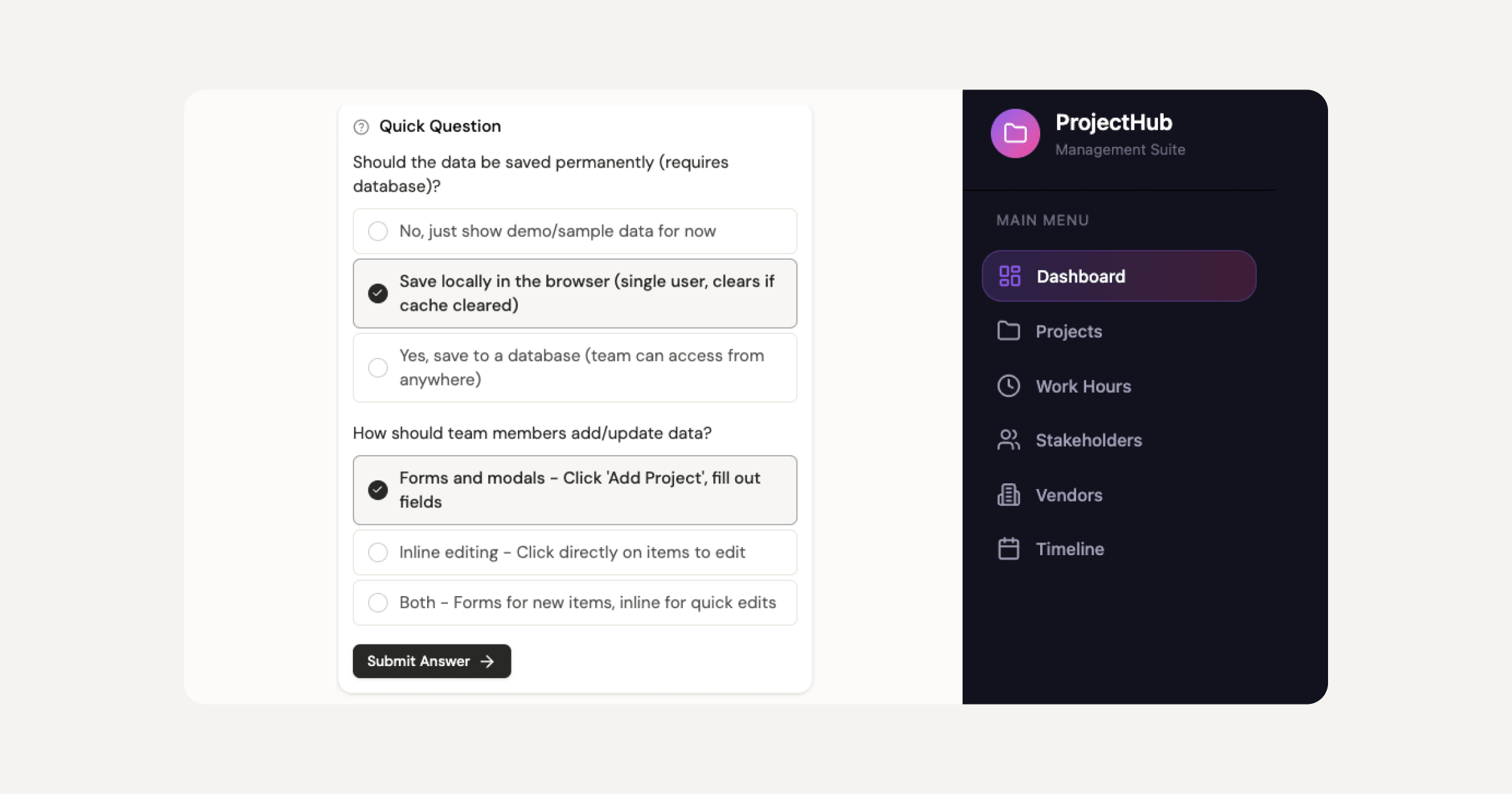
WordPress and Elementor remain solid, proven ways to build and publish the pages that get tested, and Sticklight is built to work alongside that approach rather than replace it. For creators who want to move quickly from a testing idea to a working variant, Sticklight adds another practical path from a plain-language prompt to a page ready for real visitors.
Frequently asked questions
What is A/B testing in simple terms?
A/B testing is comparing two versions of a page, email, or app screen, an original and a changed variant, to see which one performs better against a specific goal such as clicks or signups.
How long should an A/B test run?
A test should run for a full, predetermined period long enough to reach a reliable sample size, rather than being stopped as soon as one version appears to be ahead.
What is the difference between the control and the variant?
The control is the original, unchanged version, and the variant is the version with the single change being tested against it.
Why do A/B tests need a single primary metric?
A single primary metric, such as a conversion rate, gives the test one clear way to determine a winner, while testing several goals at once tends to produce a confusing or unreliable result.
What kinds of things can be A/B tested?
Common test subjects include headlines, calls to action, page layouts, pricing pages, checkout steps, onboarding flows, and email subject lines.
Built by the Elementor team. Powered by Claude.
Let it glow.
