

What Is DevOps?

DevOps is a culture and set of practices that brings software development and IT operations together, so teams build, test, and release software as one continuous process instead of two separate phases. Rather than developers writing code and then handing it off to a separate operations team to deploy and maintain, DevOps has both groups share responsibility for the full lifecycle: writing, testing, deploying, and monitoring an application once it is live.
The core ideas behind DevOps
A handful of practices show up in almost every DevOps setup, and they tend to reinforce one another.
- Continuous integration and continuous delivery (CI/CD). Code changes are merged, tested, and prepared for release frequently, often many times a day, instead of in large infrequent batches.
- Automation. Repeatable manual steps, such as running tests or provisioning a server, are replaced with scripts and pipelines that do the same work the same way every time.
- Infrastructure as code. Servers, networks, and configuration are defined in files stored in version control, so environments can be recreated exactly rather than configured by hand.
- Monitoring and observability. Teams get a real-time view of how an application behaves in production, so problems surface early instead of being reported by users first.
- Collaboration. Developers and operations staff share goals, tools, and accountability instead of working in separate silos with a hand-off in between.
Why DevOps matters
Software that changed slowly and rarely broke was once acceptable. Today, most teams need to ship updates often, respond to issues quickly, and keep systems reliable at the same time. DevOps matters because it shortens the distance between writing code and learning how it performs in the real world. When testing and deployment are automated, a change that used to take days to release can go out in minutes, and if something goes wrong, the same automation makes it easier to roll back or fix. The shared ownership at the heart of DevOps also means operational concerns, like how a feature will scale or how it will be monitored, get considered earlier, instead of becoming someone else’s problem after launch.
Common DevOps practices and tools
DevOps is implemented with categories of tools rather than one single product, and most teams mix and match based on what they already use.
- Version control to track every code change and let multiple people work on the same project safely.
- CI/CD pipelines to automatically build, test, and deploy code whenever changes are pushed.
- Configuration management and infrastructure as code to define servers and environments in reusable, version-controlled files.
- Containers and orchestration to package an application with everything it needs to run consistently across different environments.
- Monitoring, logging, and alerting to track application health and notify teams when something needs attention.
Where to start
DevOps does not require rebuilding a team or a tech stack overnight. Most teams start small: automate one manual step, such as running tests on every code change, and build from there. Adding basic monitoring so issues are visible before users report them is another natural first step. From there, teams typically move toward defining infrastructure in code and expanding CI/CD to cover more of the release process. The cultural side matters just as much as the tools: regular communication between the people who write code and the people who keep it running is often what determines whether DevOps practices actually stick.
Owning a project means owning every choice inside it, including the ones I let the tool make without asking.
Itamar Haim
Where Sticklight fits
DevOps practices are usually associated with large engineering teams, but the same idea, closing the gap between building something and running it reliably, applies to smaller teams and solo creators too. Sticklight is a vibe-coding platform for professional web creators: you describe what you want in a prompt, and it produces a production-ready website, app, dashboard, CMS, or tool, with the underlying build and deployment work handled for you.
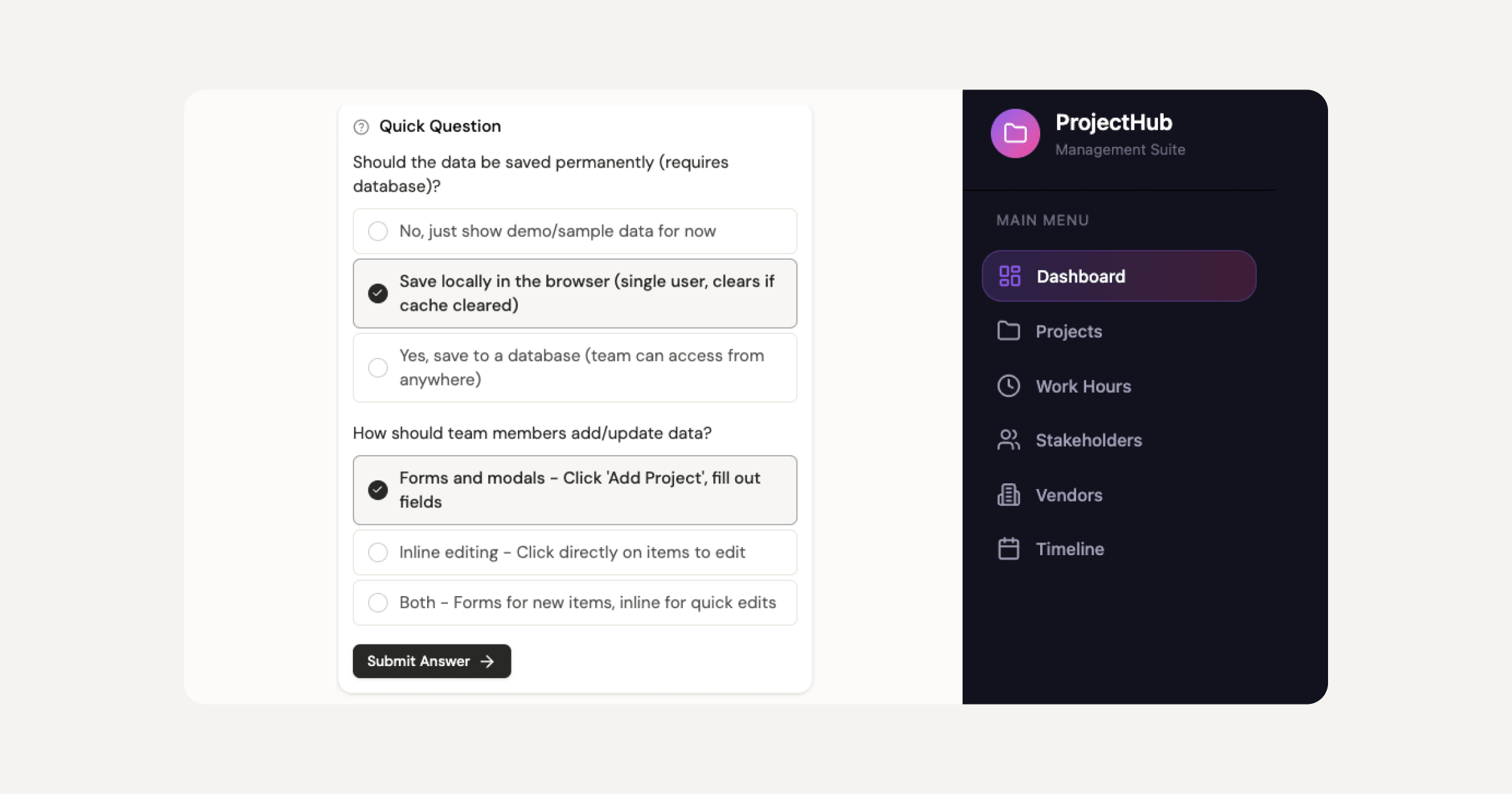
That approach extends what platforms like WordPress and Elementor already do well. Where WordPress and Elementor give creators a strong foundation for building and publishing, Sticklight adds a layer on top: turning ideas into working software faster, so creators can spend more time on what they are building and less on the mechanics of getting it live. The goal is to move beyond just websites, toward becoming a full-stack creator who can ship an app, a dashboard, or a custom tool with the same ease as a landing page.
For anyone drawn to DevOps mainly because they want to ship projects faster without managing servers and pipelines themselves, that is exactly the gap Sticklight is built to close.
Frequently asked questions
What does DevOps stand for?
DevOps combines development and operations into a single, ongoing process of writing, testing, deploying, and monitoring software, instead of treating them as separate stages handled by separate teams.
Is DevOps a job title or a way of working?
DevOps started as a way of working that brings development and operations together, though many companies also use it as a job title for engineers who build and maintain automation, deployment, and monitoring systems.
What is CI/CD in DevOps?
CI/CD stands for continuous integration and continuous delivery, the practice of merging, testing, and preparing code for release frequently instead of in large infrequent batches.
Do small teams need DevOps?
Even small teams benefit from basic DevOps habits, such as automated testing and simple monitoring, since these practices catch problems earlier and make releases less risky regardless of team size.
What is infrastructure as code?
Infrastructure as code means defining servers, networks, and configuration in version-controlled files, so environments can be recreated consistently instead of set up manually each time.
Built by the Elementor team. Powered by Claude.
Let it glow.
