

What Is Refactoring?

Refactoring is the practice of restructuring existing code without changing what it does. The inputs, outputs, and behavior stay exactly the same; what changes is the internal shape of the code, so it becomes easier to read, easier to change, and easier to reason about later.
The word gets used loosely to mean any edit to old code, but a real refactor never adds a feature and never fixes a bug on its own. Those are separate, useful activities. Refactoring is specifically about improving the structure underneath working software so the next round of changes goes faster and with fewer surprises.
How refactoring works
A refactor moves in small, verifiable steps rather than one sweeping rewrite. A developer picks a narrow piece of code, has a way to confirm it still behaves correctly, usually an existing test suite, then makes a focused change: renaming a variable, splitting a long function, or removing a duplicate block. After each step, the tests run again. If they pass, the change is kept and committed. If they fail, the step is undone before moving on.
Version control makes this safe. Small, reversible commits mean a bad step can be rolled back without losing the good ones around it. Many editors also offer automated refactoring commands, such as safely renaming a symbol across a whole codebase or extracting a block of code into its own function, which reduces the chance of a manual slip introducing a real bug.
The key parts of a refactor
Most refactors touch a handful of recurring concerns:
- Naming: variables, functions, and files that describe what they actually do, so a reader does not have to guess.
- Duplication: the same logic repeated in several places, consolidated into one place it can be maintained.
- Function and file size: breaking apart pieces that have grown to handle too many responsibilities at once.
- Structure: how modules, classes, or components relate to each other, so dependencies are easy to trace.
- Tests: the safety net that lets every other change happen with confidence instead of guesswork.
Why it matters
Code that nobody has restructured in a while tends to accumulate small compromises: a workaround added under deadline pressure, a function that grew past its original purpose, a naming choice that made sense once and confuses everyone since. Individually those are minor. Together, they slow down every future change, because a developer has to untangle the existing logic before they can safely add anything new. Refactoring pays that cost down deliberately, in small increments, instead of letting it build up until a rewrite feels like the only option.
It also matters for reliability. Tangled, duplicated code is where bugs hide, because a fix applied in one copy of a duplicated block is easy to miss in the others. Clear structure makes it far easier for a new team member, or the original author six months later, to understand what a piece of code is actually doing.
Common uses
Refactoring shows up in a few recurring situations. Teams refactor before adding a feature, so the new logic has a clean place to live instead of being wedged into a function that already does too much. They refactor after a fast prototyping phase, once something has proven useful and now needs to be built on with more care. They refactor when replacing a stale pattern with a current one, such as moving from a manual process to a shared utility. And they refactor simply to keep a growing codebase from becoming harder to navigate every month, treating it as ongoing maintenance rather than a one-time cleanup.
Where to start
Start small and start where it is safe. Pick a file or function you touch often, ideally one with existing tests, or add a quick test first if there is not one. Make one focused change, confirm nothing broke, and commit it before moving to the next. Resist the urge to refactor and add a feature in the same step; keeping them separate makes it obvious, if something does break, which change caused it. Over time, these small, low-risk steps add up to a codebase that is noticeably easier to work in, without ever requiring a risky rewrite.
Where Sticklight fits
Sticklight is a vibe-coding platform built for professional web creators: you describe what you want in plain language, and it turns that prompt into a production-ready result, whether that is a website, an app, a dashboard, a CMS, or a working tool. That range matters here, because restructuring a project often means touching more than one layer at once, and Sticklight is built to go beyond a single website toward being a full-stack creator that can handle those pieces together.
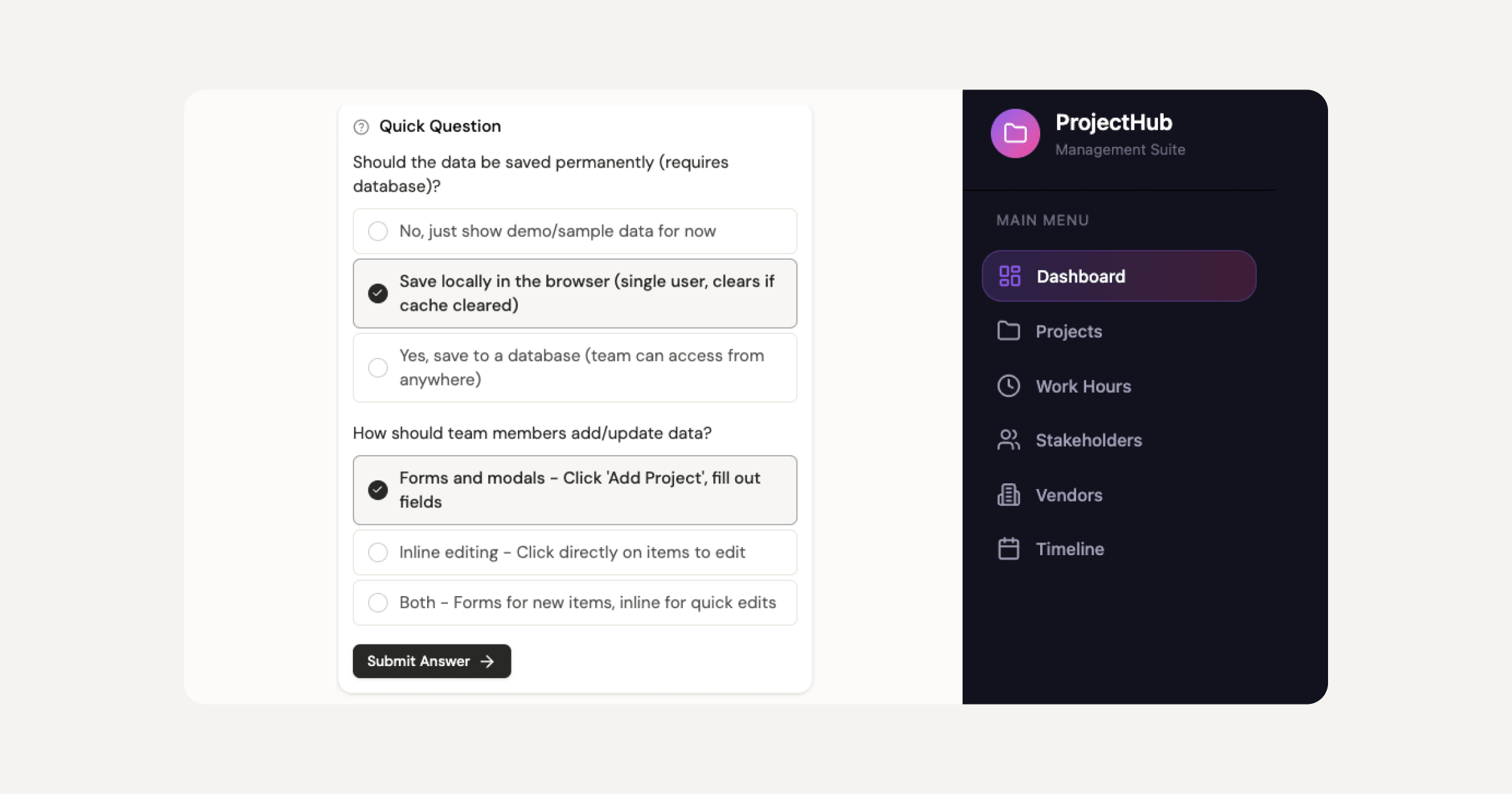
WordPress and Elementor remain solid, proven ways to build and extend a site, and plenty of refactoring work happens inside them today, cleaning up templates, consolidating custom code, and tightening how a site is organized. Sticklight adds a prompt-first path alongside that approach, useful when a project has grown past its original shape and the fastest way forward is to describe the cleaner structure you want and let it be built.
Frequently asked questions
Is refactoring the same as fixing bugs?
No. Refactoring changes the internal structure of code without changing its behavior, so the same bugs that existed before a refactor still exist after it. Fixing a bug and refactoring are separate activities, and keeping them separate makes it easier to tell which change caused which effect.
Do I need tests before I refactor code?
Tests are the safety net that lets a refactor happen with confidence. Without them, there is no fast way to confirm that a restructured piece of code still behaves the same way, so it is common practice to add a basic test first if one does not already exist.
How often should a codebase be refactored?
There is no fixed schedule. Many teams treat refactoring as ongoing maintenance, doing it in small steps whenever they touch a piece of code, rather than waiting until the structure has grown difficult to work with and a large cleanup feels unavoidable.
Can refactoring introduce new bugs?
It can if it is done in large, unverified steps. Moving in small changes, confirming behavior with tests after each one, and committing frequently keeps the risk low and makes any problem easy to trace back to a specific step.
What is the difference between refactoring and rewriting?
Refactoring preserves existing behavior and moves in small, reversible steps. A rewrite replaces a piece of software from scratch, which carries more risk and takes longer. Regular refactoring is one of the main ways teams avoid reaching a point where a full rewrite feels necessary.
Built by the Elementor team. Powered by Claude.
Let it glow.
