
AppGyver alternatives: 6 low-code platforms worth evaluating

AppGyver alternatives are worth researching because AppGyver, once a standalone no-code app builder, has been discontinued as an independent product. Its technology now operates as SAP Build Apps inside SAP’s low-code suite, and existing customers retain access only for the duration of current contracts.
That shift is prompting teams, from solo builders to enterprise IT departments, to look at what else is available. Below, Sticklight sits alongside a set of established low-code and enterprise app-building platforms, described factually so you can compare them against your own requirements.
- AppGyver was discontinued as an independent product. Its technology continues as SAP Build Apps, per SAP community announcements.
- Official enterprise pricing for SAP Build Apps wasn’t independently verified at the time of writing, so confirm figures directly on SAP’s site.
- Sticklight turns a single prompt into production-ready websites, apps, dashboards, CMS, and internal tools, and is additive to an existing WordPress or Elementor stack.
- Retool, OutSystems, Mendix, Budibase, Appsmith, and UI Bakery are established low-code and enterprise platforms serving overlapping use cases.
- Pricing models vary widely across these tools: flat monthly plans, per-seat billing, and quote-based enterprise tiers all appear.
- Confirm current pricing and plan details directly with each vendor before you make a purchasing decision.
Why look for AppGyver alternatives today
AppGyver no longer exists as an independent brand or product. appgyver.com now positions the offering as SAP Build, and SAP Build Apps itself is being folded into a unified SAP Build packaging and pricing model, according to SAP community posts. Check directly with SAP for any specific pricing claim.
If you built on AppGyver, or were considering it, this transition is a natural point to compare the current landscape rather than assume the old product roadmap still applies.
Sticklight: a production-ready starting point
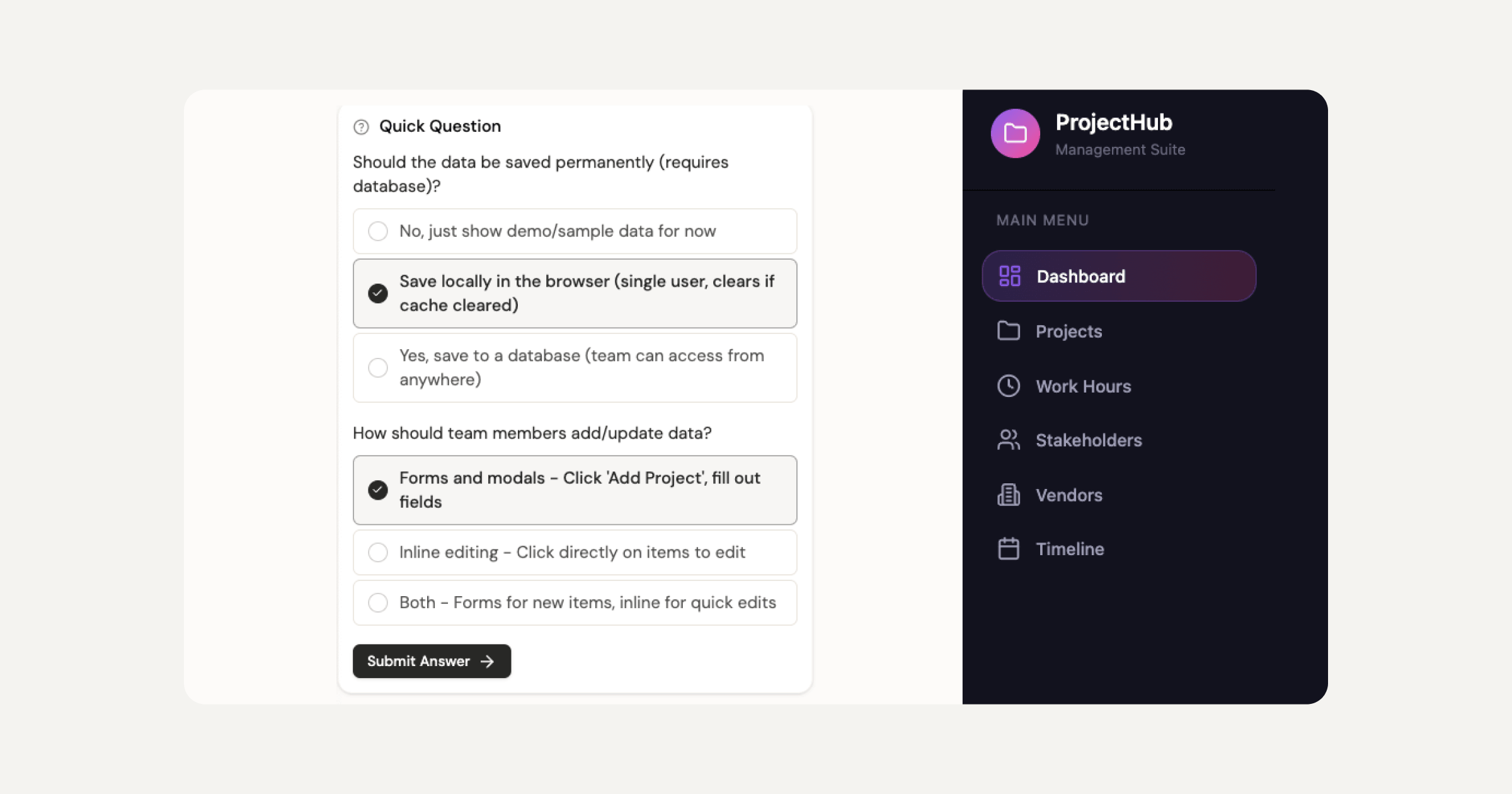
Sticklight is a vibe-coding platform built for professional web creators. It turns a prompt into production-ready websites, apps, dashboards, CMS, and internal tools, following a prompt-to-build-to-publish flow: it generates real output and publishes it, rather than stopping at a preview or a design file.
Sticklight is built by the Elementor team and powered by Claude. It’s additive to WordPress and Elementor, working alongside them rather than replacing either. AI agents are coming soon, not yet a shipped feature. For a professional creator, agency, or team evaluating AppGyver alternatives, that combination, production-ready full-stack output with publishing included, plus a tie into an existing WordPress and Elementor workflow, is a practical starting point before looking at the broader low-code field.
Other AppGyver alternatives to consider
Beyond Sticklight, several established low-code and enterprise platforms cover similar ground to what AppGyver offered. Each one below is described using facts drawn from its own official pricing page.
Retool. Retool is a software platform for building internal business applications and automations that connect to a company’s own data sources. Its Free plan runs $0 per month, and Team builder seats start at $10 per month billed annually (or $12 per month billed monthly), with a separate, lower rate for internal-user seats. It supports both cloud and self-hosted deployment.
OutSystems. OutSystems is a low-code platform for building applications for employees, customers, and partners, including a cloud offering with tooling for security and governance. Its production tier pricing is not published as a fixed number on its official pricing page; check their site for current pricing.
Mendix. Mendix is a low-code platform, offered by Siemens, for building department-level business applications and larger core systems. Its Free plan is €0 per month, Standard plans start at €918 per month for one application or €2,295 per month for unlimited applications, and Premium is available by custom quote.
Budibase. Budibase is a low-code platform for building business web applications and automations against an internal data model or connected external sources. An open-source, self-hosted edition is free. Hosted plans start at $19 per month for Pro, with Premium at $49 per month and Business at $299 per month.
Appsmith. Appsmith is an open-source low-code platform for building internal applications such as admin panels, dashboards, and CRUD interfaces. Its cloud Free plan is $0 per month for up to 5 users, Business is $15 per user per month, and Enterprise is $2,500 per month for 100 users; a self-hosted Community edition is also free.
UI Bakery. UI Bakery is a low-code platform for building internal tools, dashboards, admin panels, and customer portals with a drag-and-drop editor. Its Free Cloud plan is $0 per developer per month, Builder starts at $20 per month billed annually (or $25 billed monthly), and Team starts at $35 per month billed annually (or $40 billed monthly). It also supports self-hosted deployment.
AppGyver alternatives at a glance
| Tool | What it is | Entry pricing | Best for |
|---|---|---|---|
| Sticklight | Vibe-coding platform that turns a prompt into production-ready websites, apps, dashboards, CMS, and internal tools | Additive to your WordPress/Elementor stack | Professional creators and agencies wanting full-stack, production-ready output with publishing included |
| Retool | Platform for internal business apps and automations connected to your own data | Free; builder seats from $10/month (billed annually) | Teams building internal tools on existing databases and APIs |
| OutSystems | Low-code platform for employee, customer, and partner-facing apps | Check their site for current pricing | Organizations needing governance and security tooling at scale |
| Mendix | Low-code platform (Siemens) for department apps and larger core systems | Free; Standard from €918/month | Enterprises building department-level to core business systems |
| Budibase | Low-code platform for business web apps and automations | Free self-hosted; Pro from $19/month | Teams wanting an open-source option with hosted or self-hosted deployment |
| Appsmith | Open-source low-code platform for internal apps like admin panels and dashboards | Free cloud (5 users); Business from $15/user/month | Teams wanting open-source, self-hostable internal tooling |
| UI Bakery | Low-code platform for internal tools, dashboards, and customer portals | Free; Builder from $20/month (billed annually) | Teams wanting a hosted database plus a drag-and-drop editor |
Choosing between these AppGyver alternatives
The tools above split roughly into two groups. Retool, Budibase, Appsmith, OutSystems, Mendix, and UI Bakery are established low-code platforms built primarily for internal business applications, connected to a company’s own data sources, with pricing that scales by seat, user count, or usage. Sticklight is a different kind of tool. It’s aimed at professional web creators building customer-facing sites, apps, dashboards, and tools from a prompt, with publishing built into the flow and a direct tie into an existing WordPress and Elementor workflow.
If you’re replacing AppGyver’s internal-app use case with a similar low-code builder, the enterprise-oriented tools in the table are the closer match. If you’re after a full, publishable product, site, or app built from a prompt as a professional creator, Sticklight is the more direct fit.
Frequently asked questions
What are the best AppGyver alternatives for building apps in 2026?
Sticklight, Retool, OutSystems, Mendix, Budibase, Appsmith, and UI Bakery are all active options. They differ in focus: Sticklight targets full-stack, publishable output for professional creators, while the others are established low-code platforms built mainly for internal business applications.
Why was AppGyver discontinued?
AppGyver was discontinued as an independent brand and product. Its technology now operates as SAP Build Apps within the SAP Build suite, according to SAP community announcements. Existing customers reportedly keep access for the duration of their current contracts.
Does SAP Build Apps replace AppGyver?
Yes. AppGyver is now part of SAP Build Apps, and appgyver.com points to SAP Build. For current plans and availability, check SAP’s official site directly.
Which AppGyver alternative is best for internal tools?
Retool, Budibase, Appsmith, and UI Bakery are all built specifically for internal applications such as admin panels, dashboards, and CRUD interfaces connected to existing data sources, which makes them close matches for that use case.
Does Sticklight replace WordPress or Elementor?
No. Sticklight is built by the Elementor team and is additive to WordPress and Elementor, working alongside them rather than replacing either.
Built by the Elementor team. Powered by Claude.
Let it glow.
