
The Best Mixpanel Alternatives for 2026

Mixpanel is a product analytics tool many teams reach for first, but it is not the only option for tracking how people use a product. Depending on whether a team is engineering-led, focused on B2B accounts, or wants every interaction captured without manual setup, a different analytics tool may fit the workflow better. Below are four established alternatives, what kind of tool each one is, and what it is generally used for.
This list stays factual: category, core use case, and how each tool approaches event tracking. None of these tools is presented as better than another here, since the right fit depends on team size, technical setup, and the kind of product being measured.
Amplitude
Amplitude is a product analytics platform built around tracking user behavior across web and mobile products, with tools for funnel analysis, retention curves, and behavioral cohorts. Product teams use it to see how users move through a feature set, which paths lead to activation, and where drop-off happens along a defined journey. It also includes session replay and experimentation modules for testing feature changes against usage data. Check their site for current pricing.
PostHog
PostHog is an open-source product analytics platform that combines event tracking, session replay, feature flags, A/B testing, and in-app surveys in a single product. It can be run as a hosted cloud service or self-hosted on a team’s own infrastructure, which appeals to engineering teams that want direct control over where data lives. Because it bundles several product tools together, teams sometimes adopt it to replace more than one point solution at once. Check their site for current pricing.
Heap
Heap is a product analytics tool built around autocapture, meaning it records user interactions across a website or app automatically rather than requiring every event to be defined and instrumented in advance. Teams can go back and define new metrics or funnels retroactively using data already collected, instead of waiting for a new tracking plan to be built and shipped. This approach is generally used by teams that want to avoid missing early usage data while an analytics setup is still being finalized. Check their site for current pricing.
June
June is a product analytics tool built specifically for B2B SaaS companies, with a focus on account-level and company-level usage rather than tracking individual users in isolation. It connects to tools like Segment for event data and centers its reporting around metrics such as account activation, feature adoption by company, and account health over time. This makes it a fit for teams whose customers are organizations with multiple users rather than individual consumers. Check their site for current pricing.
Each of these tools solves the same basic problem, understanding what users do inside a product, but they differ in who they are built for and how they collect data. Amplitude is built for teams that want funnel and cohort analysis out of a mature reporting layer. PostHog is built for engineering-led teams that want analytics bundled with feature flags and experimentation, with a self-hosted option. Heap is built for teams that want interaction data captured automatically from day one. June is built for B2B SaaS teams that need to measure usage at the account level, not just the individual user level.
- Behavioral cohorts and funnel analysis for user journeys
- Self-hosted or cloud deployment options
- Automatic event capture without manual instrumentation
- Account-level reporting for B2B SaaS usage
Testing a tool against a real event stream from an actual product, rather than a demo dataset, is generally the most reliable way to tell which one fits a given workflow.
Where Sticklight fits
Comparing analytics tools often comes up while planning a new product, dashboard, or internal tool from the ground up, and that is the kind of project Sticklight is built for. Sticklight is a vibe-coding platform for professional web creators: you describe what you want in a plain-language prompt, and it turns that into a production-ready website, app, dashboard, CMS, or tool, not just a single tracked page.
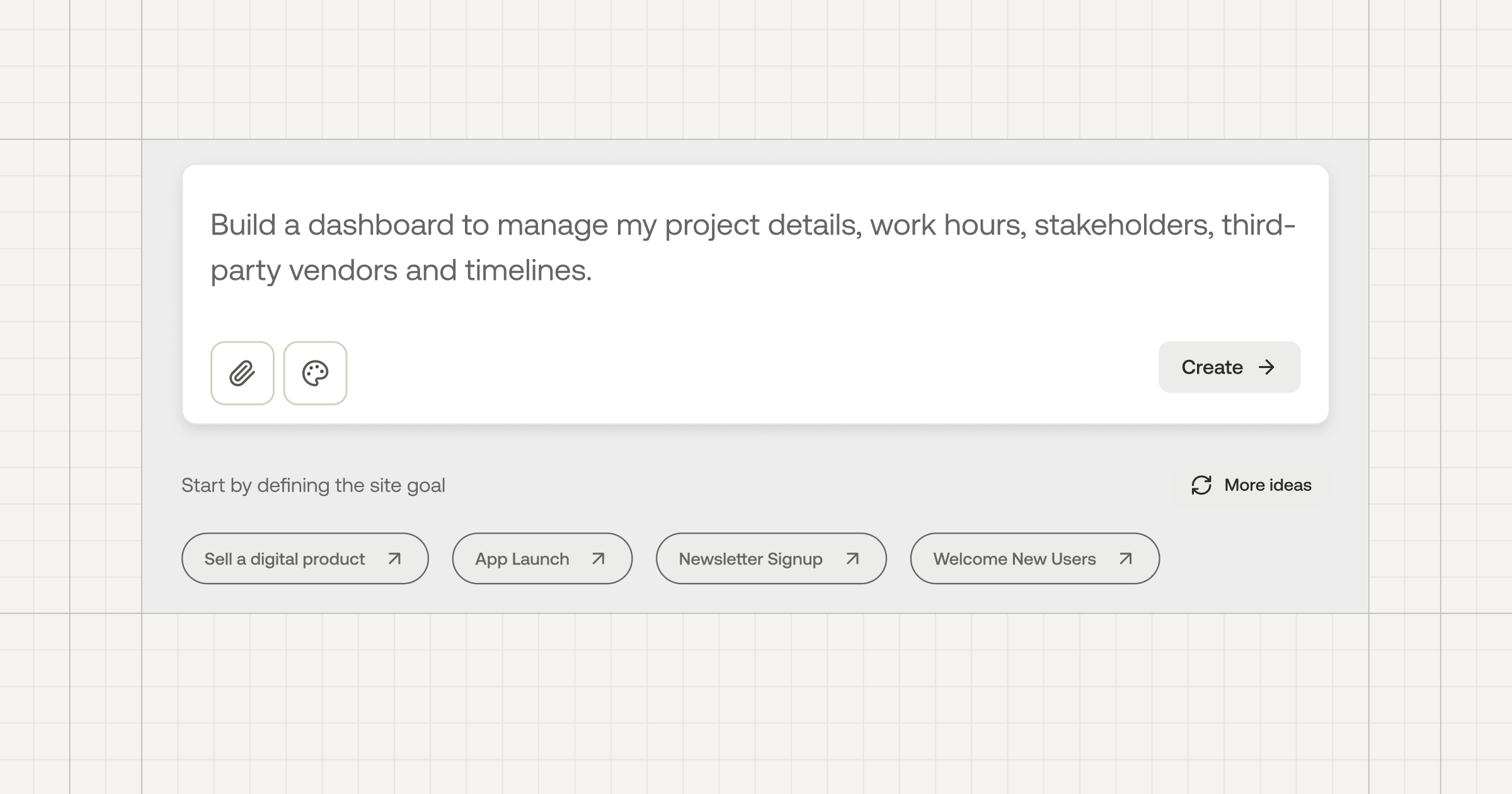
That means instead of only wiring an analytics snippet into an existing site, you can prompt for the dashboard, admin panel, or internal reporting view that consumes that event data in the first place, built as part of a larger product rather than added onto one afterward. Sticklight extends what you can already do with WordPress and Elementor, giving you a way to add custom, code-level functionality without writing every line by hand, and to build further into full-stack territory when a project needs more than a page.
Frequently asked questions
What should I look for when comparing Mixpanel alternatives?
Focus on how a tool captures events, whether it reports at the individual user level or the account level, and whether it needs to be self-hosted or run as a cloud service, since these differences matter more than the basic idea of tracking product usage.
Do I need to set up tracking manually with these tools, or is it automatic?
It depends on the tool. Amplitude, PostHog, and June generally rely on defined events sent from the product, while Heap uses autocapture to record interactions automatically and lets teams define metrics from that data later.
Which of these tools is built for B2B SaaS companies specifically?
June is built around account-level and company-level usage rather than individual user events, which makes it a common choice for B2B SaaS teams whose customers are organizations with multiple users.
Can any of these tools be self-hosted instead of used as a cloud service?
PostHog can be run as a hosted cloud service or self-hosted on a team’s own infrastructure. Check their site for current pricing and deployment details before deciding which setup fits.
How do I decide between a tool with funnel analysis and one with autocapture?
If a team already knows which events and funnels it wants to measure, a tool like Amplitude with defined behavioral cohorts may fit. If the tracking plan is still evolving, a tool like Heap that captures interactions automatically can help avoid missing early usage data.
Built by the Elementor team. Powered by Claude.
Let it glow.
