The Best Retool Alternatives for 2026

Teams that build internal tools, admin panels, and dashboards often start with Retool and later look around for other options as their hosting needs, pricing structure, integration list, or workflow shift. This list gives a factual, side-by-side look at four Retool alternatives, Budibase, Appsmith, UI Bakery, and ToolJet, followed by a section on where Sticklight fits for teams that would rather generate an internal tool from a prompt than assemble one screen by screen.
Each option below approaches internal-tool building a little differently, spanning open-source self-hosting, drag-and-drop editors, and scriptable logic layers, and each connects to a different mix of databases, APIs, and third-party services. What follows covers what each platform is, what it is generally known for, and the kind of team it tends to suit, so you can match the option to how your team actually works day to day and which data sources it needs to reach.
Budibase
Budibase is an open-source low-code platform for building internal tools, admin panels, and workflow apps. It connects to data sources including SQL databases, REST APIs, MongoDB, Airtable, and Google Sheets, and offers both self-hosted and cloud deployment options. The visual builder includes pre-built components for forms, tables, and charts. It generally suits teams that want to host their own internal tooling infrastructure.
Budibase also includes automation features for triggering workflows on events or schedules, along with row-level permissions and user role management. It ships an internal relational data store alongside its external data connectors, so a team can start building without wiring up a separate database first. A plugin system extends the available components and integrations for teams with more specific requirements.
Appsmith
Appsmith is an open-source framework for building admin panels, dashboards, and CRUD applications. Its drag-and-drop interface builder pairs with JavaScript for custom logic, and it connects to relational databases, REST APIs, and GraphQL endpoints. Appsmith can be self-hosted through Docker or Kubernetes, or used through a hosted cloud version. It generally suits development teams that want scriptable, code-level control over internal application behavior.
Appsmith includes role-based access control, a Git-based version control system for apps, and audit logs for tracking changes across a workspace. Its component library covers tables, charts, forms, and modals, and custom JavaScript can run inside queries or bind directly to UI state. Multiple environments can be configured for separating development from production apps.
UI Bakery
UI Bakery is a low-code platform for building internal tools, admin panels, and business dashboards through a drag-and-drop interface. It connects to databases, REST APIs, and common third-party services, and includes query editors for SQL and JavaScript logic. Deployment options include cloud hosting and on-premise setup. It generally suits teams that want to assemble internal applications quickly while retaining access to custom queries and scripts.
UI Bakery includes role-based permissions, audit logging, and a component library covering tables, charts, forms, and calendars. Apps can be organized into folders and shared across workspace members, and queries can be reused across multiple screens within a project. AI-assisted query generation is available for translating plain-language requests into SQL or API calls.
ToolJet
ToolJet is an open-source low-code platform for building business applications, internal dashboards, and admin tools. It offers a drag-and-drop editor alongside connectors for a wide range of data sources, including Postgres, MySQL, MongoDB, REST APIs, Stripe, and Slack. Teams can self-host ToolJet through Docker or use a hosted version, and can write transformations in JavaScript or Python. It generally suits teams that value a broad integration list and open-source deployment.
ToolJet supports multi-page applications, role-based access control, and audit logs for tracking user activity within a workspace. Its component library includes tables, charts, kanban boards, and calendars, and workflows can be triggered on a schedule or through incoming webhooks. A marketplace of plugins extends the list of supported data sources and third-party integrations.
Where Sticklight fits
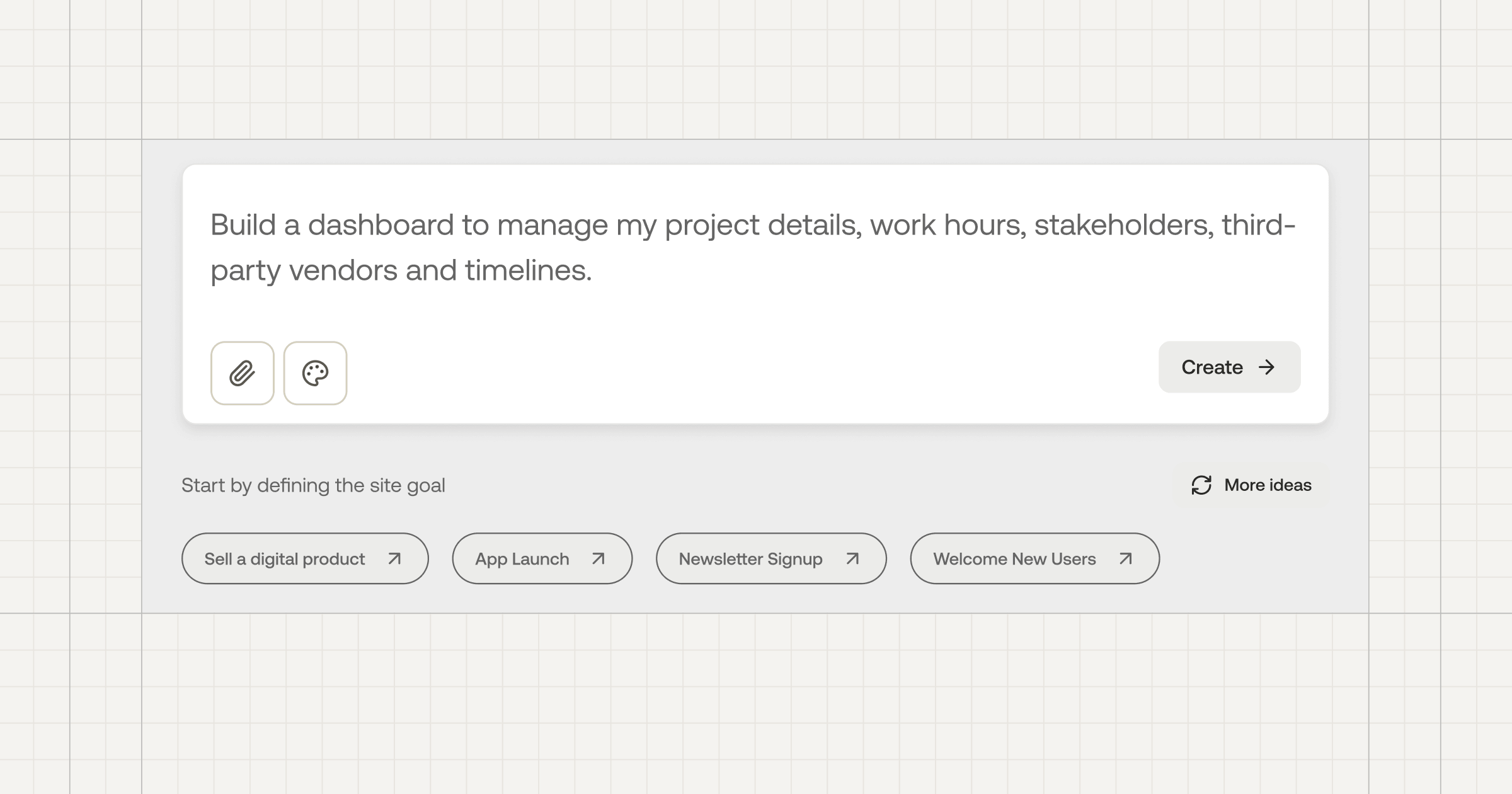
Sticklight is a vibe-coding platform that turns a prompt into a production-ready internal tool or dashboard for your team. Instead of assembling screens, components, and data connections by hand, you describe the internal tool you need, such as an admin panel, an approval workflow, or a reporting dashboard, and Sticklight generates it, giving your team a working starting point that already reflects the workflow you described and that can be refined from there.
Sticklight is built by the team behind Elementor, and it sits alongside WordPress and Elementor rather than replacing them: WordPress and Elementor continue to handle websites, marketing pages, and content, while Sticklight adds a separate path for the internal tools, admin panels, and dashboards a team also needs to run its day-to-day operations. Teams already building on WordPress and Elementor can add Sticklight for internal tooling without changing how their public-facing site is built.
Frequently asked questions
What is Retool?
Retool is a platform for building internal tools, admin panels, and dashboards by connecting to databases and APIs, used by teams who want to create custom software for their own operations.
Why look for a Retool alternative?
People look for alternatives when they want different pricing, self-hosting, an open-source option, or a different building experience. Check each tool’s site for current pricing.
What should I look for in a Retool alternative?
Consider what you are building, your data sources, whether you want self-hosting or open source, ease of use, and how the tool handles permissions, growth, and deployment.
Are there open-source Retool alternatives?
Yes. Several internal-tool builders offer open-source or self-hosted options, which some teams prefer for control and data ownership. Review each project’s terms and check its site for current details.
Can I build a custom internal tool instead of using a builder?
Yes. Instead of assembling components in an editor, some teams build a custom tool tailored to their exact workflow, which modern tools make faster to do from a plain description.
Built by the Elementor team. Powered by Claude.
Let it glow.