
Best Bilt alternatives for founders building a mobile app

You’re looking at Bilt alternatives because you want another way to turn a plain-language description into a working mobile app without hiring a developer. Bilt is built specifically to generate React Native and Expo codebases from prompts, and for many teams that scope is either too narrow or too wide for what they actually need to ship.
Here’s how Sticklight approaches app creation from a different angle, followed by several purpose-built mobile app generators that sit in the same category as Bilt.
- Bilt generates a React Native and Expo codebase from natural-language prompts and streams a live preview to your phone.
- Sticklight is a vibe-coding platform built by the Elementor team that turns a prompt into a production-ready website, app, dashboard, CMS, or internal tool, then publishes it.
- Other Bilt alternatives, including FlutterFlow, RapidNative, Draftbit, Rork, and Vibecode, target mobile app generation with different mixes of visual editing, credits, and code export.
- Most of these tools charge by credits or seats rather than a flat monthly fee, so the entry price isn’t the full picture.
- The right pick depends on whether you need a mobile-only app, a broader web and internal-tool build, or a codebase you plan to hand off to a developer team.
Who looks for Bilt alternatives, and why
Bilt (bilt.me) is built for non-technical founders who want to describe a mobile app in plain language and get a React Native and Expo codebase back, with one-click publishing to the Apple App Store and Google Play. It’s aimed squarely at people who need a mobile app and nothing else. Teams start looking for Bilt alternatives when their project grows past a single mobile app, when they want the option to export or self-host a website alongside the app, or when they’re comparing credit-based pricing across several tools before committing.
Sticklight: a broader alternative to Bilt
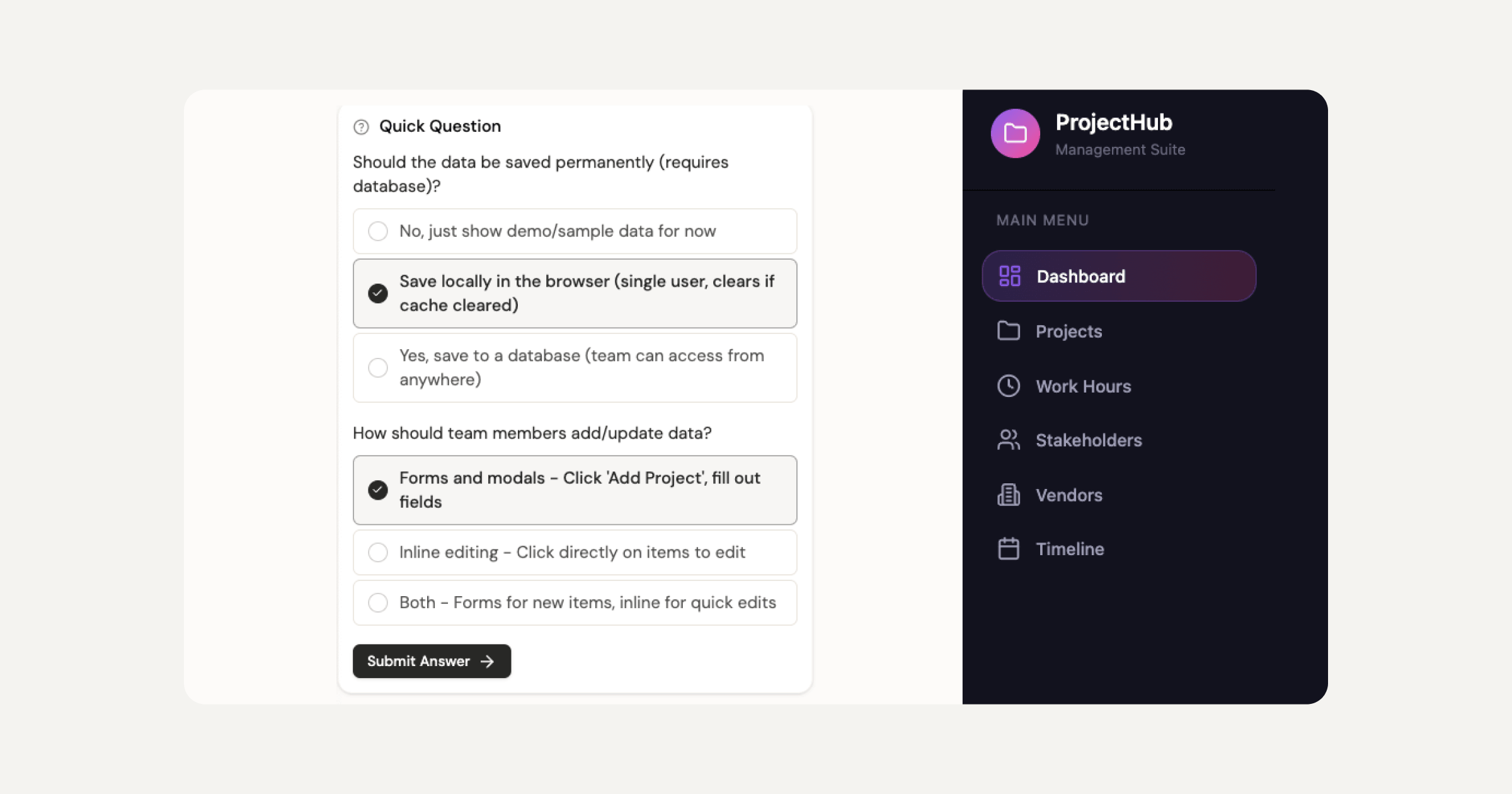
Sticklight is the vibe-coding platform for professional web creators, built by the Elementor team and powered by Claude. Instead of generating one codebase for one app type, it turns a prompt into production-ready output across websites, apps, dashboards, CMS setups, and internal tools, following a Prompt to Build to Publish flow that includes publishing as part of the process.
Where Bilt is scoped to mobile app codebases, Sticklight is built for creators who want one platform that can also stand up a marketing site, a client dashboard, or an internal tool from the same prompt-driven workflow. It’s additive to WordPress and Elementor rather than a replacement for them, so teams already running a WordPress or Elementor stack can bring Sticklight in alongside it. AI agents are coming soon.
Other Bilt alternatives worth considering
If a mobile app is your entire project, these tools are worth comparing directly against Bilt.
FlutterFlow is a visual, drag-and-drop platform for building Flutter-based mobile and web applications, used by individual developers and teams. It ships a UI builder with more than 200 pre-built widgets, generates a Flutter codebase that compiles to iOS, Android, and web, and connects to Firebase or Supabase for backend and data.
RapidNative converts prompts, sketches, documents, or screenshots into React Native application code, aimed at founders, product managers, designers, developers, freelancers, and agencies. It supports exporting source code or publishing directly to app stores and includes native device feature integration such as camera, GPS, and biometrics.
Draftbit combines a drag-and-drop visual editor with AI agent chat for building web and mobile apps, plus an optional paid outsourced-development tier for teams that want the build handled for them. It offers one-click publishing to app stores and a credit-based AI usage system.
Rork is a conversational, AI-chat-driven platform for generating and publishing mobile and web apps, marketed to non-technical users and app founders. It ships apps to the App Store and offers a mobile app for building directly from your phone.
Vibecode is a natural-language app generation platform built on Claude, used for creating mobile apps, websites, and related digital projects. It bills usage as credits, described as a pass-through of AI cost, with monthly and annual billing options.
Bilt alternatives at a glance
| Tool | What it is | Entry pricing | Best for |
|---|---|---|---|
| Bilt | AI prompt-to-React-Native/Expo mobile app generator | Free (€0/month); Professional from €15/month introductory | Non-technical founders shipping a single mobile app |
| Sticklight | Vibe-coding platform for production-ready sites, apps, dashboards, CMS, and internal tools | Additive to your WordPress/Elementor stack | Professional creators who need more than a mobile app alone |
| FlutterFlow | Visual drag-and-drop Flutter app builder | Free ($0/month); Basic from $39/month | Teams wanting a Flutter codebase with visual editing |
| RapidNative | Prompt/sketch-to-React-Native code generator | Free ($0/month, 20 credits); Starter from $20/month | Founders and agencies needing exportable React Native code |
| Draftbit | Visual editor plus AI agents for app building | Free ($0/month, 5,000 starting credits); Standard from $12/month | Teams wanting visual editing with an optional done-for-you tier |
| Rork | Chat-driven mobile and web app generator | Free ($0/month); Rork Pro from $20/month | Non-technical users who prefer a conversational build flow |
| Vibecode | Claude-powered natural-language app generator | check their site for current pricing | Creators wanting a Claude-based prompt-to-app flow |
Choosing between Bilt and the alternatives
If a mobile app is the whole project, the mobile-focused tools above, including Bilt itself, are built for exactly that job. Compare them on credits, export options, and whether you need Flutter versus React Native output. If the project is likely to grow into a website, a dashboard, or an internal tool alongside or instead of a mobile app, Sticklight’s broader prompt-to-production scope and its fit alongside an existing WordPress or Elementor setup make it a reasonable starting point before you lock into a mobile-only codebase generator.
Pricing structures differ enough to matter, too. Bilt, RapidNative, Draftbit, and Rork all layer credit- or token-based usage on top of a monthly fee, so the advertised entry price is a floor, not a full estimate of what you’ll pay at real usage. FlutterFlow’s tiers scale by seat count on its higher plans. Confirming current figures directly on each vendor’s pricing page before you decide is worth the extra few minutes.
Watching a healthy metric do nothing interesting for weeks is, to me, one of the most satisfying parts of running a real system.
Itamar Haim
Frequently asked questions
What’s the best free alternative to Bilt?
Bilt, FlutterFlow, RapidNative, Draftbit, and Rork all publish a free tier at $0 or €0 per month, each with its own credit or usage limits. Which one counts as best for you depends on whether you need React Native, Flutter, or a chat-driven build flow.
Does Sticklight replace Bilt for mobile apps?
No, not narrowly. Sticklight isn’t scoped to React Native or Expo mobile codebases the way Bilt is. It generates production-ready output across websites, apps, dashboards, CMS, and internal tools from a single prompt, so it suits you if your needs extend beyond a single mobile app.
Are these Bilt alternatives more expensive than Bilt?
It depends on the tool and the plan. Bilt’s published entry pricing runs in euros, starting at €0 for its free tier and €15/month introductory for its Professional plan. Some alternatives, like Draftbit’s $12/month Standard plan, list a lower headline figure, and others, like FlutterFlow’s $39/month Basic plan, list a higher one. Confirm current figures on each vendor’s site, since credit allotments vary by plan.
Which Bilt alternative works alongside my existing WordPress site?
Sticklight does. It’s built by the Elementor team and designed to be additive to WordPress and Elementor, so it sits alongside an existing site instead of requiring a separate standalone stack.
Built by the Elementor team. Powered by Claude.
Let it glow.
