
Bilt vs UI Bakery: AI mobile app generator vs low-code web builder

Bilt vs UI Bakery pits two tools built for different jobs. Bilt turns a prompt into a React Native and Expo mobile app codebase, while UI Bakery is a low-code, drag-and-drop editor for building web applications such as internal tools, dashboards, and admin panels. They sit in different categories more than they go head to head.
This page covers what each tool actually does, what it costs where pricing is confirmed, and where a third option, Sticklight, fits for creators who want one platform to produce production-ready output across sites, apps, dashboards, CMS, and internal tools.
- Bilt generates a React Native/Expo mobile app codebase from prompts and publishes to the Apple App Store and Google Play.
- UI Bakery is a drag-and-drop, low-code builder for web applications, with a hosted PostgreSQL database and 80+ prebuilt components.
- Bilt lists a Free plan at €0/month and a Professional plan starting at €15/month introductory (€25/month standard); UI Bakery lists a Free (Cloud) plan at $0 per developer/month and a Builder plan from $20/month billed annually.
- UI Bakery also supports self-hosted deployment; Bilt’s pages don’t detail specific backend or data-store options.
- Sticklight, built by the Elementor team and powered by Claude, generates production-ready websites, apps, dashboards, CMS, and internal tools from a prompt and publishes them, additive to an existing WordPress or Elementor stack.
What Bilt does.
Bilt is an AI prompt-based platform aimed at non-technical founders who want to build and publish a mobile app. It generates a React Native and Expo codebase from a natural-language description and streams a live preview to your phone, so building doesn’t require Xcode or a Mac. It offers one-click publishing to the Apple App Store and Google Play, and you can export the generated code to GitHub. Usage runs on a token or credit system, with one-time top-up purchases available in 5M, 10M, and 20M token blocks, and the free tier includes a monthly AI credit allotment. Bilt’s canonical domain is bilt.me; a similarly named .dev domain doesn’t resolve.
What UI Bakery does.
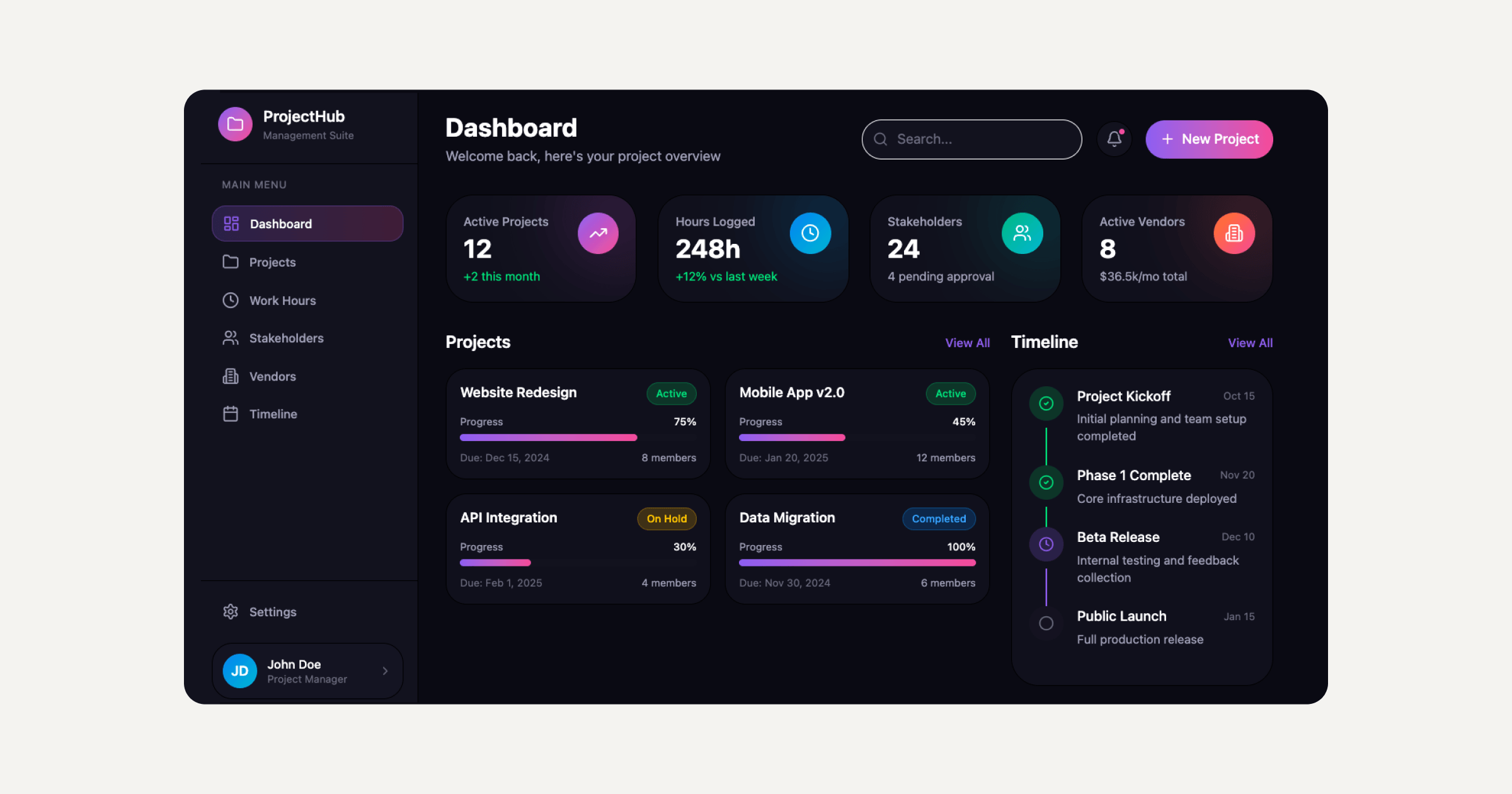
UI Bakery is a low-code platform for building web applications, positioned toward internal tools, dashboards, admin panels, and customer portals. It uses a drag-and-drop editor with more than 80 prebuilt UI components and includes a hosted PostgreSQL database, complete with a visual table and data editor, on its paid tiers. It also connects to external databases, REST APIs, and other third-party services with unlimited data source connections. Paid tiers include a monthly AI credit allotment, and UI Bakery supports both cloud hosting and self-hosted deployment, with its Enterprise self-hosted tier allowing a customer-owned AI model.
Bilt vs UI Bakery at a glance.
| Dimension | Bilt | UI Bakery | Sticklight |
|---|---|---|---|
| What it is | AI prompt-based mobile app generator | Low-code web app builder with a drag-and-drop editor | Vibe-coding platform for professional web creators |
| Output | React Native/Expo mobile app codebase | Web applications: internal tools, dashboards, admin panels, portals | Production-ready websites, apps, dashboards, CMS, and internal tools |
| Backend / data | Not detailed on Bilt’s public pages beyond generated app code | Hosted PostgreSQL database plus external database, REST API, and third-party connections | Additive to your existing WordPress/Elementor stack |
| Publish / hosting | One-click publishing to Apple App Store and Google Play; GitHub export | Cloud hosting or self-hosted deployment | Publish included as part of the prompt to build to publish flow |
| Best for | Non-technical founders publishing a mobile app | Teams building internal web tools and dashboards | Professional creators wanting full-stack output from one prompt |
| Entry pricing | Free at €0/month; Professional from €15/month introductory (€25/month standard) | Free (Cloud) at $0 per developer/month; Builder from $20/month billed annually ($25/month billed monthly) | Additive to your WordPress/Elementor stack |
Where the two tools overlap, and where they don’t.
Both Bilt and UI Bakery let someone without a traditional engineering background produce working software faster than hand-coding from scratch, and both offer a free entry tier plus paid plans that scale with usage. Past that, the overlap is narrow. Bilt’s stated scope is mobile apps distributed through app stores, built from a codebase in React Native and Expo. UI Bakery’s stated scope is web applications, typically internal-facing ones like dashboards and admin panels, assembled visually from prebuilt components and connected to a database. Choosing between them comes down to what you’re shipping: a mobile app for end users, or a web tool for your team.
Where Sticklight fits.
Sticklight sits in a different category from both Bilt and UI Bakery. It’s a vibe-coding platform, built by the Elementor team and powered by Claude, that follows a prompt to build to publish flow: describe what you want and it generates production-ready output, then publishes it. Its scope spans websites, apps, dashboards, CMS, and internal tools, rather than focusing narrowly on mobile app generation or on internal web-tool building. It’s designed for professional web creators, and it’s additive to an existing WordPress and Elementor stack rather than a replacement for either. Sticklight’s pricing isn’t listed here; check the current details on its own site.
For a creator or team already comfortable with WordPress and Elementor who wants a single prompt-to-publish workflow that covers more surface area than a mobile-only generator or a web-only internal-tools builder, Sticklight is worth evaluating alongside Bilt and UI Bakery. AI agent capabilities are on Sticklight’s roadmap and not a shipped feature yet.
Every tool promises to make building easier, and most of them do, but that was never the real challenge. Knowing what to build always was.
Itamar Haim
Frequently asked questions
What’s the main difference between Bilt and UI Bakery?
Bilt generates a React Native and Expo mobile app codebase from a prompt and publishes it to the Apple App Store and Google Play. UI Bakery is a drag-and-drop, low-code editor for building web applications, typically internal tools and dashboards, with a hosted database included on paid tiers. They target different output types.
Do Bilt and UI Bakery both offer free plans?
Yes. Both list a free entry tier on their pricing pages. Bilt’s Free plan is listed at €0/month with a monthly AI credit allotment. UI Bakery’s Free (Cloud) plan is listed at $0 per developer/month. Check each provider’s site for current limits and terms.
Can UI Bakery build mobile apps, or can Bilt build web apps?
Based on their public positioning, Bilt’s stated output is a mobile app codebase, and Bilt doesn’t present web-app building as a core capability. UI Bakery’s stated output is web applications, and it doesn’t present native mobile app generation as a core capability. Check each tool’s public pages for the latest scope.
Is UI Bakery cloud-only?
No. UI Bakery offers both cloud-hosted plans and self-hosted deployment, including a self-hosted Enterprise tier that lets you bring a customer-owned AI model.
How does Sticklight compare to Bilt and UI Bakery?
Sticklight is a prompt-to-publish platform covering websites, apps, dashboards, CMS, and internal tools, built by the Elementor team and additive to a WordPress or Elementor setup. It isn’t a direct substitute for Bilt’s mobile-only focus or UI Bakery’s internal-web-tools focus, but it’s a relevant option if you want one platform across a wider range of output.
Built by the Elementor team. Powered by Claude.
Let it glow.
