
Blink vs OutSystems: AI app generation vs low-code development

Blink and OutSystems sit on opposite ends of app development. Blink turns natural-language prompts into full-stack applications, complete with a database, authentication, and hosting. OutSystems is a low-code platform organizations use to build applications for employees, customers, and partners, backed by a cloud runtime built around governance and security.
Here’s what each platform is, how it generates and hosts output, and what it costs, plus where a third option, Sticklight, fits if you’re a professional creator who wants production-ready output from a prompt.
- Blink generates full-stack applications, frontend, backend, database, and authentication, directly from natural-language prompts, and hosts the result.
- OutSystems is a visual, low-code development platform aimed at organizational applications, with a dedicated cloud runtime called OutSystems Developer Cloud (ODC).
- Blink publishes verified pricing from a Free plan through Team seats. OutSystems doesn’t publish a numeric starting price for its production-ready ODC tier; check their site for current pricing.
- OutSystems also offers a Personal Edition intended for development and testing only, capped at 100 internal users, and not licensed for production use.
- Sticklight, built by the Elementor team and powered by Claude, is a separate route: it turns a prompt into a production-ready website, app, dashboard, or CMS and publishes it, additive to an existing WordPress and Elementor stack.
What Blink and OutSystems are built for
Blink positions itself as an AI platform that generates full-stack applications, frontend, backend, database, authentication, and hosting, from natural-language descriptions. It includes an AI model gateway with access to more than 200 AI models through one API, always-on agents it calls “Blink Claw” for tasks like customer support or marketing, and more than 3,000 built-in integrations covering tools like Stripe, Slack, Gmail, and Notion.
OutSystems takes a different route: a visual, low-code development environment for building web and mobile applications, with AI-assisted development features referenced on its own site. Its cloud offering, OutSystems Developer Cloud, adds tooling for security and governance, along with add-ons like 24×7 support, additional runtimes, a higher uptime SLA, and extra compliance certifications on paid tiers.
Blink vs OutSystems at a glance
| Dimension | Blink | OutSystems | Sticklight |
|---|---|---|---|
| What it is | AI platform that generates full-stack apps from natural-language prompts | Low-code visual development platform for organizational applications | Vibe-coding platform for professional web creators |
| Output | Frontend, backend, database, and authentication generated per app | Web and mobile applications built in a visual, low-code environment | Production-ready websites, apps, dashboards, CMS, and internal tools from a prompt |
| Backend / data | Platform auto-provisions database, authentication, and APIs per generated app; the default database technology is not disclosed on its pricing page | Application logic and data run inside the OutSystems Developer Cloud runtime, with security and governance tooling built in | Full-stack output built to be production-ready on generation |
| Publish / hosting | Global hosting included, with free SSL, CDN, custom domains, and auto-scaling | Deployed through OutSystems Developer Cloud; higher SLA and compliance add-ons available on paid tiers | Publish included, additive to your WordPress and Elementor stack |
| Best for | Builders who want an AI-generated full-stack app with integrations and hosting handled automatically | Organizations building governed, compliance-sensitive internal or customer-facing applications | Professional creators who want production-ready sites, apps, dashboards, or tools built by prompt alongside their existing WordPress and Elementor work |
| Entry pricing | Free ($0/month, 5 daily refresh credits capped at 30/month); paid plans start at $25/month ($21/month billed annually) | check their site for current pricing | Additive to your WordPress/Elementor stack |
How pricing is structured
Blink’s pricing is published and tiered by credits. The Free plan gives 5 daily refresh credits capped at 30 per month. Starter runs $25/month, or $21/month billed annually, with 100 credits plus a daily refresh. Pro runs $50/month, or $42/month billed annually, with 200 credits plus a daily refresh. Max starts from $200/month, or from $167/month billed annually, with 800 or more credits plus a daily refresh. Team pricing starts from $40 per seat per month, with a shared credit pool and role-based access.
OutSystems doesn’t publish a numeric price for its production-capable Developer Cloud tier. The official pricing page describes it as priced by application complexity, number of users, and add-ons, without listing a starting figure, so check their site for current pricing. It also lists a separate Personal Edition tier, a development and test runtime only, limited to 100 internal users, and excluded from production deployment, uptime SLA, and compliance certifications.
Where a professional creator fits in
Blink and OutSystems solve different problems: one generates an app from a prompt end to end, the other gives an organization a governed low-code environment to build within. Neither is built specifically around the workflow of a professional web creator who also runs client sites on WordPress and Elementor.
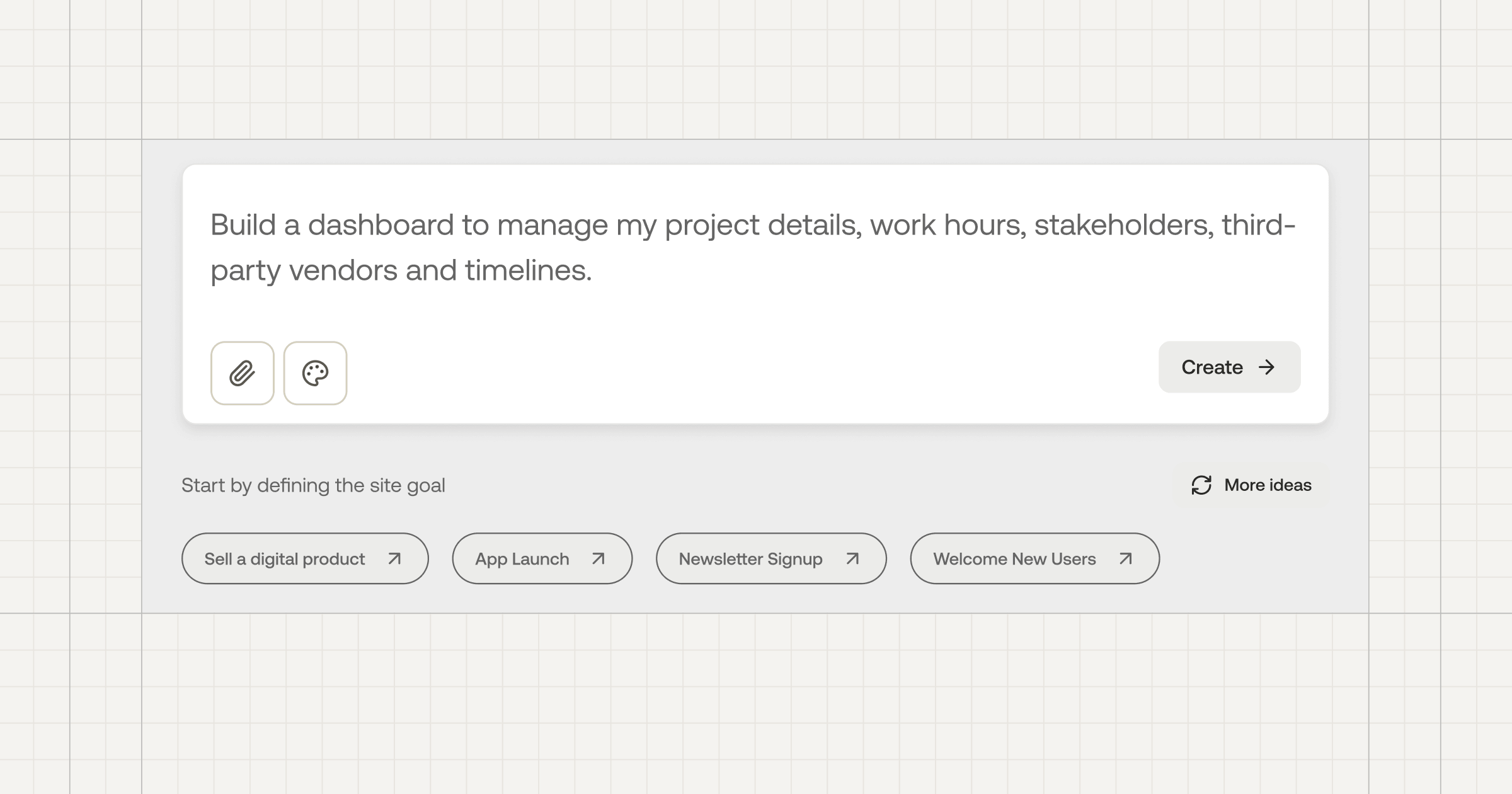
Sticklight follows a Prompt, Build, Publish flow: a prompt becomes a production-ready website, app, dashboard, CMS, or internal tool, and publishing is part of the same flow. It’s built by the Elementor team and powered by Claude, and it’s additive, meaning it works alongside WordPress and Elementor rather than replacing them. If you already have a WordPress and Elementor practice and want to extend into full-stack apps and tools without leaving that ecosystem, Sticklight is worth evaluating alongside Blink and OutSystems. AI agents are on Sticklight’s roadmap and not yet a shipped feature, so that comparison point isn’t made here.
Scoping a project used to mean counting screens. Now it means mapping what the data does when nobody is watching.
Itamar Haim
Frequently asked questions
Which is better for cost, Blink or OutSystems?
Blink publishes exact prices, from a Free plan up to Team seats starting at $40 per seat per month. OutSystems doesn’t publish a numeric price for its production-ready Developer Cloud tier, so check their site for current pricing if cost is the deciding factor for you.
Can I use OutSystems for free?
Only for development and testing. OutSystems offers a Personal Edition, but it’s a development and test runtime only, capped at 100 internal users, and it excludes production deployment, uptime SLA, and compliance certifications.
Does Blink handle hosting and infrastructure automatically?
Yes. Blink includes global hosting with free SSL, a CDN, custom domains, and auto-scaling as part of the generated application.
Is Sticklight a direct replacement for Blink or OutSystems?
No. Sticklight is a separate option built by the Elementor team that turns a prompt into a production-ready website, app, dashboard, or CMS and publishes it. It’s additive to WordPress and Elementor rather than a like-for-like swap, so whether it fits you depends on whether that ecosystem is already part of your workflow.
Which platform is best for organizational, compliance-heavy applications?
OutSystems. It’s built around governance, security tooling, and add-ons like additional compliance certifications and a higher uptime SLA on paid tiers, which points it toward organizational use cases.
Built by the Elementor team. Powered by Claude.
Let it glow.