Bubble vs Softr: comparing two no-code platforms and where Sticklight fits

Bubble vs Softr comes up often when you’re choosing a no-code platform for a web application, portal, or internal tool. Both are established no-code builders, but they start from different assumptions about how you put an app together.
This comparison covers what each platform actually does, based on their own public feature descriptions, then brings in Sticklight as a third option if you want production-ready, full-stack output from a single prompt.
- Bubble is a browser-based visual builder with its own hosted database and a drag-and-drop workflow engine for backend logic.
- Softr sits on top of existing data sources such as Airtable, Google Sheets, or Notion, and turns that data into a working app through pre-built UI blocks.
- Neither platform’s current pricing could be independently verified at the time of writing, so check each vendor’s site for current numbers.
- Bubble gives you a fuller visual canvas and logic engine; Softr trades some of that flexibility for faster setup on top of data you already have.
- Sticklight generates production-ready websites, apps, dashboards, CMS, and internal tools from a prompt, and is additive to an existing WordPress or Elementor stack.
Bubble: a visual builder with its own database
Bubble is a browser-based visual development platform for building multi-user web applications. It combines a drag-and-drop UI editor with a pixel and responsive layout engine, a built-in hosted relational database for defining data types, fields, and relationships, and a visual Workflow Engine for backend logic, scheduled events, and API-triggered actions. A Plugin Marketplace adds third-party integrations for payments, email, maps, and AI, and a built-in API Connector lets your app call external REST APIs directly. Bubble apps are hosted on Bubble’s own infrastructure, and the platform doesn’t offer code export. Output is a web application; if you need a native mobile app store build, you’ll need a third-party wrapper. Current plans measure and bill usage in Workload Units.
Softr: apps built on the data you already have
Softr is a no-code platform for building web applications, client portals, and internal tools on top of external or internal data sources. It connects to Airtable, Google Sheets, and Notion, or to Softr’s own built-in database, and gives you a library of pre-built UI blocks, such as lists, tables, forms, charts, calendars, and maps, that bind to a connected data source. Built-in user authentication supports email and Google login, and row-level permission controls let logged-in users see only their own records. Rather than a freeform visual canvas like Bubble’s, you configure Softr through settings panels, with no native code editor exposed to the end user. Softr outputs a hosted web application and doesn’t compile to native iOS or Android binaries.
Bubble vs Softr at a glance
| Dimension | Bubble | Softr | Sticklight |
|---|---|---|---|
| What it is | Visual application builder with a drag-and-drop canvas | App builder layered on top of existing data sources | Vibe-coding platform that turns a prompt into production-ready output |
| Output | Multi-user web applications | Web applications, client portals, internal tools | Websites, apps, dashboards, CMS, and internal tools |
| Backend / data | Built-in hosted relational database | Airtable, Google Sheets, Notion, or Softr’s own database | Generated as part of the production-ready build |
| Publish / hosting | Hosted on Bubble’s own infrastructure, no code export | Hosted web app, no native mobile builds | Publish is included in the Prompt to Build to Publish flow |
| Best for | You want a full visual canvas and workflow engine for custom logic | You already have data in Airtable, Sheets, or Notion and want a fast front end | You want full-stack, production-ready output from one prompt |
| Entry pricing | Check their site for current pricing | Check their site for current pricing | Additive to your WordPress/Elementor stack |
How the two platforms differ in practice
The practical difference between Bubble and Softr comes down to where each one starts. Bubble starts from a blank canvas: you design the interface, define the database schema, and wire up logic through its Workflow Engine, which gives you more control but also more to configure. Softr starts from data you already maintain elsewhere, such as an Airtable base or a Google Sheet, and wraps that data in pre-built UI blocks, which is faster to set up but leaves less room to design custom logic beyond what the blocks and connected automation tools support. Neither approach is objectively better; the right one depends on whether you’re starting from scratch or already have structured data to build on.
Both platforms are web-first. Neither compiles to a native iOS or Android app on its own, so if you need an app store presence, you’ll typically add a separate wrapper or export path outside either tool.
Where Sticklight fits as a third option
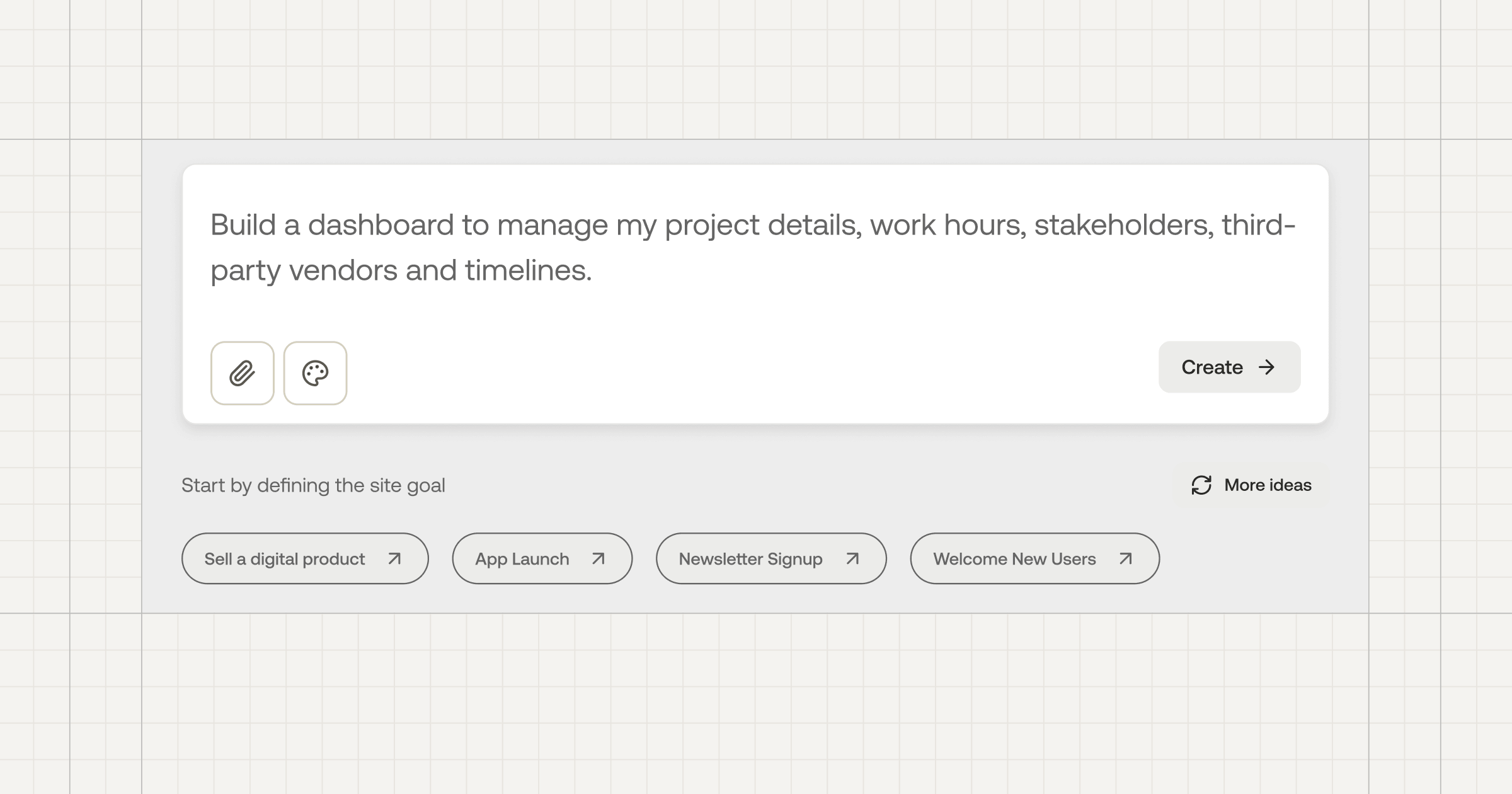
Sticklight, built by the Elementor team and powered by Claude, is a vibe-coding platform for professional web creators. Its flow is Prompt to Build to Publish: a prompt generates real, production-ready output, and publishing is part of the same flow rather than a separate step. Where Bubble and Softr are visual builders you configure screen by screen, Sticklight is built to generate full-stack output, sites, apps, dashboards, CMS, and internal tools, from a single prompt, then publish it. It’s additive to WordPress and Elementor rather than a replacement for either, so if you’re already running on that ecosystem, you can bring Sticklight in alongside it. AI agents are coming soon and not yet a shipped feature, so today’s comparison is about prompt-to-production output and publishing, not autonomous agents.
If you’re evaluating Bubble vs Softr to decide between two established visual and data-driven builders, Sticklight is worth a look as an alternative path when what you want is production-ready output from a prompt rather than screen-by-screen configuration.
Frequently asked questions
What’s the main difference between Bubble and Softr?
Bubble is a visual application builder with its own hosted database and workflow engine, built for designing an app from scratch. Softr sits on top of external data sources like Airtable, Google Sheets, or Notion, and turns that data into an app through pre-built UI blocks.
Does Bubble or Softr cost more?
Neither vendor’s current pricing could be independently verified at the time of writing. Check each vendor’s site for current pricing before you compare costs.
Can Bubble or Softr build a native mobile app?
No. Neither compiles to a native iOS or Android app on its own. Bubble apps typically need a third-party wrapper for an app store build, and Softr outputs a hosted web application rather than a native binary.
Is Sticklight a replacement for Bubble or Softr?
No. Sticklight is additive to a WordPress and Elementor stack rather than a like-for-like replacement for either platform. It generates production-ready websites, apps, dashboards, CMS, and internal tools from a prompt and publishes them as part of the same flow.
Built by the Elementor team. Powered by Claude.
Let it glow.