
How much does it cost to create a website with AI?

The cost to create a website with AI comes down to four things: the plan you choose, your domain, any premium assets or integrations you add, and the hours you spend directing the build. For most founders and small business owners, the software was never the biggest line item. Design and development hours were, and that is exactly where AI website builders change the math.
This guide breaks down what actually drives the price of an AI-built website, how that compares to hiring an agency or using a traditional DIY builder, and where a platform like Sticklight fits. We will not hand you a made-up number. Prices move and plans change, so treat this as the shape of the cost rather than a quote.
- Four real cost drivers: your builder subscription, your domain, any premium assets or integrations, and the time you spend prompting and reviewing.
- Design and development hours were historically the largest expense on a website project. AI compresses much of that into the prompt itself.
- Agencies, traditional DIY builders, and AI app builders each have a different cost shape than their price tag alone suggests.
- Sticklight’s pricing scales with seats and features across Free, Pro, Team, and Enterprise, with bring-your-own AI keys on select plans.
- Domain registration, premium integrations, and your own review time sit outside any builder’s subscription, whichever path you pick.
- Treat any published price as a starting range, not a quote for your specific project.
The cost to create a website with AI, broken into four parts
When founders ask what it costs to build a website with AI, they are picturing one number. In practice it is closer to four separate line items, each behaving differently.
- The builder subscription. This is the recurring cost of the platform itself, tied to a plan tier rather than a one-time project fee.
- The domain. A domain is a small, predictable annual cost that exists no matter how the site gets built. AI does not change this line item.
- Premium assets and integrations. Stock photography, custom fonts, paid API connections, and payment processors all carry their own cost, separate from the builder you choose.
- Your time. This is the most underestimated driver. Prompting, reviewing drafts, and making revisions all take real hours, even when a machine did the first pass.
Founders who budget only for the subscription are usually the ones surprised by the total.
Where the money used to go: design and development hours
Before AI builders existed, a website’s price was mostly a proxy for hours. An agency or freelancer priced a project by estimating time for wireframing, custom coding, revision rounds, and quality checks. A simple brochure site and a complex booking system cost differently because they required different amounts of skilled human labor, not because the hosting was more expensive.
That matters because it explains why AI changes the equation. If a website’s cost was mostly hours, then anything that compresses hours compresses cost. Judgment still matters. What changes is who spends the time, and on what.
How an AI website builder changes that equation
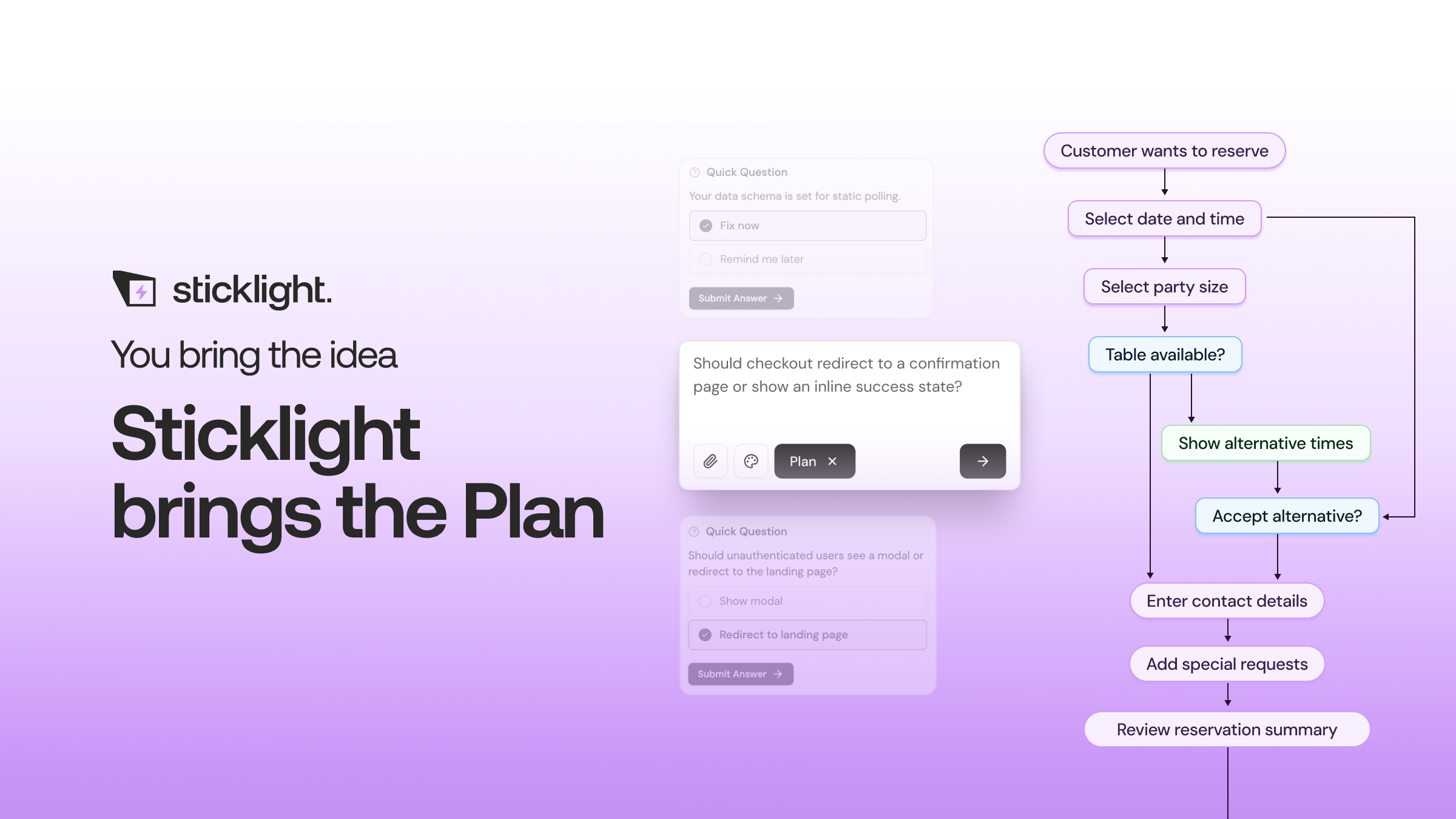
Sticklight was built by the Elementor team and runs on Claude, positioning it as a vibe-coding platform for professional web creators. It takes creators beyond websites, turning a plain-language prompt into a production-ready website, app, dashboard, CMS, or internal tool, following a Prompt, Build, Publish flow. Production-ready is the operative phrase. The goal is a shippable product, not a demo you hand off to a developer.
The cost impact comes from where the expertise sits. Instead of paying an hourly rate for a designer to think through accessibility, or a developer to wire up SEO fundamentals, you can add a Skill during the Build phase. Skills are packaged units of expert know-how covering accessibility, SEO, design systems, performance, copywriting, localization, micro-interactions, onboarding, and 3D web experiences. Adding one is a click, not a separate line item on an invoice.
None of this locks you out of the work. AI does the heavy lifting from the first prompt, and you keep full control of every pixel after that, editing by hand or dropping into the code directly. The cost you save on the first draft is not a cost you pay back later in flexibility.
Three paths, three cost shapes: agency, DIY builder, or AI app builder
It helps to think about this less as three prices and more as three shapes.
Hiring an agency or freelancer
This path bills for expertise and hours directly. Cost scales with scope, complexity, and how many revision rounds you need. You get a dedicated human thinking through your specific problem, which suits genuinely custom, high-stakes builds, but the price reflects that labor.
A traditional DIY builder
Here the sticker price is usually lower, but the hours do not disappear. They shift to you. You assemble templates, adjust layout by hand, and research best practices for SEO or accessibility on your own time. The cost is real, just measured in your calendar instead of an invoice.
An AI app builder like Sticklight
This path is subscription-based, tied to a plan tier rather than a per-project quote. AI compresses a large share of the design and development hours an agency would otherwise bill for, and packaged Skills replace research time you would otherwise spend on a DIY builder. You still direct the build and still own the final result, with fewer billable hours and less of your own unpaid time.
Sticklight’s pricing shape: plans that scale with seats and features
We keep this simple, because team size and feature needs matter more than page count. Free lets you try the platform and ship real products, not a stripped-down sandbox. Pro fits independent creators, freelancers, and small studios. Team adds multi-seat collaboration, more Skills, and higher capacity for agencies or in-house teams. Enterprise adds SSO, security review, and dedicated support.
Across select plans, you can also bring your own AI provider keys, useful if you already have AI spend elsewhere and want to manage it in one place rather than layering a second bill on top.
The core idea to remember: pricing scales with seats and feature access, not with how many pages you publish or how much traffic your site gets. A ten-page site and a fifty-page site on the same plan cost the same.
Costs founders forget to budget for
A few line items get overlooked even by people who have built a website before.
- Domain renewal. Domains typically renew annually, sitting outside your builder subscription entirely.
- Third-party fees. Payment processors, booking tools, and email services you connect often carry their own usage-based fees.
- Your review time. Even a fast first draft needs a human eye on copy and accuracy before it goes live. Budget hours for this, not just dollars.
- Plan upgrades as you grow. A solo founder on a starter plan may need to move to a team plan once a second person joins.
A simple way to estimate your own project
Instead of chasing a single average, walk through four questions. What are you building: a marketing site, a full app, or several at once. Who is prompting and reviewing, and how many hours can they realistically give it. What premium extras does the project need, such as a custom domain or a payment processor. And how many people need seat access to build and approve the work.
Answer those honestly and you will land on a plan tier and a time estimate that fits your actual project, not a number pulled from someone else’s blog post.
When paying for more makes sense
Not every founder needs the top tier, and we would rather you pick the right one than the biggest one. Paying for more capacity makes sense once you manage multiple client sites as an agency, once a growing team needs shared seats and more Skills, or once you need Enterprise requirements like SSO and a formal security review. If your AI usage is already significant elsewhere, bring-your-own-keys on select plans can also be the deciding factor.
Every team I have worked with learns the same lesson late, that maintaining a system is the actual job, not the interruption to the job.
Itamar Haim
Built by the Elementor team. Powered by Claude.
Let it glow.
