How Much Does It Cost to Make an App in 2026?

The cost to make app in 2026 ranges from under $500 for a simple no-code prototype to $250,000 or more for a complex, custom-built application with a full backend, integrations, and native iOS and Android versions. Most small business and startup apps land somewhere between $10,000 and $80,000, depending on how many features you need and whether you build it yourself, hire freelancers, or work with an agency.
There’s no single number because “app” covers everything from a basic booking tool to a multi-platform product with real-time data and payments. This article breaks down what actually drives the cost to make app in 2026, compares build approaches, and shows rough price ranges by complexity so you can budget with realistic expectations before you start.
What drives app cost
Cost climbs with feature count, custom design work, and how much backend logic the app needs to run, things like user accounts, databases, and server-side processing. Supporting both iOS and Android roughly doubles native development time unless you use a cross-platform framework, which trades some performance for a single shared codebase and lower cost.
Integrations add cost too. Connecting to payment processors, calendars, CRMs, or third-party APIs each takes design, testing, and ongoing maintenance. Team composition matters as much as scope: a solo freelancer charges less per hour than an agency, but an agency typically bundles design, QA, and project management into the price.
Cost by build approach
No-code and low-code platforms are the cheapest way to get a working app live, often a few hundred to a few thousand dollars in tooling and setup time, and they suit simple workflows like directories, forms, or booking tools well. They start to strain once you need custom logic, heavy data processing, or a fully original interface.
Hiring a freelancer or small dev shop for custom development typically runs $15,000 to $60,000 for a focused app, while a full-service agency building a polished, multi-feature product usually starts around $50,000 and can climb past $200,000 for enterprise-grade work with dedicated design, QA, and long-term support built in.
Cost by app complexity
Complexity is the single biggest lever on price, more than any other factor. A simple app with a handful of screens and no backend costs a fraction of what a complex app with real-time sync, payments, and admin tooling requires. The table below gives broad market ranges, not quotes, since every project varies.
| Complexity | Typical features | Broad cost range |
|---|---|---|
| Simple | Few screens, no backend, static content | $1,000 to $15,000 |
| Medium | User accounts, database, basic integrations | $15,000 to $75,000 |
| Complex | Real-time data, payments, multi-platform, admin panel | $75,000 to $250,000 plus |
Design depth pushes any of these ranges higher. A template-based layout costs far less than a fully custom interface with original illustrations, animation, and a distinct visual identity, so if your app needs to feel like a polished consumer product rather than an internal tool, plan for design to take a real share of the budget.
Ongoing costs after launch
Launch is not the finish line. Hosting, app store fees, bug fixes, and OS updates typically cost 15% to 25% of the original build price per year, and that number climbs if you keep adding features. Budget for this from day one so an early win doesn’t turn into an unmaintained app a year later.
Support needs also shift after launch. Early on you’re mostly fixing bugs users find in the wild, but over time the bigger cost driver becomes keeping pace with new OS versions, device sizes, and security patches, work that’s easy to underestimate when you’re focused only on getting to launch day.
How to reduce app costs
Start with the smallest version that proves the idea works, a minimum viable product, rather than building every feature you can imagine. Reuse existing components, pick a cross-platform approach over separate native builds when performance allows, and phase advanced integrations in after you have real users and feedback guiding the roadmap.
Clear requirements before you start also save money. Vague scope is the top reason app budgets balloon mid-project, since every undefined detail becomes a change request later, and change requests almost always cost more than planning them in from the beginning.
The moment a prompt could hold a database and a form and the logic between them, my job description quietly rewrote itself.
Itamar Haim
Where Sticklight fits
Sticklight turns a plain-language prompt into a production-ready website, app, dashboard, or internal tool, no separate design phase, no hiring a dev team, no juggling quotes from freelancers or agencies. It’s built by the Elementor team and powered by Claude, so you go from idea to working product in one continuous flow, and it helps you become a full-stack creator without needing to already be one.
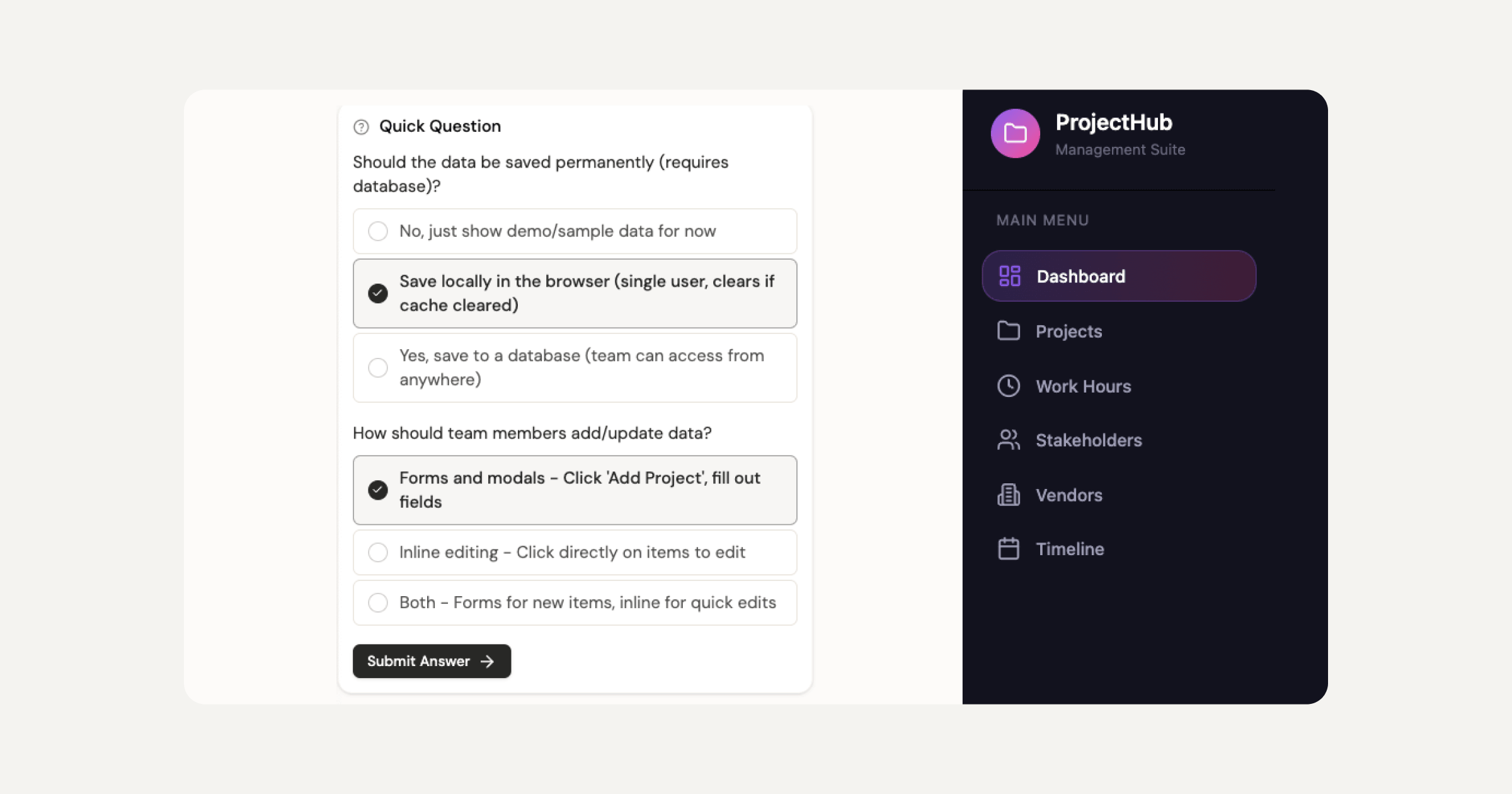
If you already run a WordPress or Elementor site, Sticklight fits alongside it rather than replacing it, letting you spin up a companion app or dashboard that connects back to your existing pages. It’s a fast, capable way to build the thing you’d otherwise be scoping out a costly quote for.
Frequently asked questions
How much does it cost to make an app in 2026?
It varies widely. A simple app built with modern tools can cost very little, while a complex custom app with a development team can run into six figures. Scope and approach drive the range.
What makes an app more expensive to build?
More features, support for both iOS and Android, custom design, integrations, backend complexity, and a larger team all raise the cost.
Is it cheaper to build an app with no-code or low-code tools?
Often yes, especially for the first version. No-code and low-code tools reduce build time, though complex or highly custom apps may still need developers.
What ongoing costs should I plan for?
Budget for hosting, maintenance, updates, third-party services, app store fees, and support. These recurring costs continue after launch.
How can I reduce app development costs?
Start with a focused first version, use modern build tools, reuse components, and add features based on real user feedback rather than building everything up front.
Built by the Elementor team. Powered by Claude.
Let it glow.