
Cursor vs O-mega: comparing two very different AI build tools

Cursor and O-mega solve different problems for different people, even though both surface in the same “AI build tool” conversation. Cursor is an AI-assisted code editor built for software developers. O-mega is an AI platform that generates and operates a business’s public website, customer sign-in and payment flow, and internal admin dashboard from a natural-language description. They rarely compete for the same buyer, but seeing them side by side clarifies what each one is actually for.
Here’s what each tool does, how they price and deploy, and where a third option, Sticklight, fits for professional creators who want production-ready output without hand-coding it.
- Cursor is an in-editor AI coding environment for developers; it doesn’t host or deploy the applications it helps build.
- O-mega generates and autonomously runs a business’s website, customer flow, and admin dashboard from a single prompt.
- Cursor’s Hobby plan is free with a capped number of agent requests; Individual Pro is $20 per user per month and Teams Standard is $40 per user per month.
- O-mega’s non-enterprise pricing isn’t publicly confirmed, so check their site for current pricing.
- Sticklight, built by the Elementor team and powered by Claude, turns a prompt into a production-ready site, app, dashboard, CMS, or internal tool and publishes it, additive to a WordPress and Elementor stack.
What Cursor is
Cursor is an AI-assisted code editor with AI coding agents built into the workflow. Its Composer and Agent modes let you describe a change in natural language and have the agent write, edit, and refactor code directly in the project, with access to multiple frontier language models. Cloud agents run longer tasks remotely, Bugbot handles automated code review, and the platform supports MCP, custom skills, and hooks for extending agent behavior. Team plans add a shared marketplace and team-wide context, and Enterprise adds SCIM seat management and audit logs. Cursor stays squarely a developer tool: it speeds up writing and reviewing code inside an existing engineering workflow, but it doesn’t host, deploy, or operate the resulting application itself.
What O-mega is
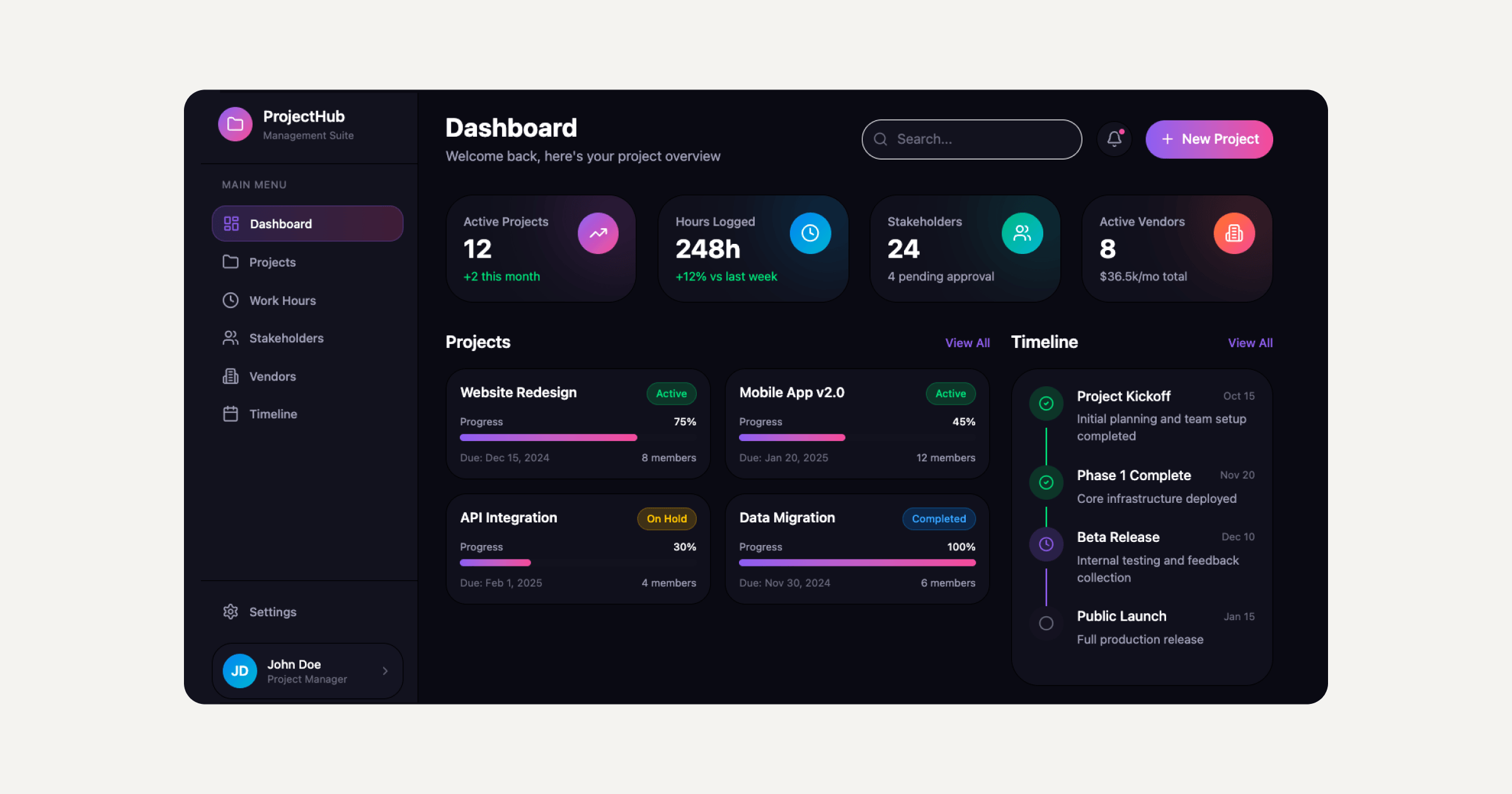
O-mega takes a different approach. Instead of assisting a developer inside an editor, it generates an entire operating business stack, public website, customer product or sign-in flow, payment handling, and an internal admin dashboard, from a natural-language description. A single edit propagates across the website, checkout, and admin views. Beyond generation, O-mega positions itself around ongoing autonomous operations: 24/7 customer support, payment recovery, invoice management, and content updates, along with live data integration with tools such as Stripe, Apple Health, and Garmin. It also claims full data and domain ownership with export capability, and runs on a credit-based usage system where one credit corresponds to one build step, such as adding a banner or setting up automated emails. O-mega states it has deployed thousands of companies and a large volume of autonomous operations, according to its own published figures.
Cursor vs O-mega at a glance
| Dimension | Cursor | O-mega | Sticklight |
|---|---|---|---|
| What it is | AI-assisted code editor (IDE) for developers | AI platform that generates and runs a full business stack from a prompt | Vibe-coding platform that turns a prompt into production-ready sites, apps, dashboards, CMS, and internal tools |
| Output | Code changes inside an existing codebase, reviewed and edited by the developer | Public website, customer sign-in/payment flow, and internal admin dashboard together | Production-ready websites, apps, dashboards, CMS, and internal tools |
| Backend / data | Works with whatever backend the developer’s project already uses | Live data integration with tools such as Stripe, Apple Health, Garmin; claimed data/domain ownership with export | Additive to a WordPress and Elementor stack rather than a separate backend to manage |
| Publish / hosting | Does not host or deploy generated applications itself | Operates the generated site, checkout, and dashboard on an ongoing basis | Publish is included as part of the prompt-to-build-to-publish flow |
| Best for | Software developers writing and reviewing code inside an editor | Founders wanting an autonomously operated business stack from a description | Professional web creators who want full-stack, production-ready output from one prompt |
| Entry pricing | Hobby: $0 per month (limited agent requests); Individual Pro: $20 per user per month; Teams Standard: $40 per user per month | check their site for current pricing | Additive to your WordPress/Elementor stack |
Where the two tools actually differ
The core difference is scope. Cursor lives inside the software development process: you still own the codebase, the architecture, and the deployment pipeline, and Cursor’s agents speed up the writing and reviewing of code within that process. O-mega instead aims to remove much of that process altogether, generating the website, the customer-facing flow, and the admin dashboard as one connected system, then continuing to operate parts of it, such as support and payment recovery, on an ongoing basis. If you’re comparing Cursor vs O-mega for a specific project, you’re usually really asking a different question: do you want a faster way to write code yourself, or a system that builds and runs the whole thing on your behalf. Pricing structure reflects that gap too. Cursor publishes concrete per-seat monthly figures starting at a free Hobby tier. O-mega’s public pricing page lists a stated Enterprise tier, but its standard-tier plan names and prices weren’t confirmed from official sources at the time of writing, so check the O-mega site directly rather than rely on secondhand figures.
Where Sticklight fits in
Sticklight sits closer to O-mega than to Cursor in terms of what it produces, a full result rather than assistance inside someone else’s workflow, but with a different frame. It follows a prompt, build, publish flow: you describe what you need, Sticklight generates production-ready output such as a website, app, dashboard, CMS, or internal tool, and publishing is part of the same flow rather than a separate step. It’s built by the Elementor team and powered by Claude, and it’s additive to an existing WordPress and Elementor setup rather than a replacement for it, so if you’re already working in that ecosystem you can bring Sticklight in alongside your current stack instead of migrating away from it. AI agents that operate the resulting product autonomously, the way O-mega describes for its own platform, are on Sticklight’s roadmap rather than a shipped capability today, worth knowing if ongoing autonomous operation is what’s deciding the choice for you.
Choosing between Cursor, O-mega, and Sticklight
If you want to keep full control of an existing codebase and simply move faster inside it, Cursor is the better fit; its agents are built for that exact context and its pricing is transparent at the entry tiers. If you’re a founder specifically looking for a system to generate and then autonomously run day-to-day business operations, support tickets, payment recovery, and more, that’s closer to what O-mega describes, though the unconfirmed standard pricing means it’s worth a direct check before committing. If you’re a professional web creator who wants production-ready, full-stack output from a prompt, published as part of the same flow, and you’re already invested in WordPress or Elementor, that’s the audience Sticklight is built for. None of the three is a strict upgrade over the others; they solve different problems for different people.
Frequently asked questions
Is Cursor vs O-mega really a fair comparison?
Not directly. Cursor is a code editor for developers who write and review code themselves, while O-mega generates and operates a full business stack from a description. They’re usually evaluated by different kinds of buyers, but both come up under the broader “AI build tool” umbrella.
How much does Cursor cost?
Cursor’s Hobby plan is $0 per month with a capped number of agent requests and no credit card required. Individual Pro is $20 per user per month, and Teams Standard is $40 per user per month. Higher individual and team tiers and Enterprise pricing aren’t fully published, so check their site for current pricing on those tiers.
How much does O-mega cost?
O-mega’s full pricing structure isn’t confirmed from official sources at the time of writing. Check their site for current pricing.
Does Sticklight replace WordPress or Elementor?
No. Sticklight is additive: it’s built by the Elementor team and works alongside WordPress and Elementor rather than replacing them.
Does Sticklight operate a business autonomously the way O-mega does?
Not yet. Sticklight focuses on turning a prompt into production-ready, published output. Autonomous AI agents that operate the result are on its roadmap rather than a current, shipped feature.
Built by the Elementor team. Powered by Claude.
Let it glow.
