Educational app development, and how to build one in 2026

Educational app development is the work of turning a course, curriculum, or training program into something learners actually open and move through: lessons in order, quizzes that check understanding, a record of what’s done, and a login that keeps the right content in front of the right person. Get the structure right and the app disappears into the learning. Get it wrong and learners spend more energy fighting the interface than absorbing the material.
This guide covers what an education app typically needs, the paths available for building one in 2026, why accessibility carries extra weight here, and a practical route for building yours with Sticklight, the platform that takes web creators beyond websites into apps, dashboards, and tools like this one, including how it fits alongside a WordPress LMS you already run.
- Every education app rests on four pieces: content structure, assessment, progress tracking, and access control.
- Accessibility is not a finishing touch. It determines who can use the app at all, and often carries institutional weight.
- Build paths range from no-code course platforms to custom development to prompt-first platforms like Sticklight.
- Sticklight lets you prompt the learner experience and an admin view in one build, then add the Accessibility and SEO Skills with one click.
- If you already run a WordPress LMS, Sticklight connects to and extends it rather than replacing it.
- Plan your lesson structure and assessment logic before you build. The app is only as clear as the curriculum behind it.
What educational app development covers today
The phrase covers more ground than it used to. Today’s education apps range from a single-course companion app, to a multi-course learning platform with cohorts and certificates, to a corporate training portal, to a K-12 supplementary tool that plugs into a classroom routine.
What ties them together is state. A course page just displays content. An education app remembers where a learner left off, what they scored, whether they’re enrolled, and what they’re allowed to see next.
What every education app needs to work well
Strip away branding and niche, and most education apps need the same handful of working parts.
- Course or lesson structure. A clear hierarchy (course, module, lesson) with sequencing logic, so content opens up in an order that matches how the material builds.
- Quizzes and assessment. A way to check understanding, whether that’s a scored quiz gating progress or a lighter self-check that reinforces a lesson.
- Progress tracking. Learners need to see what’s done, resume where they stopped, and often receive a completion record or certificate at the end.
- Memberships or logins. Access tied to enrollment, purchase, or cohort, with different roles for learners versus instructors or admins.
- Accessibility. Markup, focus states, and navigation that work for a screen reader, a keyboard, or captions, built in rather than added on.
Miss one of these and the app usually still launches. It just creates friction: learners who can’t find where they left off, instructors who can’t see who’s stuck, or a portion of your audience who can’t use the product at all.
Choosing a build path for your education app
There are three broad routes, and the right one depends less on budget and more on how far past “deliver a course” you need to go.
No-code course platforms are built for one job: hosting lessons, quizzes, and progress behind a paywall. They’re fast to set up, and harder to work with once you need a custom dashboard or an app-like experience beyond course delivery.
Custom development gives full control over structure and design, at the cost of engineering time for every dashboard and integration.
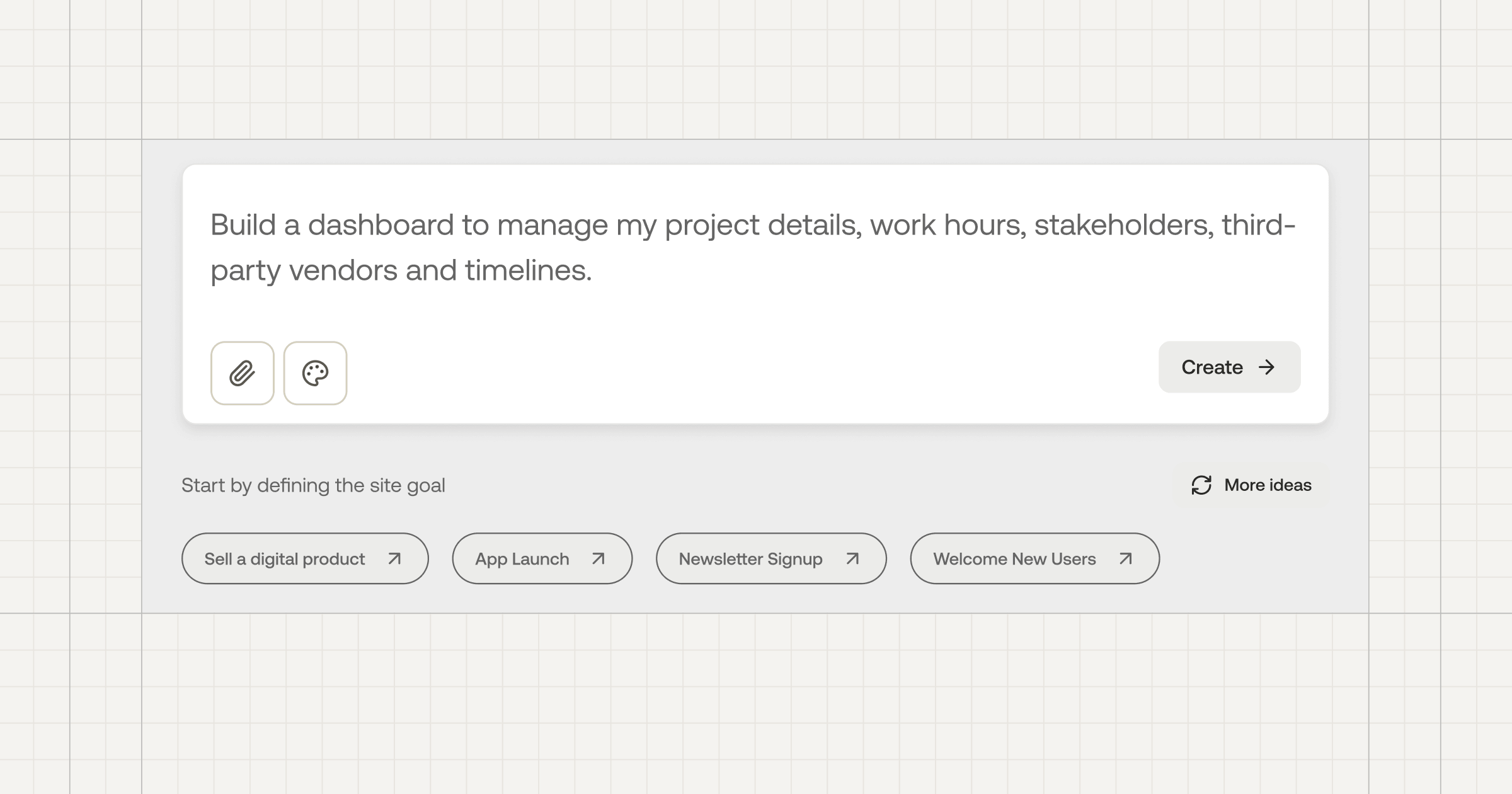
Prompt-first, vibe-coding platforms sit between the two. You describe the learning experience and the admin tooling in plain language, get a production-ready build back, and edit by hand where you want something specific. This is the path we build Sticklight for.
Why accessibility matters more in education than anywhere else
Education apps serve one of the widest ranges of users any product category touches: learners with visual, auditory, motor, or cognitive differences, learners on old devices, and learners using screen readers or keyboard-only navigation.
Many schools, universities, and corporate training programs also carry accessibility requirements as a condition of use, not a nice-to-have. An app that fails a basic accessibility check can be a non-starter for an institutional buyer, regardless of how good the content is.
An app that works for a learner using a screen reader tends to work better for every other learner too: clearer focus order, real captions, and navigation that doesn’t depend on a mouse.
Build accessibility into the interface from the first pass, not as a cleanup step before launch. Retrofitting focus states and ARIA onto a finished app is slower than shipping with them from the start.
Planning your course structure before you build
The build goes faster when the curriculum is settled first. Before you open a builder, a prompt box, or a developer brief, it helps to answer a few questions on paper.
- What’s the content hierarchy: how many courses, modules, and lessons, and in what order does each open?
- What counts as “done”: a video watched, a quiz passed, a project submitted?
- What does an instructor or admin need to see: enrollment, completion rates, quiz scores, flagged learners?
- What data actually needs to persist: progress, scores, certificates, membership status?
None of this requires a formal spec. A rough outline is enough to prompt from, and it’s the difference between a build that maps cleanly to the course and one that needs several rounds of rework to catch up.
Building an education app with Sticklight, step by step
Once the curriculum is outlined, the Sticklight build follows the same Prompt, Build, Publish flow as any other project, shaped for a learning product.
Start by prompting the learner-facing experience: describe the course structure, lesson pages, quiz flow, and progress indicators in plain language. Sticklight turns that into a working, production-ready build rather than a demo you’d have to rebuild later.
In the same project, prompt an admin view: an instructor dashboard for managing courses, tracking enrollment, and seeing where learners are stuck. Because Sticklight goes beyond single web pages into apps and dashboards, the learner experience and the admin tooling can live in one build instead of two disconnected systems.
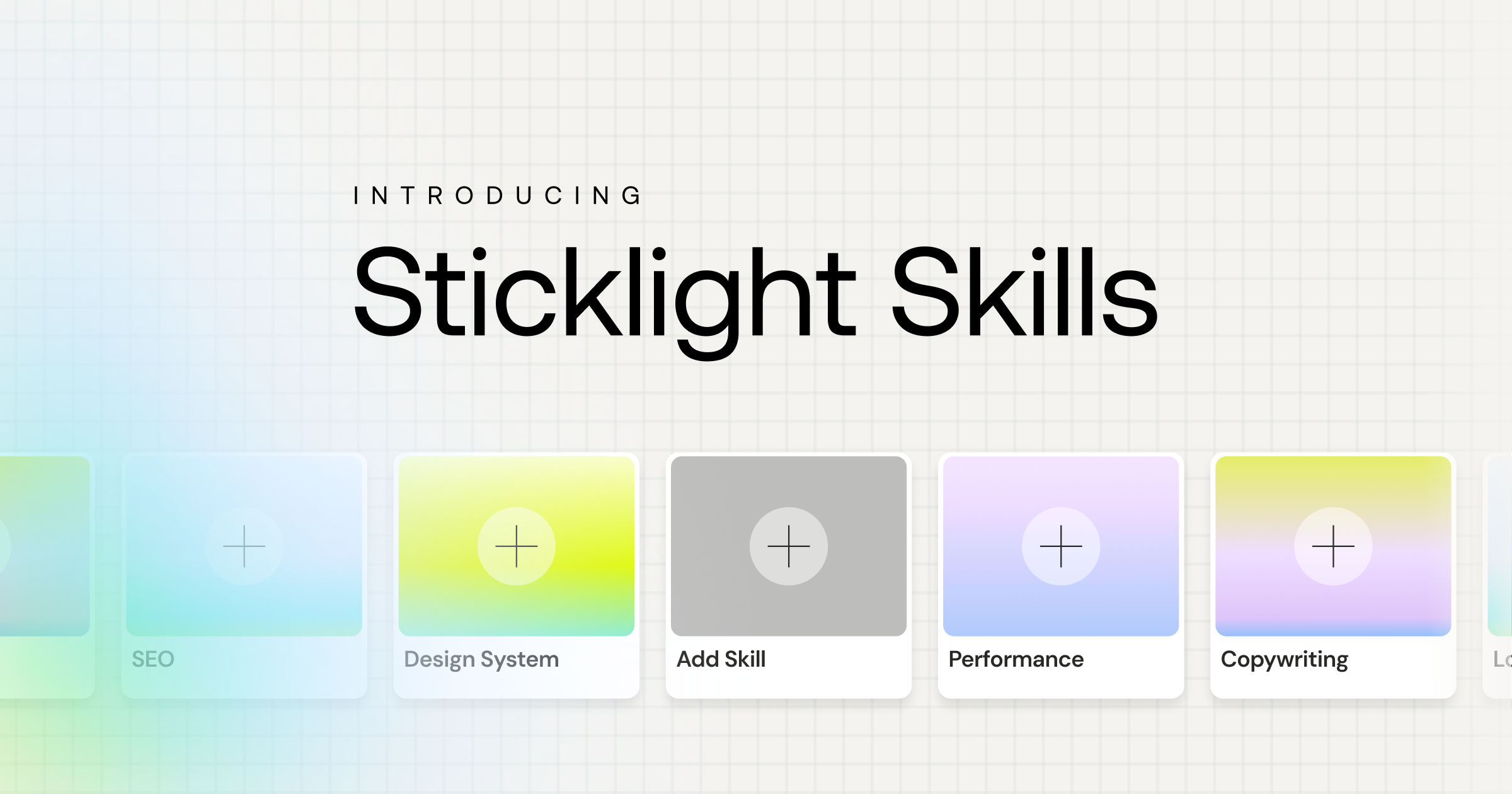
Add the Accessibility Skill during the Build phase. It ships WCAG-aligned markup, focus states, and ARIA rather than leaving it for a later audit. Add the SEO Skill alongside it for the public course pages, so meta data, schema, and on-page structure are handled as part of the build.
From there, connect learner data: progress, quiz results, and enrollment records, using Sticklight’s support for forms and databases so the app has somewhere real to store state. And if you already run courses on a WordPress LMS, you don’t have to start over. Sticklight connects to and extends an existing WordPress setup, so the course catalog can stay the source of truth while Sticklight adds the app-like layer, custom dashboard, or new learner experience on top.
Everything the prompt generates is still yours to hand-edit. AI does the first pass, and you keep control of the pixels, copy, and logic.
Testing, launching, and iterating after launch
Before launch, walk the app the way a learner would: start a course, answer a quiz wrong on purpose, close the tab, and come back to confirm progress resumed correctly. Then walk it again with only a keyboard, and once more with a screen reader.
On the admin side, confirm an instructor can see what matters: who’s enrolled, who’s stuck, and what completion looks like at a glance. A dashboard that hides those numbers will get abandoned fast.
After launch, treat the app as a living build. Skills and prompt patterns compound across projects, so the second course you build tends to move faster than the first, and feedback from real learners is a reason to prompt a refinement rather than start over.
I’ve stopped trusting any process I haven’t tried with my own hands. Reading about it is fine, but doing it is what actually sticks.
Itamar Haim
Built by the Elementor team. Powered by Claude.
Let it glow.