
Emergent vs Appsmith: AI App Generation Compared to Low-Code Internal Tools

Emergent and Appsmith take two different paths to cutting manual coding out of your workflow. Emergent generates full-stack web and mobile applications from natural-language prompts. Appsmith is an open-source low-code platform built for internal tools: admin panels, dashboards, and CRUD interfaces.
Both cut down the manual work, but they’re solving different problems for different teams. Here’s what each one actually does, what it costs, and where Sticklight fits if you want production-ready, full-stack output from a single prompt.
- Emergent generates full-stack applications, web, mobile, dashboards, e-commerce, and SaaS, from natural-language prompts. You own the generated code and can export it.
- Appsmith is an open-source low-code platform built specifically for internal applications like admin panels and CRUD interfaces, connecting to external databases and REST APIs.
- Emergent’s paid plans start at $17 per month (billed annually, 100 credits per month), with a free tier offering 10 monthly credits.
- Appsmith’s cloud Free tier covers up to 5 users at no cost, and a self-hosted Community edition is also free; paid Business plans start at $15 per user per month.
- Both platforms include Git-based version control: Emergent through GitHub integration, Appsmith through Git-based application versioning.
- Sticklight is a vibe-coding platform built by the Elementor team and powered by Claude, that turns a prompt into production-ready websites, apps, dashboards, CMS, and internal tools, and is additive to an existing WordPress and Elementor stack.
What Emergent and Appsmith are built for
Emergent bills itself as an AI platform that generates full-stack web and mobile applications from natural-language descriptions. By its own feature list, it covers web apps, mobile apps, dashboards, e-commerce, and SaaS products, and the code it produces is yours to own and export rather than locked into a proprietary runtime. It also integrates with GitHub for version control and deployment, and higher tiers add a larger context window, access to more advanced models, and custom AI agents.
Appsmith takes a different route. It’s an open-source low-code platform aimed specifically at internal applications: admin panels, dashboards, and CRUD interfaces that connect to a company’s existing data sources. Its core is open source and can be self-hosted, and it connects to external databases and REST APIs, though the specific backend architecture isn’t detailed on its own pricing page. Appsmith also uses Git-based version control for the applications you build on it.
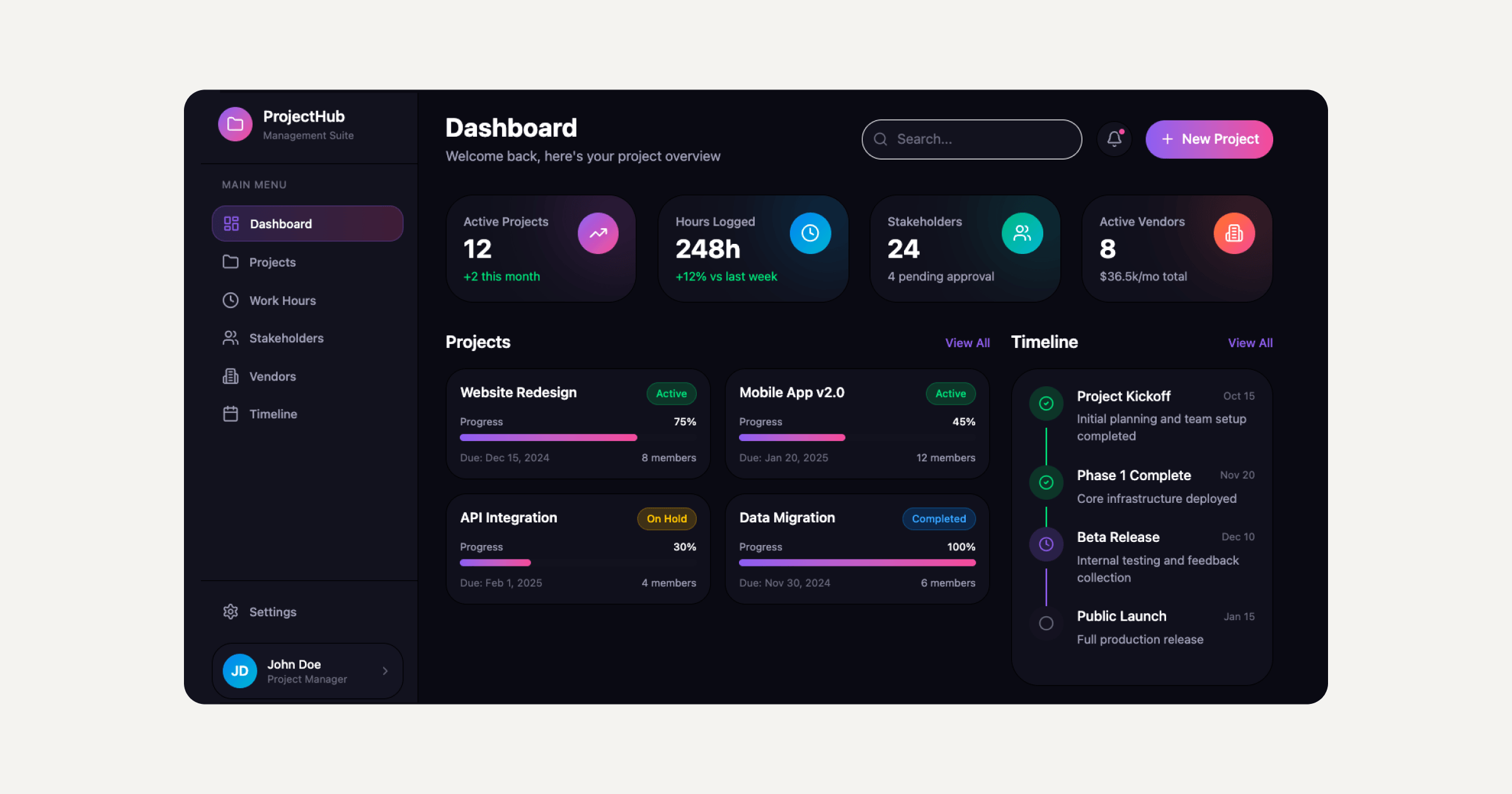
Emergent vs Appsmith at a glance
| Dimension | Emergent | Appsmith | Sticklight |
|---|---|---|---|
| What it is | AI platform that generates full-stack apps from natural-language prompts | Open-source low-code platform for internal applications | Vibe-coding platform that turns a prompt into production-ready output |
| Output | Web and mobile apps, dashboards, e-commerce, SaaS products; code is owned and exportable | Admin panels, dashboards, CRUD interfaces for internal use | Production-ready websites, apps, dashboards, CMS, and internal tools |
| Backend / data | Not specified beyond “production-ready code that you own and can modify” | Connects to external databases and REST APIs; specific architecture not detailed publicly | Additive to an existing WordPress and Elementor stack |
| Publish / hosting | GitHub integration for version control and deployment | Git-based version control; self-hosting available via the Community edition | Publish included as part of the prompt to build to publish flow |
| Best for | Teams that want AI-generated, exportable full-stack applications | Teams building internal tools on top of existing data sources | Professional creators wanting production-ready, full-stack output from one prompt |
| Entry pricing | Free tier ($0/month, 10 credits); Standard $17/month billed annually | Free ($0/month, up to 5 users, cloud); Community edition free, self-hosted | Additive to your WordPress/Elementor stack |
Pricing structures side by side
Emergent’s pricing is credit-based. The free tier includes 10 monthly credits at no cost. The Standard plan runs $17 per month when billed annually and includes 100 credits per month. The Pro plan is $167 per month billed annually, with 750 credits per month and access to custom AI agents. An Enterprise tier is available at custom pricing through direct sales, adding SSO and role-based access control.
Appsmith’s pricing is seat- and deployment-based. The cloud Free tier costs $0 per month and supports up to 5 users. A separate Community edition is open source and free to self-host. The Business tier runs $15 per user per month and supports up to 99 users, adding unlimited workspaces, unlimited Git repositories, and email and chat support. The Enterprise tier is listed at $2,500 per month for 100 users, with unlimited users beyond that baseline, custom scaling, SAML/OIDC single sign-on, SCIM provisioning, and 24/7 SLA-backed support.
Where Sticklight fits alongside Emergent and Appsmith
Emergent and Appsmith both solve real, specific problems. One generates exportable full-stack applications from a prompt, the other gives you an open-source way to build internal tools on your own data. If you want a single prompt to produce production-ready output across websites, apps, dashboards, CMS, and internal tools, and you want that output published as part of the same flow, Sticklight is worth evaluating alongside them.
Sticklight is built by the Elementor team and powered by Claude. It follows a prompt, build, publish flow, and it’s designed to be additive: it works alongside WordPress and Elementor rather than asking you to leave that ecosystem behind. AI agents are on Sticklight’s roadmap but aren’t a shipped feature today, so don’t assume that capability yet. Sticklight doesn’t publish dollar pricing here; check its site for current details.
The shift was not technical first. It was in what I let myself imagine a single person could deliver.
Itamar Haim
Frequently asked questions
What’s the main difference between Emergent and Appsmith?
Emergent generates full-stack web and mobile applications from natural-language prompts, and you own and can export the code it produces. Appsmith is an open-source low-code platform built specifically for internal applications like admin panels and CRUD interfaces connected to your existing data sources.
Is Appsmith free to use?
Yes. Appsmith offers a cloud Free tier at $0 per month for up to 5 users, plus a separate open-source Community edition that’s free to self-host. Paid Business plans start at $15 per user per month.
Does Emergent let you keep the code it generates?
Yes. By Emergent’s own description, the code it generates is yours to own and export, and it integrates with GitHub for version control and deployment.
Where does Sticklight fit if I’m comparing Emergent and Appsmith?
Sticklight is worth evaluating separately if you want one prompt to produce production-ready output across websites, apps, dashboards, CMS, and internal tools, published as part of the same flow, and additive to an existing WordPress and Elementor setup.
Which tool is better for internal admin panels?
Appsmith is purpose-built for internal applications such as admin panels and CRUD interfaces connected to external databases and REST APIs. Emergent is built more broadly for generating full-stack applications, including but not limited to internal tools, from natural-language prompts.
Built by the Elementor team. Powered by Claude.
Let it glow.