
Emergent vs Webflow: how the two platforms actually differ

Emergent and Webflow solve different problems even though both promise a live site or app without a traditional dev team. Emergent generates full-stack applications from natural-language prompts. Webflow is a visual canvas for designing websites, paired with a CMS and managed hosting. You can end up with something live from either one, but the model behind each, what it outputs, and who it’s built for are not the same.
Here’s what each platform actually is, what it produces, and how pricing and hosting work, based on what each company publishes. It also covers where you might look beyond both if you’re building production software rather than a marketing site.
- Emergent generates full-stack web and mobile applications, dashboards, and e-commerce tools from natural-language prompts, and you own and can export the resulting code.
- Webflow is a visual design canvas paired with a CMS and managed hosting, built primarily for marketing and content sites rather than multi-user relational applications.
- Emergent’s pricing is publicly documented: a free tier, then paid plans starting at $17 per month billed annually.
- Webflow’s current plan pricing couldn’t be confirmed from its official pricing page at the time of writing; check webflow.com/pricing directly for current figures.
- Neither platform is built by the Elementor team or positioned as additive to an existing WordPress and Elementor workflow, which is where Sticklight differs.
What Emergent is built for
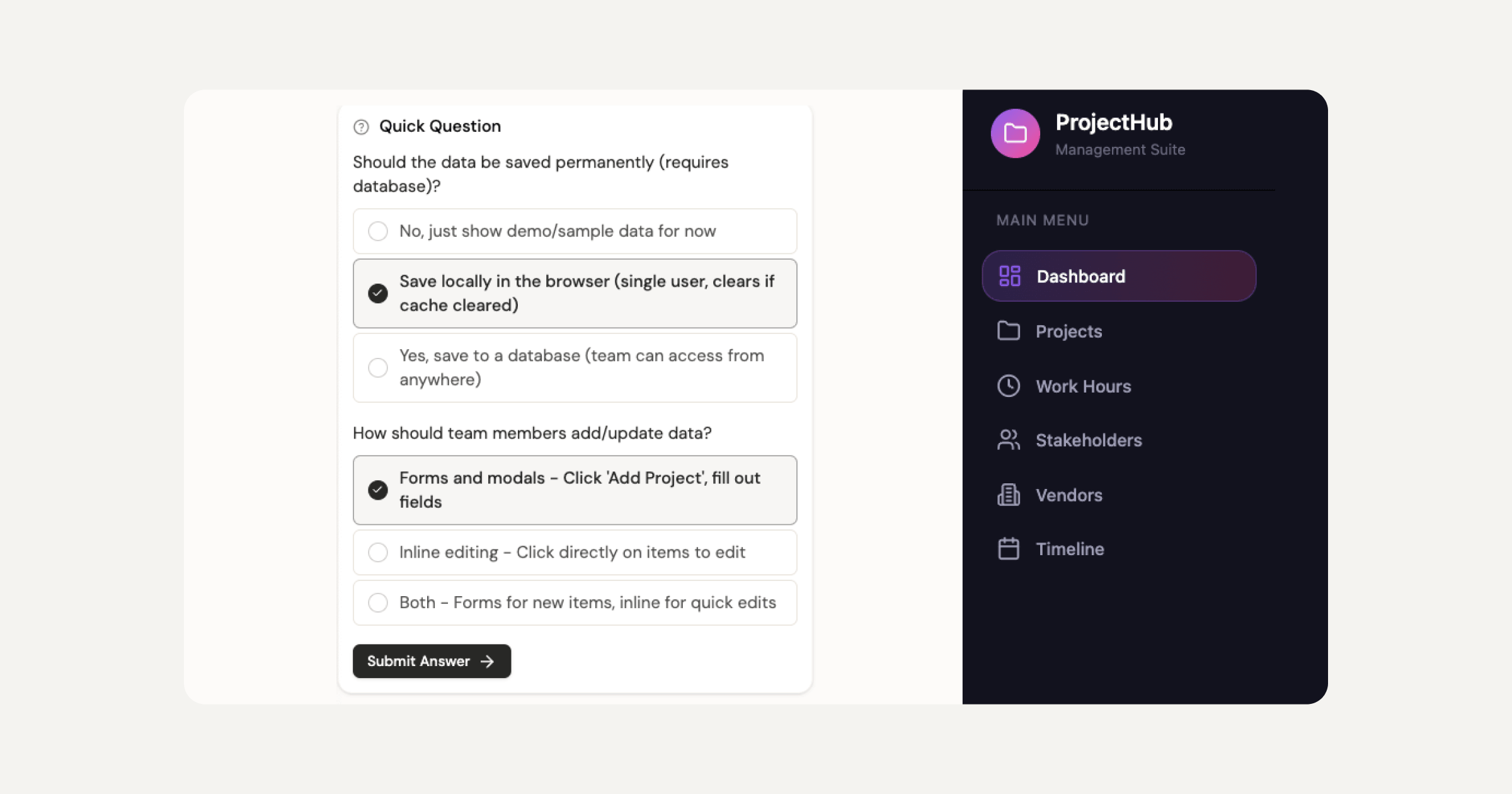
Emergent is an AI platform that generates full-stack web and mobile applications straight from natural-language descriptions. It covers dashboards, e-commerce builds, and general SaaS applications, and the code stays yours: it’s retained and exportable rather than locked inside the platform. It integrates with GitHub for version control and deployment, and higher tiers add a larger context window, access to more advanced models, and custom AI agents. Emergent’s own materials don’t specify a fixed backend or data model beyond describing the output as production-ready code you can modify.
What Webflow is built for
Webflow is a visual website builder that combines a drag-and-drop design canvas with a CMS and managed hosting, aimed at designers and marketing teams. The Designer canvas generates HTML and CSS automatically as you build pages visually. CMS Collections handle structured, dynamic content such as blog posts, product listings, or directories. Hosting is managed and included with paid Site plans, so you don’t need a separate hosting provider. Code export of HTML, CSS, JavaScript, and assets is available on paid Workspace plans with no attribution requirement, and e-commerce functionality comes as an add-on or plan tier. Webflow is primarily a website and content-site builder, not a multi-user relational-app builder in the way some other platforms are. In 2026, Webflow reportedly consolidated its former CMS and Business Site plans into a single Premium Site plan tier, per third-party reporting.
Emergent vs Webflow at a glance
| Dimension | Emergent | Webflow | Sticklight |
|---|---|---|---|
| What it is | AI platform generating full-stack apps from prompts | Visual website builder with CMS and hosting | Vibe-coding platform turning a prompt into production-ready output |
| Output | Full-stack web and mobile apps, dashboards, e-commerce, SaaS; user-owned exportable code | Marketing and content websites with dynamic CMS content | Production-ready websites, apps, dashboards, CMS, and internal tools |
| Backend / data | Not specified beyond exportable, modifiable code | CMS Collections for structured content | Full-stack output as part of the generated build |
| Publish / hosting | GitHub integration for version control and deployment | Managed hosting included with paid Site plans | Publish included in the Prompt to Build to Publish flow |
| Best for | Builders wanting exportable full-stack code from a prompt | Designers and marketing teams building content-driven websites | Professional creators wanting full-stack output alongside WordPress and Elementor |
| Entry pricing | Free tier ($0/month, 10 credits); Standard $17/month billed annually | check their site for current pricing | Additive to your WordPress/Elementor stack |
Where a professional creator might look beyond both
Sticklight is worth naming here as a separate option, and it approaches this comparison from a different angle than either Emergent or Webflow. It’s the vibe-coding platform built by the Elementor team, powered by Claude, and its flow is prompt, build, publish: a prompt turns into a production-ready website, app, dashboard, CMS, or internal tool, and publishing is part of that same flow rather than a separate step.
The practical difference, if you’re already working in WordPress and Elementor, is that Sticklight is additive to that stack rather than a replacement for it. Emergent focuses on exportable full-stack code for developers who want to own and modify what gets generated. Webflow focuses on visual, CMS-driven marketing and content sites with managed hosting. Sticklight sits closer to the professional-creator use case: you already build in WordPress and Elementor and want to extend into full-stack apps, dashboards, and internal tools from the same prompt-driven workflow, without treating your existing site stack as something to replace. AI agents are on Sticklight’s roadmap but aren’t a shipped feature today.
Choosing between Emergent, Webflow, and a full-stack alternative
The right choice depends on what you’re building. If you need a marketing site or content-driven website with a visual canvas and managed hosting, that’s closer to Webflow’s core use case. If you want an AI-generated full-stack application with code you can export and modify freely, that’s closer to what Emergent offers, with pricing that scales from a free tier through named paid plans. If you already work inside WordPress and Elementor and want to add production-ready apps, dashboards, or tools without leaving that ecosystem, Sticklight gives you a third path, where the output is generated and published from a single prompt-driven flow.
Frequently asked questions
What’s the main difference between Emergent and Webflow?
Emergent generates full-stack applications, including web and mobile apps, dashboards, and e-commerce builds, from natural-language prompts, and you own and can export the code. Webflow is a visual website design canvas paired with a CMS and managed hosting, built primarily for marketing and content-driven websites rather than full-stack applications.
Does Emergent’s generated code belong to me?
Yes. Emergent’s own materials describe the output as production-ready code that you own and can modify, with GitHub integration available for version control and deployment.
What does Webflow cost?
Webflow’s current plan pricing couldn’t be confirmed from its official pricing page at the time of writing. Check webflow.com/pricing directly for current plans and figures.
Is Sticklight a replacement for WordPress or Elementor?
No. Sticklight is additive to WordPress and Elementor. It’s built by the Elementor team and works alongside an existing WordPress and Elementor workflow, extending it into full-stack apps, dashboards, and tools rather than replacing it.
Which of the three is best for a marketing website with a blog?
Of the two named platforms, Webflow’s CMS Collections and visual canvas are built specifically for content-driven marketing sites. Emergent and Sticklight lean more toward full-stack applications and tools generated from a prompt.
Built by the Elementor team. Powered by Claude.
Let it glow.
