
Finance app development (and how to build)

Finance app development is the process of designing and building software that helps people or businesses manage money: tracking spending, sending invoices, viewing transactions, or reporting on financial activity. Done well, it pairs a clear, trustworthy interface with the right compliant integrations for anything that touches real payments or bank accounts, rather than building those rails from scratch.
Most teams run into trouble not because the idea is complicated, but because they try to build every layer themselves, including the parts that carry real regulatory weight. This guide covers what finance apps typically need, why security and privacy sit at the center of the work, and a practical path for building the interface layer, including how Sticklight fits in.
- Finance app development covers a specific set of common needs: budgeting or expense tracking, invoicing, transaction views, and reporting dashboards.
- Payments and banking connections should always run through compliant, purpose-built integrations, never a custom or simulated version.
- Security and privacy are not an add-on for a finance app. They shape the data model, the access rules, and the interface from day one.
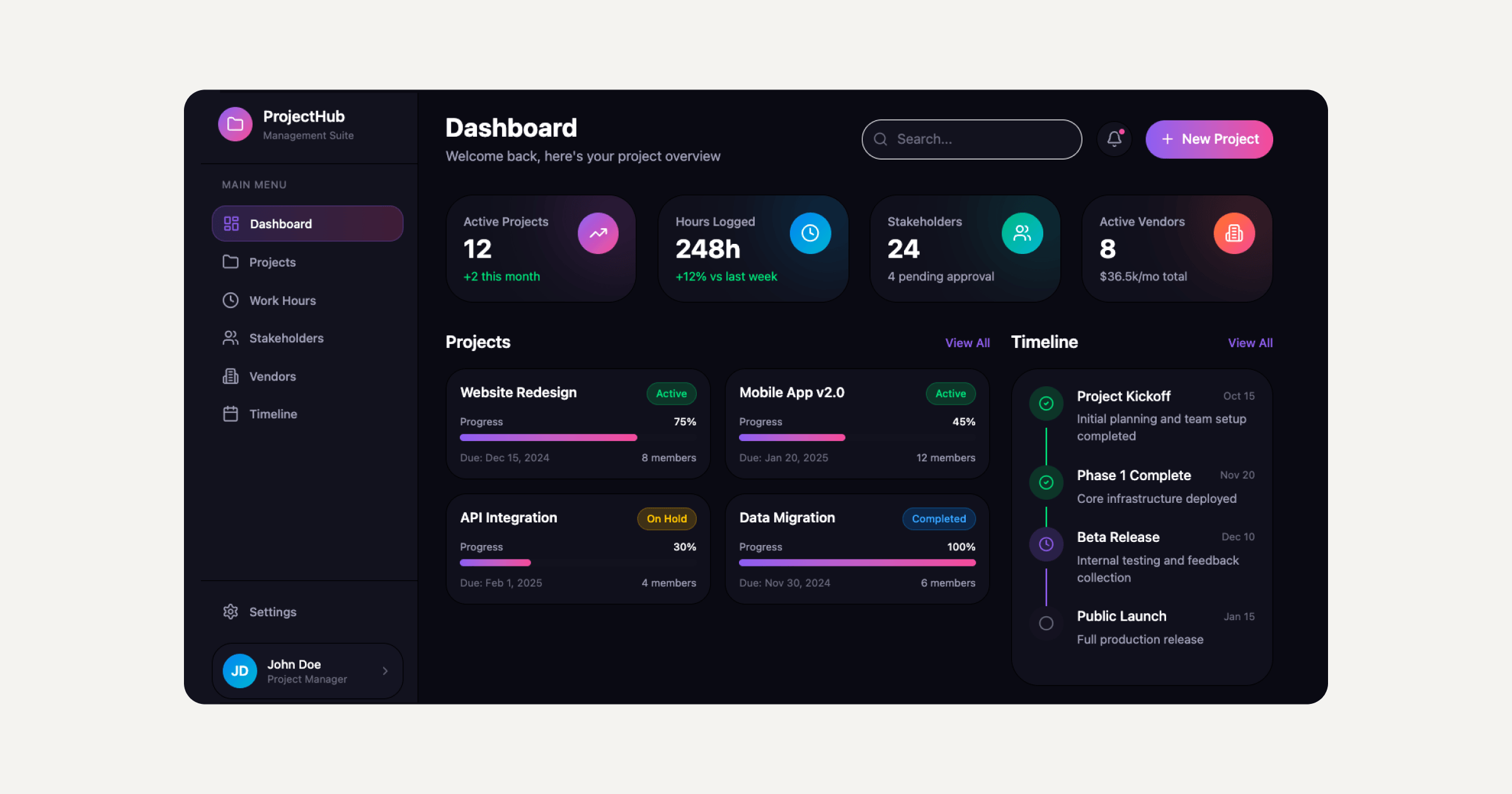
- Sticklight is well suited to the dashboards, account screens, reporting views, and admin tools that sit on top of financial data.
- You can build the interface layer by prompt, refine it by hand on the canvas, then publish it and connect it to an existing site.
- No app, however well designed, replaces a licensed provider for handling actual money movement or storing account credentials.
What finance app development actually involves
Turning money-related tasks into a working product is what finance app development comes down to: a screen where someone logs an expense, a report that totals income against outgoing costs, an invoice that goes out to a client. The logic behind those screens has to be accurate and consistent, because a miscalculated total or a mislabeled transaction erodes trust fast.
It also means being honest about scope. A budgeting tool for a household has different requirements than a business invoicing platform, and both differ from something that connects directly to a bank feed. Defining which of those you are building, before you start on screens, saves rework later.
What finance apps commonly need
Across budgeting tools, invoicing platforms, and internal finance dashboards, the same building blocks show up again and again.
- Budgeting or expense tracking. Categorized entries, running totals, and simple filters by date, category, or account.
- Invoicing. Line items, totals, client details, and a clear status for each invoice, such as draft, sent, or paid.
- Transaction views. A readable list of activity, searchable and sortable, that does not bury the one entry someone is looking for.
- Reporting dashboards. Summaries and trends built from the underlying data, aimed at answering a specific question rather than showing every number at once.
- Payments, handled through integrations. Any point where money actually moves should call out to a compliant payment or banking provider rather than being built in-house.
The first four are interface and data-presentation problems. The fifth is a compliance problem, and keeping that distinction clear is one of the most useful habits in finance app development.
Why security and privacy come first
Financial data is some of the most sensitive information a person or business has. Account balances, spending patterns, invoice amounts, and client details all reveal things people generally do not want exposed. That reality should shape decisions from the first screen, not arrive as an afterthought.
In practice, this means limiting data access to what each role actually needs, avoiding storage of sensitive details the app does not strictly require, and treating every third-party connection, from analytics to email, as something that touches financial context. None of this is exotic. It is closer to good hygiene than advanced engineering: least-privilege access, careful data retention, and a habit of asking what a given screen actually needs to show.
Payments and banking connections belong in compliant integrations
This is the one point worth repeating on its own. Real payment processing and banking connections come with legal and regulatory requirements that exist for good reason: they protect people’s money and their financial identity. Those requirements are the job of providers who specialize in exactly that, not something to approximate inside a custom build.
A finance app should never simulate a payment flow, fake a bank connection, or store raw card or account credentials directly. The right pattern is to connect to an established, compliant payment or banking integration and let that provider handle the regulated parts, while your app focuses on showing the data clearly and keeping records organized.
If a screen in your finance app touches real money, ask whether a compliant integration is doing that work. If the answer is no, that is the gap to close first.
Planning a finance app before you build
A short planning pass prevents most of the expensive mistakes. Before building anything, write down the actual entities in the system (accounts, transactions, invoices, categories), the roles who will touch them (an owner, a bookkeeper, a client viewing their own invoice), and the one or two reports each role actually needs.
It also helps to separate what you build directly from what you hand off to an integration. Dashboards, account screens, reporting views, and admin tools are yours to design. Payment capture, bank account linking, and identity verification belong to a compliant provider you connect to.
A Sticklight build path for the interface layer
For this interface layer, Sticklight is a strong fit. Built by the Elementor team as a vibe-coding platform for professional web creators and powered by Claude, it turns a plain-language prompt into a production-ready starting point for the parts of a finance app that are mainly about presenting data clearly: dashboards, account and reporting screens, and admin tools. A practical path looks like this:
- Start with a prompt that describes the screen you need: an expense dashboard with category totals, a client-facing invoice view, or an admin panel for managing user accounts.
- Add relevant Skills during the Build phase. Accessibility ships WCAG-compliant markup and focus states, useful when people are reading numbers under time pressure. Design System keeps every screen consistent as the app grows. Performance matters for dashboards loading transaction history.
- Refine the result on the canvas. Sticklight keeps full control in the creator’s hands after the first prompt, so layouts, labels, and data groupings can be adjusted by hand or with direct code edits until they match how your users think about their money.
- Connect the pieces that need to reach a real payment or banking provider through Sticklight’s ready-made tools and integrations, or Sticklight MCP for other tools already in your stack, rather than building that logic from scratch.
Where admin tools and account management fit
Every finance app needs a back office: a place to manage users, review flagged transactions, adjust categories, or reissue an invoice. These admin tools rarely get the design attention the main app gets, which is a mistake, since the people using them are often making decisions that affect real accounts.
Building admin screens with the same prompt-then-refine approach used for the main dashboards keeps them consistent rather than treating them as an afterthought. A clear table of accounts, a simple way to filter by status, and a reporting view for the team running the app are usually enough. The goal is clarity for the person doing the work, not extra features for their own sake.
From canvas to published: connecting to an existing site
Once the dashboards, reporting screens, and admin tools are in shape, publishing is the next step. Sticklight’s publish phase includes SEO built in, a security scan on every build, custom domain connection, and app hosting, which covers what a finance app’s interface layer needs to go live.
If you already run a site on WordPress or Elementor, that is not something to leave behind. Sticklight plugs into your current WordPress or Elementor setup and builds alongside it, so a new finance dashboard or client portal can sit next to the site you already have, rather than replacing it.
Tutorials show you someone else’s finished path. Building your own project shows you exactly where your assumptions break.
Itamar Haim
Built by the Elementor team. Powered by Claude.
Let it glow.
