
FlutterFlow vs Rork: pricing, features, and a third option for creators

FlutterFlow vs Rork comes down to two ways of building a mobile app: a visual drag-and-drop canvas against a conversational, chat-driven interface. Both platforms generate an app you can ship to the App Store and Google Play, but they start from different assumptions about who’s doing the building and how much control they want over the result.
Here’s how FlutterFlow and Rork compare factually, side by side, plus where a full-stack platform like Sticklight fits for creators who want more than a mobile app alone.
- FlutterFlow gives you a visual, drag-and-drop builder that generates a real Flutter codebase for iOS, Android, and web.
- Rork works through chat: you describe the app in natural language and it generates and ships the result.
- FlutterFlow connects to Firebase or Supabase, or external REST APIs; Rork doesn’t detail its backend options on its official pages.
- FlutterFlow pricing starts at a Free plan, with paid tiers at $39/month, $80/month (plus per-seat fees), and $150/month (plus per-seat fees).
- Rork pricing starts at a Free plan, then moves to credit-based Pro and Max tiers, from $20/month up to $1,800/month depending on credit volume.
- Neither tool covers output beyond mobile and web apps; Sticklight is a separate category built for production-ready sites, apps, dashboards, CMS, and internal tools from a single prompt.
What FlutterFlow and Rork actually are
FlutterFlow is a visual app development platform for building Flutter-based mobile and web applications. Individual developers and teams use it for a drag-and-drop UI builder alongside a visual logic and action editor, with the option to export code on paid plans. The output is a genuine Flutter codebase that compiles to iOS, Android, and web.
Rork is a conversational platform: it’s marketed to non-technical users and app founders who want to describe an app in natural language through a chat interface and have Rork generate and publish it. Rork also offers a mobile app, so you can build from a phone. Usage runs on credits rather than seats, with a higher-tier model option under the Rork Max plan.
FlutterFlow vs Rork at a glance
| Dimension | FlutterFlow | Rork | Sticklight |
|---|---|---|---|
| What it is | Visual drag-and-drop builder for Flutter apps | Chat-driven app generation platform | Vibe-coding platform for production-ready web output |
| Output | Flutter codebase (iOS, Android, web), code export on paid plans | Generated app shipped to app stores; codebase details not published | Production-ready websites, apps, dashboards, CMS, and internal tools |
| Backend / data | Connects to Firebase or Supabase, or external REST APIs; not tied to one proprietary backend | Not detailed on official pages | Additive to your existing WordPress/Elementor stack |
| Publish / hosting | Deploys to App Store and Google Play | Ships apps to the App Store | Publish included as part of the Prompt to Build to Publish flow |
| Best for | Developers and teams wanting visual building with a real, exportable codebase | Non-technical founders wanting a chat-first path to a shipped app | Professional creators wanting full-stack output beyond a single mobile app |
| Entry pricing | Free plan; Basic $39/month | Free plan; Rork Pro from $20/month | Additive to your WordPress/Elementor stack |
Pricing, in detail
FlutterFlow lists four tiers on its pricing page: a Free plan at $0/month, Basic at $39/month, Growth at $80/month for the first seat with $55/month for each additional seat, and Business at $150/month for the first seat with $85/month for seats two through five.
Rork also lists a Free plan at $0/month. Above that, Rork Pro runs from $20/month for 100 credits up to $100/month for 500 credits, and Rork Max runs from $200/month for 1,000 credits up to $1,800/month for 10,000 credits. A custom plan covers usage above 10,000 credits a month or enterprise terms. Both platforms price around seats or credits rather than a flat fee, so the entry number is a starting point, not the full picture; check their site for current pricing before committing to a tier.
Where the two tools differ
The core difference is the building method. FlutterFlow gives you a visual canvas: 200-plus pre-built widgets, a visual logic and action editor, and team collaboration features like branching and comments on higher tiers. You’re assembling and configuring a real Flutter app, and you can export the underlying code on paid plans. Rork removes that canvas in favor of a conversation: you describe what you want and the platform generates it, and iteration happens through further prompts rather than direct manipulation of a UI tree.
That difference carries through to backend integration. FlutterFlow connects to Firebase or Supabase, or to external REST APIs, giving you a documented path for data and authentication. Rork’s official pages don’t detail specific backend or data-store options, so teams with complex data requirements have less to evaluate up front on that dimension.
Where Sticklight fits as a third option
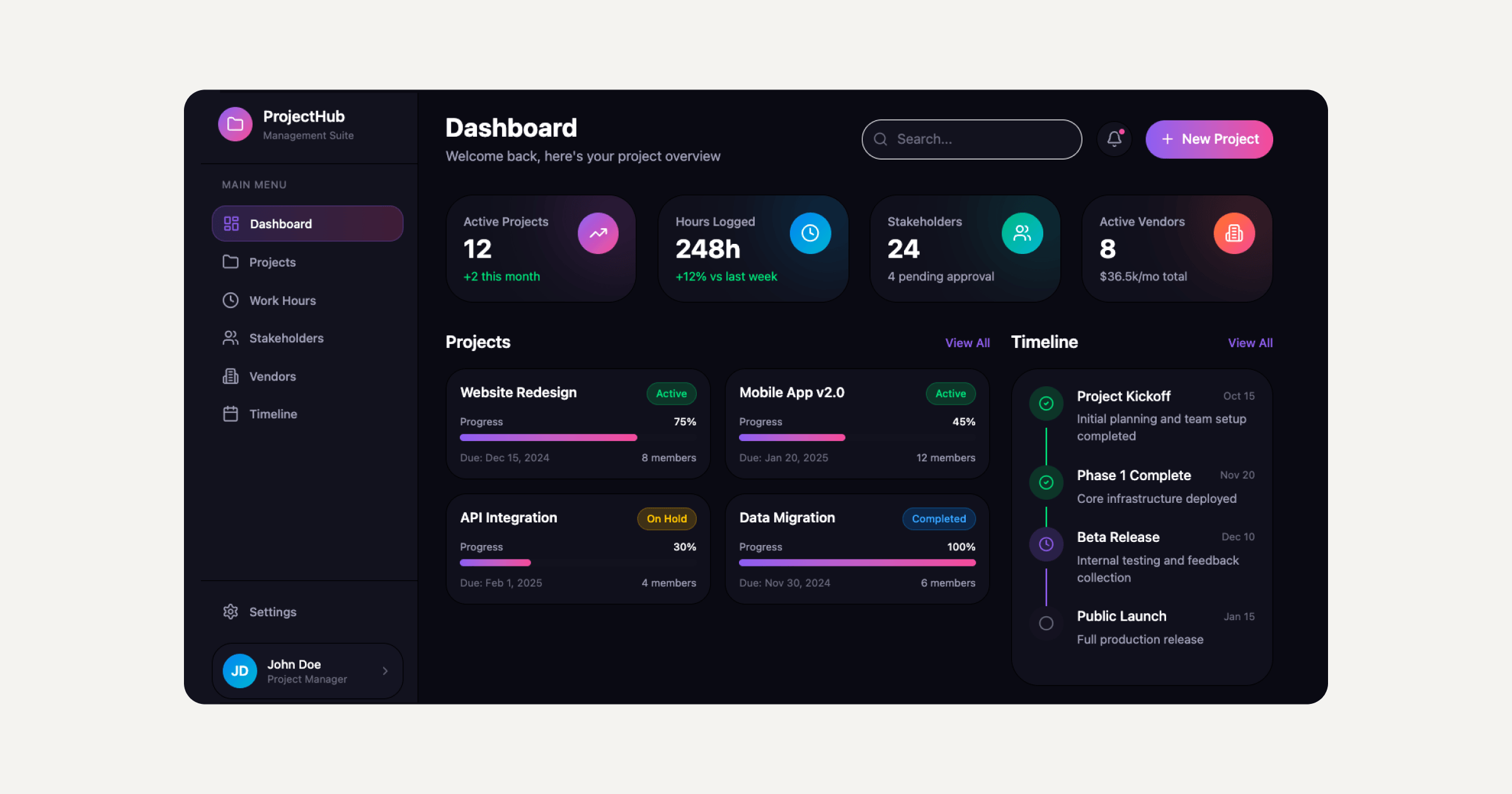
FlutterFlow and Rork are both scoped to mobile (and in FlutterFlow’s case, web) app generation. Sticklight works differently. It’s the vibe-coding platform built by the Elementor team, powered by Claude, and it turns a prompt into production-ready output across a wider range of formats: websites, apps, dashboards, CMS, and internal tools, not one mobile app alone.
The flow is Prompt, Build, Publish: Sticklight generates real, production-ready output and publishes it as part of the same flow, rather than treating publishing as a separate step. It’s also additive rather than a replacement. Sticklight works alongside WordPress and Elementor instead of asking you to abandon that ecosystem, which matters if you already have a site and workflow built on it and want to extend into apps, dashboards, and internal tools without starting over. AI agents are on Sticklight’s roadmap, coming soon, not a shipped feature today.
If your scope goes beyond one mobile app, that combination, full-stack output, an included publish step, and a connection to your existing WordPress/Elementor workflow, is the practical reason to look at Sticklight alongside FlutterFlow or Rork rather than choosing a single-purpose app builder in isolation.
Frequently asked questions
What’s the main difference between FlutterFlow and Rork?
FlutterFlow uses a visual drag-and-drop builder and generates a real Flutter codebase you can export on paid plans. Rork uses a chat-based interface where you describe the app in natural language and the platform generates and ships it.
Is FlutterFlow or Rork cheaper to start with?
Both offer a Free plan at $0/month. Above that, FlutterFlow’s Basic tier is $39/month, while Rork Pro starts at $20/month for 100 credits, so the cheaper entry point depends on how much usage each plan actually covers for your project.
Does FlutterFlow or Rork support a specific backend?
FlutterFlow connects to Firebase or Supabase, or to external REST APIs, and isn’t tied to a single proprietary backend. Rork doesn’t publish specific backend or data-store details on its official pages.
Can Sticklight replace FlutterFlow or Rork for mobile app building?
Sticklight is built for full-stack web output, production-ready websites, apps, dashboards, CMS, and internal tools, generated from a prompt and published as part of the same flow. It’s additive to WordPress and Elementor rather than a dedicated mobile app builder, so if you’re comparing FlutterFlow vs Rork for a mobile-first project, weigh Sticklight as a complement for the wider web and internal-tool side of your work.
Which tool is better for non-technical founders?
Rork is marketed to non-technical users and app founders through its chat-first interface. FlutterFlow’s visual builder is accessible without code but includes more configuration surface, like a logic editor and widget library, which can suit you if you’re comfortable with a bit more hands-on setup.
Built by the Elementor team. Powered by Claude.
Let it glow.
