How long does it take to build an app?

How long it takes to build an app depends on two things: the path you build it on, and how complex the product needs to be. A traditional agency or in-house team typically works in months, from discovery through launch. A no-code platform can get a working version live in weeks. An AI app builder like Sticklight can produce a working first version in hours to a few days, because the prompt does the heavy lifting that used to eat the first weeks of any build.
None of those numbers is the whole answer, though. A fast first draft does not mean the finished, production-ready app is fast too. Founders and agencies who plan around the first-draft number alone get surprised later, when integrations, real data, and revisions add weeks back onto the calendar. This guide breaks the timeline down honestly, by path and by complexity, so you can plan around ranges and factors instead of one number that will not hold up.
- Traditional agency or developer builds run in months. No-code platforms typically run in weeks. AI app builders can produce a working first version in hours to a few days.
- Complexity matters as much as path: a simple internal tool moves fast, a full web app takes longer, and a marketplace with two-sided logic takes longer still.
- The real drivers of timeline are scope, integrations, data structure, revision cycles, and testing, not the tool you pick.
- A fast first draft is real with Sticklight, but thoughtful refinement, testing, and connecting real data still take genuine time.
- Agencies and founders who scope tightly and plan integrations early protect their timeline far more than any single tool choice does.
The three paths to building an app, and what each one costs in time
Every app gets built on one of three paths, and each one trades speed for a different kind of control.
Traditional development, through an agency or an in-house team, runs on months because it front-loads discovery, architecture, and design before a line of working product exists. That process produces thorough, custom results, but the timeline reflects every meeting along the way.
No-code platforms compress a lot of that with pre-built components and visual logic, so a working version can land in weeks instead of months. The tradeoff is usually flexibility, since you are building inside someone else’s blocks.
An AI app builder changes the starting point. With Sticklight, you describe what you want to build in plain language, and the platform generates a production-ready first version, not a demo, in hours to a few days. From there you move through Build and Publish, adding Skills, editing by hand, and testing before the app is ready for real users. The first draft is fast. Getting from draft to dependable product is where the remaining time goes.
How long to build an app, by complexity
Asking how long to build an app without naming the type of app is like asking how long a drive takes without naming the destination. Complexity is the single biggest variable, more so than the platform or team you choose.
A simple internal tool
Think of a form that writes to a database, a lightweight dashboard for one team, or an internal request tracker. These have a narrow user base and few integrations. They move fastest on any path, and with an AI app builder a working version can be ready to test internally within days.
A full web app
A customer-facing web app, a booking system, or a member portal usually involves user accounts, several connected screens, and at least one external integration such as payments or email. This sits in the middle of the range. The first version can still come together quickly, but expect real weeks of refinement before a public launch.
A marketplace or two-sided platform
Marketplaces add matching logic, two distinct user roles, trust and payment flows, and usually a moderation layer. This is the longest category on any path, because the complexity sits in the rules connecting buyers and sellers, not just the interface. Even a fast first draft here needs the most careful testing before launch.
What actually drives your timeline
Once you get past path and complexity, five factors decide whether a build stays on schedule or slips.
- Scope: how many screens, roles, and features are actually in the first release, versus pushed to a later version.
- Integrations: every external service you connect, payments, email, a CRM, adds its own setup and testing time.
- Data: whether you are starting from a clean structure or migrating existing records.
- Revisions: how many rounds of feedback the app needs before stakeholders sign off.
- Testing: functional testing, security checks, and real users trying to break things.
Agencies feel this most on client work, where scope creep and slow feedback are the two most common reasons a fast first draft turns into a slow launch. Founders feel it when a feature they assumed was minor turns out to depend on data they have not organized yet.
Why the first draft is fast, and thoughtful refinement still takes real time
Sticklight is built by the Elementor team and powered by Claude. It takes professional web creators beyond websites, into full-stack creators who build apps, dashboards, and more from the same prompt-first flow, and its design compresses the part of app building that used to take longest: getting from nothing to a working, production-ready first version. The Prompt, Build, and Publish flow means AI does the initial heavy lifting, and you keep full control of every pixel from there.
That control matters, because a fast first draft is not the same as a finished product. Once the first version exists, you are editing copy, adjusting layout, and wiring up the data your app needs. Sticklight’s Skills system helps here: Skills are packaged expertise, accessibility, SEO, performance, design system, copywriting, localization, micro-interactions, onboarding, and 3D web experience, added to a build with one click instead of built from scratch. Skills compress the refinement phase. They do not eliminate it.
Agents, a roadmap feature for more autonomous building, are coming soon and not part of the current workflow. Today, the honest picture is a fast first draft, then real, hands-on time spent getting the details right.
A realistic path from prompt to published app
Most builds on Sticklight follow a similar shape, though the exact time on each stage varies by complexity.
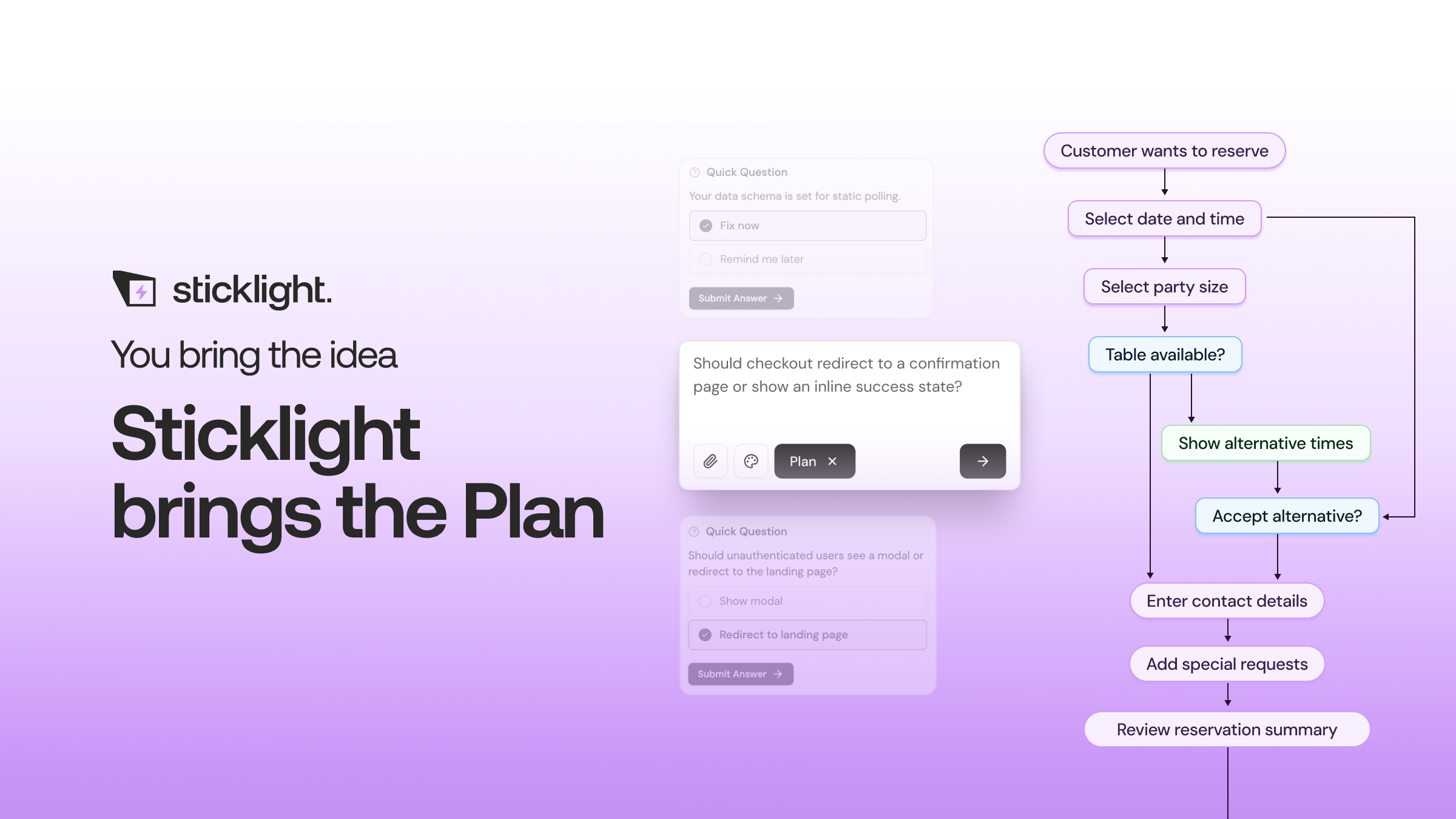
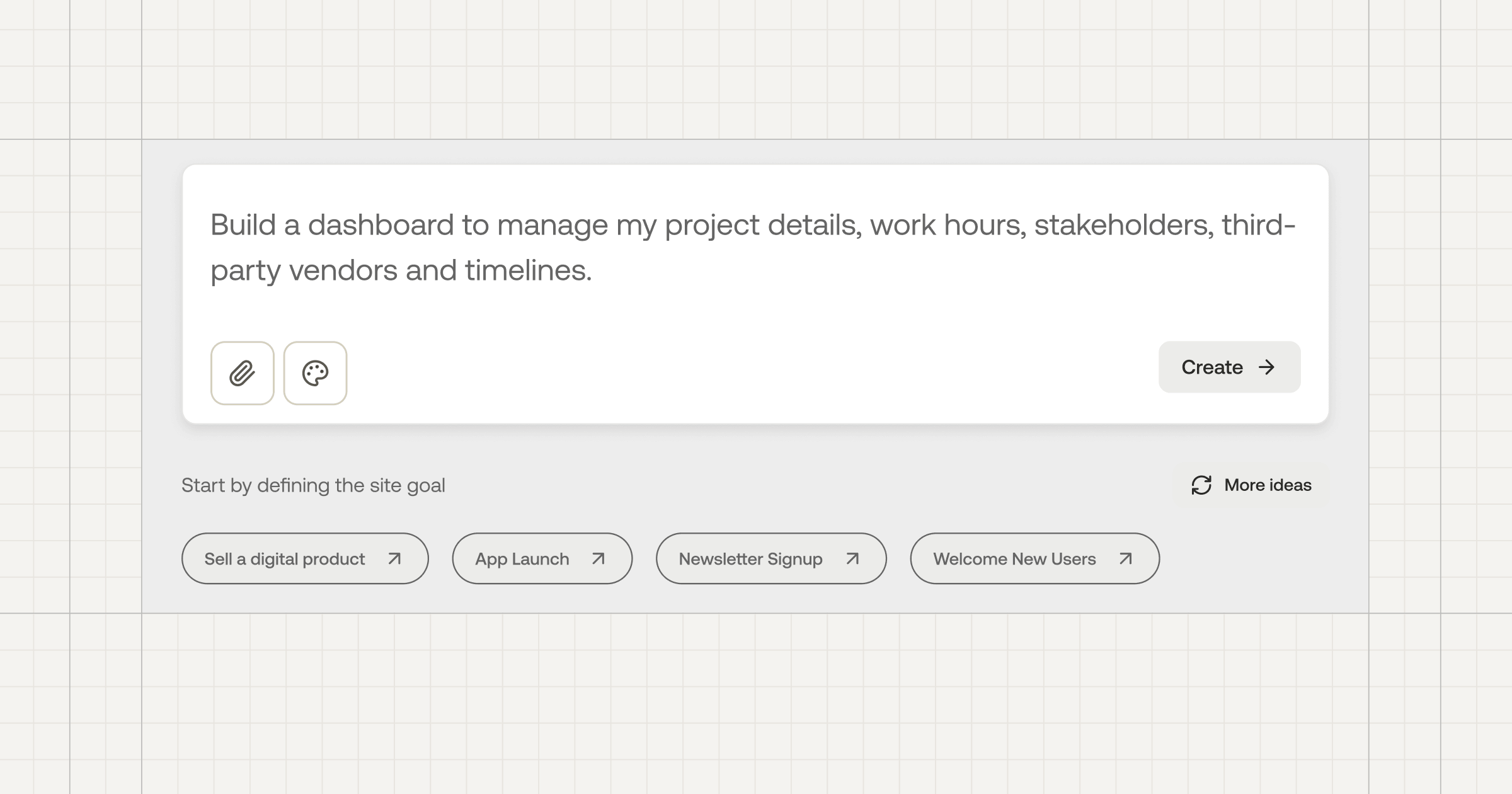
- Prompt. You describe the app in plain language, through the main prompt box, Plan Mode for complex projects, or by remixing a template. This sets the shape of your app.
- Build. Sticklight generates a working, production-ready first version. From there you add Skills for the disciplines your app needs, edit manually, and adjust code directly on the canvas.
- Refine. The stage founders and agencies most often underestimate. Real data goes in, integrations get connected, and stakeholders review and request changes.
- Publish. Built-in SEO, a security scan on every build, custom domain connection, and app hosting close out the process.
An existing WordPress or Elementor site does not slow this down. Sticklight connects to and extends what you already have, so a team with an established site can bring an app online alongside it.
How agencies and founders can protect their timeline
A few habits consistently keep builds on schedule, regardless of which path or platform you use.
- Write down the actual first-release scope before you start, and keep every “nice to have” out of it.
- Identify every integration up front. Payments, email, and third-party APIs are the most common source of late surprises.
- Get your data into a clean, known structure before you build around it.
- Set the number of revision rounds with stakeholders ahead of time, so feedback has a boundary.
- Budget real time for testing, even when the first draft feels finished.
Agencies running client work benefit from treating the fast first draft as a discovery tool, giving clients something concrete to react to early. Founders benefit from resisting the urge to add scope just because the first version came together quickly.
Most outages trace back to a decision nobody wrote down, not to a piece of code nobody understood, which is why plain documentation prevents more incidents than clever engineering does.
Itamar Haim
Built by the Elementor team. Powered by Claude.
Let it glow.