How to Build a Mobile App in 2026

The fastest way to build a mobile app in 2026 is to validate a real problem first, then match your build method, native code, a cross-platform framework, or an AI-assisted no-code tool, to your timeline, budget, and technical skill. From there you design around the shortest useful user flow, build a working version, test it with real people, and publish to the App Store and Google Play before you start iterating on real usage data.
Mobile app development has opened up considerably. AI-powered builders now turn a plain-language description into a working app in a matter of days, so the path from idea to install no longer requires years of coding experience. This article walks through every stage of how to build a mobile app, from sharpening your idea to launching and improving it, so you can move forward with a clear plan no matter which build approach you choose.
Validate your idea and define the core feature
Before writing any code, get specific about the problem you’re solving and who has it. Talk to five or ten people who match your target user and describe the app in one sentence. If they can’t immediately tell you why they’d use it, the idea needs sharpening, not a longer feature list.
Pick the single feature your app must do well, and push everything else into a later version. A habit tracker doesn’t need social sharing on day one. A booking app doesn’t need loyalty points yet. A narrow first scope keeps your build achievable and your early testing focused on what actually matters to users.
Choose your build approach
Native development, Swift for iOS and Kotlin for Android, gives you the best performance and full access to device hardware, but it means learning a language or hiring developers and maintaining two separate codebases. It suits apps with heavy graphics, offline processing, or deep camera and sensor integration.
Cross-platform frameworks like React Native and Flutter let you write one codebase and ship to both stores, trading a bit of native polish for speed. AI-assisted, no-code tools go further: describe the app you want in plain language and get a working product back, which is ideal for testing a concept before you commit real engineering budget.
Design the user experience
Sketch your core screens before building anything, and test the navigation with real users, even informally. Map the shortest path from opening the app to completing its main action, then cut every unnecessary tap along the way. People decide within seconds whether an app is worth their time.
Keep your design consistent with platform conventions. iOS and Android users expect certain gestures, icons, and layouts, and fighting those expectations makes even a well-built app feel unfamiliar. Borrow patterns from apps people already use daily rather than inventing new interaction models from scratch.
Build, test, and gather feedback
Build a working version of your core feature first, and resist the urge to build every screen before testing anything. Put it in front of real users early, watch them use it without guiding them, and note where they hesitate or get stuck. That friction tells you more than any survey.
Test on real devices, not just simulators, since performance, screen size, and network conditions vary widely in practice. Track crashes, load times, and completion rates for your core action. Fix what blocks people from finishing that action before you spend time polishing anything else.
Launch to app stores and iterate
Both Apple’s App Store and Google Play review submissions against a set of requirements, so prepare these before you submit to avoid rejection delays:
- A clear app icon and a full set of screenshots
- An accurate description and appropriate age rating
- A privacy policy covering any data you collect
- Working links for support and account deletion, if applicable
After launch, treat your first version as a starting point, not a finish line. Watch reviews, usage data, and support requests for the first few weeks, then ship small updates that address the biggest friction points first. Apps that improve steadily after launch tend to outlast ones that only got attention before it.
Where Sticklight fits
Sticklight turns a plain description into a production-ready website, app, dashboard, CMS, or tool, so you can go from idea to working product without assembling a team first. Whether you’re prototyping the mobile app you just planned or building the backend, admin panel, or marketing site around it, Sticklight lets you build like a full-stack creator even if coding has never been your main skill.
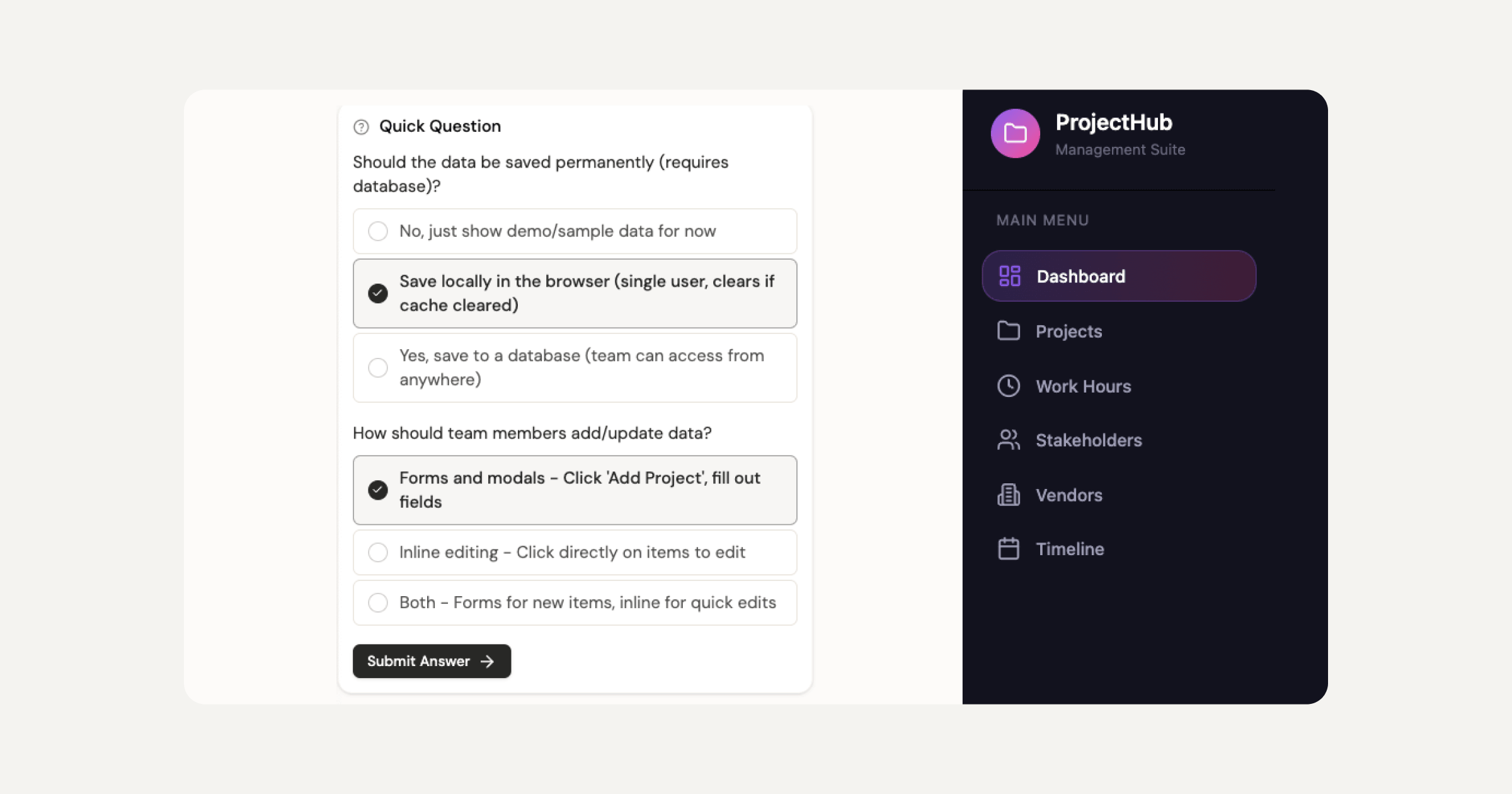
You don’t have to choose between Sticklight and what you already have. It fits neatly alongside an existing WordPress or Elementor site, handling the parts that need custom logic or a native-feeling interface while your current site keeps doing what it already does well. Add capability where you need it, on your own timeline.
Frequently asked questions
How do I build a mobile app?
Validate your idea, define the core features, choose a build approach such as native, cross-platform, or no-code, design the interface, build and test it, then publish to the app stores and improve based on feedback.
How much does it cost to build a mobile app?
It ranges widely based on features, platforms, and approach, from low cost with no-code tools to more for a custom native build. Budget for design, development, store fees, and maintenance.
Do I need to code to build a mobile app?
Not necessarily. No-code and AI build tools can create working apps, while complex features and performance-critical apps may still benefit from developer help.
How long does it take to build a mobile app?
A simple app can take a few weeks, while a complex one can take months. Tight scoping and modern tools shorten the timeline.
Should I build a native app or a web app?
Native apps offer the deepest device features and app store presence, while web apps are faster to ship and reach any browser. Many teams start with a web app or a cross-platform build.
Built by the Elementor team. Powered by Claude.
Let it glow.