How to build a SaaS in 8 steps

If you’re wondering how to build a SaaS product without assembling a full engineering team first, the honest answer is that it comes down to a sequence of deliberate decisions, not a single leap. This guide breaks the process into eight practical steps, from defining your idea to publishing a live product, using Sticklight, the vibe-coding platform that turns professional web creators into full-stack creators, built by the Elementor team and powered by Claude.
We wrote this for founders validating a first version, developers who want the scaffolding done fast so they can focus on the parts that need real engineering judgment, and SaaS marketers who need a working product to test positioning against. Each step below covers what to decide, what to prompt, and what to check before moving on.
- A SaaS starts with one clear problem and one named user, not a list of features.
- Your data model, the objects and relationships behind the product, deserves attention early, before you prompt the interface.
- Sticklight builds the app and a working dashboard from a prompt, then hands you full control to edit every pixel or the underlying code.
- Skills add packaged expertise, such as SEO, performance, and design system best practices, to your build with one click.
- A subscription model can be planned around tiers and features long before a single price is set.
- Publishing triggers a security scan and opens the door to iteration, not the end of the work.
Step 1: How to build a SaaS idea worth pursuing
Every SaaS we’ve seen built well starts with a sentence, not a spec. Write down who the product is for and what it replaces: “[target user] uses [product] to [outcome], instead of [status quo].” A booking tool for boutique fitness studios that replaces a shared spreadsheet is specific enough to prompt against. “A tool for small businesses” is not.
This step matters because it becomes the backbone of your first prompt in Sticklight. The clearer the sentence, the less back and forth you need once you start building. Founders should test the sentence against a real conversation with a potential user. Developers and marketers on the same team should agree on it together before anyone opens a prompt box, so the product and the pitch say the same thing.
- Who exactly is the user, by role or context, not by demographic alone?
- What do they do today instead of using your product?
- What’s the one moment where your product proves its worth to them?
Step 2: Pick one core feature and its data model
Resist the urge to plan every feature at once. Pick the one feature that makes the product worth using on day one, and work out the data model behind it before you prompt anything. For a booking tool, that means naming the objects, such as studios, classes, bookings, and customers, and describing how they relate to each other.
Sticklight builds apps, dashboards, CMS, booking systems, forms, and database-backed tools from the same prompt-first flow, so the platform isn’t the limiting factor here. Your clarity is. A data model written in plain language, even a short list of objects and fields, gives the build phase something concrete to work from and gets you closer to what you actually needed on the first pass.
Step 3: Plan accounts and authentication
Decide how people sign up and sign in before you build anything that depends on knowing who a user is. Most SaaS products need, at minimum, a sign-up flow, a sign-in flow, and a clear sense of who owns what data. If your product has more than one type of user, such as an admin and a team member, decide on those roles now rather than retrofitting them once the dashboard already exists.
This step is easy to skip because it feels like plumbing rather than product. It isn’t. Every dashboard, every piece of user-specific data, and every subscription tier you plan in step six depends on accounts being solid first.
Step 4: Prompt the app plus a user dashboard
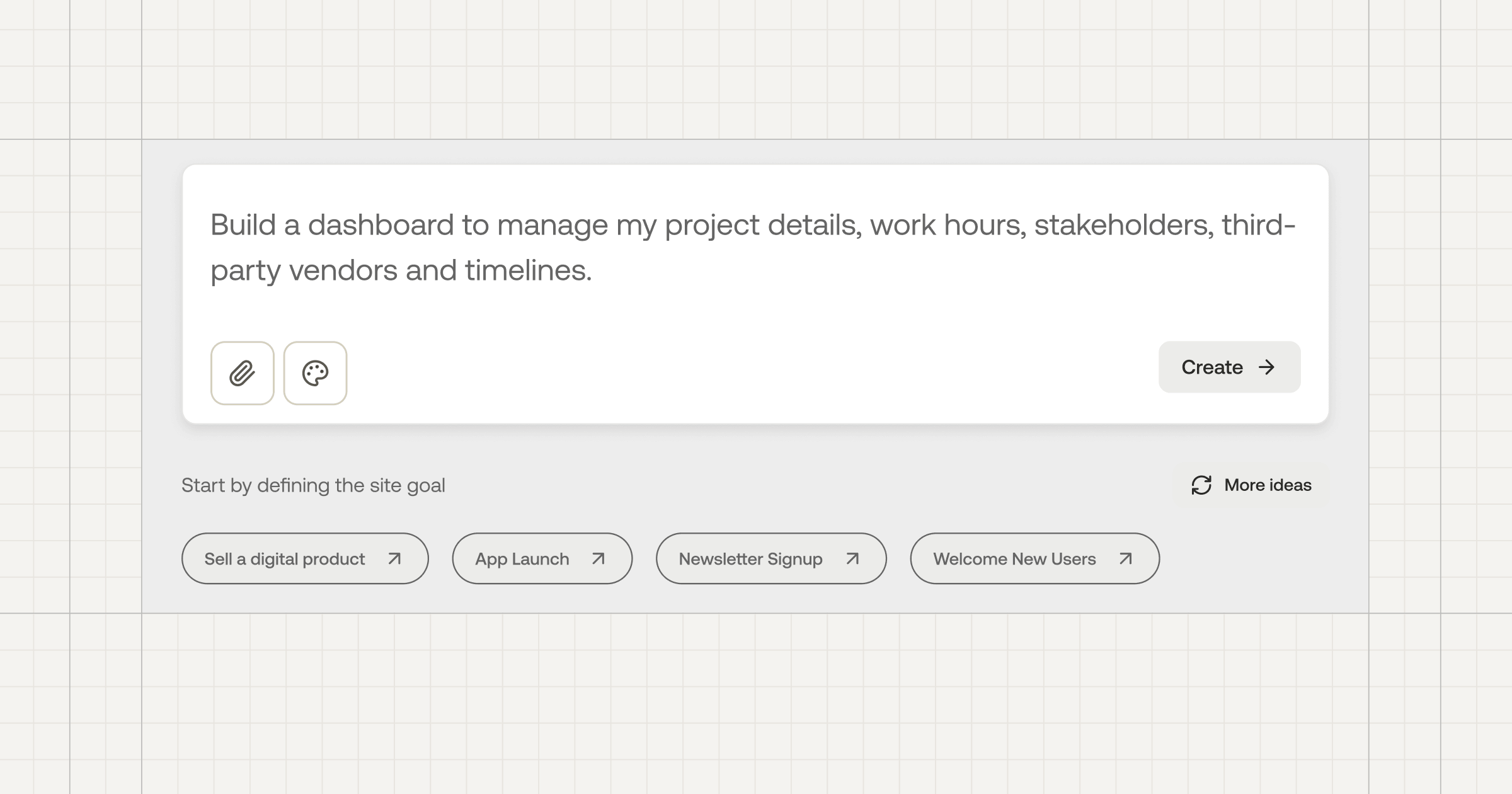
This is where the idea sentence and the data model turn into a working product. In Sticklight, you can start from the main prompt box, use Plan Mode to break a complex build into manageable pieces, remix a Template and make it yours, or bring in Connectors suited to your use case. Describe the core feature from step two and ask for a user dashboard where people can see and manage their own data.
Once the first version exists, Build phase tools let you keep shaping it: manual editing for quick adjustments, and direct code editing on the canvas when you or a developer on the team want precise, hand-built control. Nothing about the prompt-first start locks you out of the craft. You keep full control of every pixel after the build.
Step 5: Add Skills for SEO, performance, and design system
A Skill in Sticklight is a packaged unit of expert know-how you add to any prompt with one click during the Build phase. For a SaaS, three are worth adding early. The SEO Skill ships meta tags, schema, sitemap, and on-page best practices for your marketing site, so the pages that bring people in are set up correctly from the start. The Performance Skill and the Design System Skill carry that same packaged expertise into how the product looks and runs.
A growing set of Skills is available today, including Accessibility, SEO, Design System, Performance, Copywriting, Localization, Micro-interactions, Onboarding, and 3D Web Experience, with more added over time. You don’t need all of them for a first version. Add what your product needs now, and add more as it grows. Skills compound across projects, so the next thing you build with Sticklight benefits from the same packaged expertise.
Step 6: Connect your data and think through the subscription model
With the core feature built, connect the data sources your product actually needs, whether that’s the database behind your dashboard, a form that feeds it, or outside tools reached through Sticklight MCP. This is also the point to think through your subscription model, even at a conceptual level, before you build billing into the product.
A workable pattern many SaaS products follow is tiers based on features and seats rather than raw usage: a free tier so people can try the product and ship something real, a paid tier for individual or small-team use, and a higher tier for teams that need more collaboration and capacity. You don’t need exact prices at this stage. You need to know which features live in which tier and why, so the product and the pricing page agree with each other later.
Step 7: Test the product and run the security scan
Before anything goes live, walk through the core flow yourself as a new user would: sign up, use the one feature that matters, look at the dashboard, sign out, sign back in. Check it on a phone screen as well as a desktop one. Then check the edges: what happens with no data yet, what happens with a lot of data, what happens if a form gets submitted twice.
Sticklight runs a security scan on every build as part of the Publish phase. Treat that scan as a required step rather than a formality, the same way you’d treat a code review before shipping. It’s part of what keeps the output production-ready rather than demo-ready.
Step 8: Publish and iterate
Publishing in Sticklight connects a custom domain, hosts the app, and carries the SEO and security work from the earlier steps into the live product. That’s the moment your SaaS becomes a real product other people can use, not the moment the work stops.
Watch how real users move through the product and feed what you learn back into the next prompt. Agents, which will handle more of this loop automatically, are on the Sticklight roadmap and labeled coming soon. Until then, the review-and-reprompt cycle you used to build the first version is the same one you’ll use to improve it.
What separates people who get good at this from people who stay stuck is usually just hours spent doing the unglamorous parts.
Itamar Haim
Built by the Elementor team. Powered by Claude.
Let it glow.