How to use Base44 AI (and the Sticklight alternative)

Here is how to use Base44 AI in practice: you describe the app you want in plain language, and its agents build the interface, database, authentication, and hosting from that prompt. You do not need to write code or set up separate hosting yourself. Base44 was founded in early 2025 by Maor Shlomo and acquired by Wix.com Ltd. on June 18, 2025; Wix describes it as agent-driven, intent-driven AI app generation.
This guide walks through how Base44 works, what it costs, and what to check before you commit. We also introduce Sticklight, the prompt-to-production platform built by the Elementor team, as a fair alternative for founders and independent creators who want a similar prompt-first starting point.
- Base44 turns a natural-language prompt into a hosted full-stack app, with UI, database, and authentication, without a separate deployment step, according to Base44’s own site.
- Base44 pricing is a monthly subscription plus dual credits, message credits for building and integration credits for runtime actions, and annual billing saves about 20 percent, based on Base44’s pricing page.
- User or revenue figures, the exact scope of code export, precise credit-to-action conversion, and WordPress fit are not confirmed on Base44’s own pages, so we do not state them as fact here.
- Sticklight is a vibe-coding platform built by the Elementor team and powered by Claude, turning a prompt into production-ready websites, apps, dashboards, and CMS.
- Sticklight’s Skills add packaged expertise, such as SEO, accessibility, and performance, to any prompt during the build step.
- Sticklight connects to and builds on an existing WordPress or Elementor site rather than asking you to start over.
What Base44 is, in plain terms
Base44 is an AI-powered no-code platform, sometimes described as a vibe-coding tool, that builds full-stack software from a written description. Instead of assembling screens or wiring up a database by hand, you describe the outcome and the platform handles the structure, design, database, and authentication behind it, as Base44 describes it.
Maor Shlomo serves as CEO. Base44’s stated audience spans people with no coding background who want to launch an idea, to teams building products, which is worth keeping in mind as you read the pricing and feature notes below.
How to use Base44 AI, step by step
Here is what using Base44 AI generally involves, based on what the platform publishes about itself.
- Start on a plan, including the free tier, and open the main prompt interface.
- Describe the app you want in natural language, the way you would explain it to a person.
- Let the platform’s agents generate the structure, design, database, and authentication.
- Review the result. The app is hosted automatically, with no separate deployment step, Base44 says.
- Connect one-click integrations, such as Google Calendar, Gmail, Slack, Notion, HubSpot, or Salesforce, or connect any external service through its API, per Base44’s site.
- On the Starter plan and above, edit code and add backend functions. On the Builder plan and above, connect GitHub, according to Base44’s pricing page.
Each prompt draws down message credits, and each runtime action, like sending an email or generating an image, draws down integration credits. Base44 does not publish exact conversion rates, so budgeting is closer to an estimate than a fixed formula until you see your own usage.
Base44 pricing, monthly versus annual
Base44 prices its plans as a monthly subscription bundled with a monthly allowance of credits, and every paid tier also has an annual price roughly 20 percent lower per month, per Base44’s pricing page.
- Free: $0, 25 message credits, 100 integration credits, up to 5 apps.
- Starter: $20 per month, or $16 per month billed annually, 100 message credits, 2,000 integration credits.
- Builder: $50 per month, or $40 per month billed annually, 250 message credits, 10,000 integration credits.
- Pro: $100 per month, or $80 per month billed annually, 500 message credits, 20,000 integration credits.
- Elite: $200 per month, or $160 per month billed annually, 1,200 message credits, 50,000 integration credits.
Enterprise pricing is custom and not published as a number, so we do not state one here. If you use up your monthly credits, Base44 says you either upgrade to the next tier or wait for the billing cycle to reset.
What to verify before you commit
A few details that matter for planning are not confirmed on Base44’s own pages, and we would rather say so plainly than guess. Worth checking directly with Base44 before you build a plan around them.
- User counts or revenue figures quoted elsewhere are not confirmed on base44.com or in the Wix acquisition announcement.
- The exact scope of code export or self-hosting is not spelled out in one statement. Base44’s blog says builders retain full intellectual property rights to what they create, and GitHub integration exists on the Builder plan and above, but a clear download-your-codebase claim was not found on the pages we reviewed.
- Exact credit-to-action conversion rates are described qualitatively, not as published numbers.
- Whether listed prices include tax or vary by region was not confirmed.
None of this means the answers are unfavorable, only that they are not published in a way we can responsibly repeat as fact.
Where Sticklight fits as an alternative
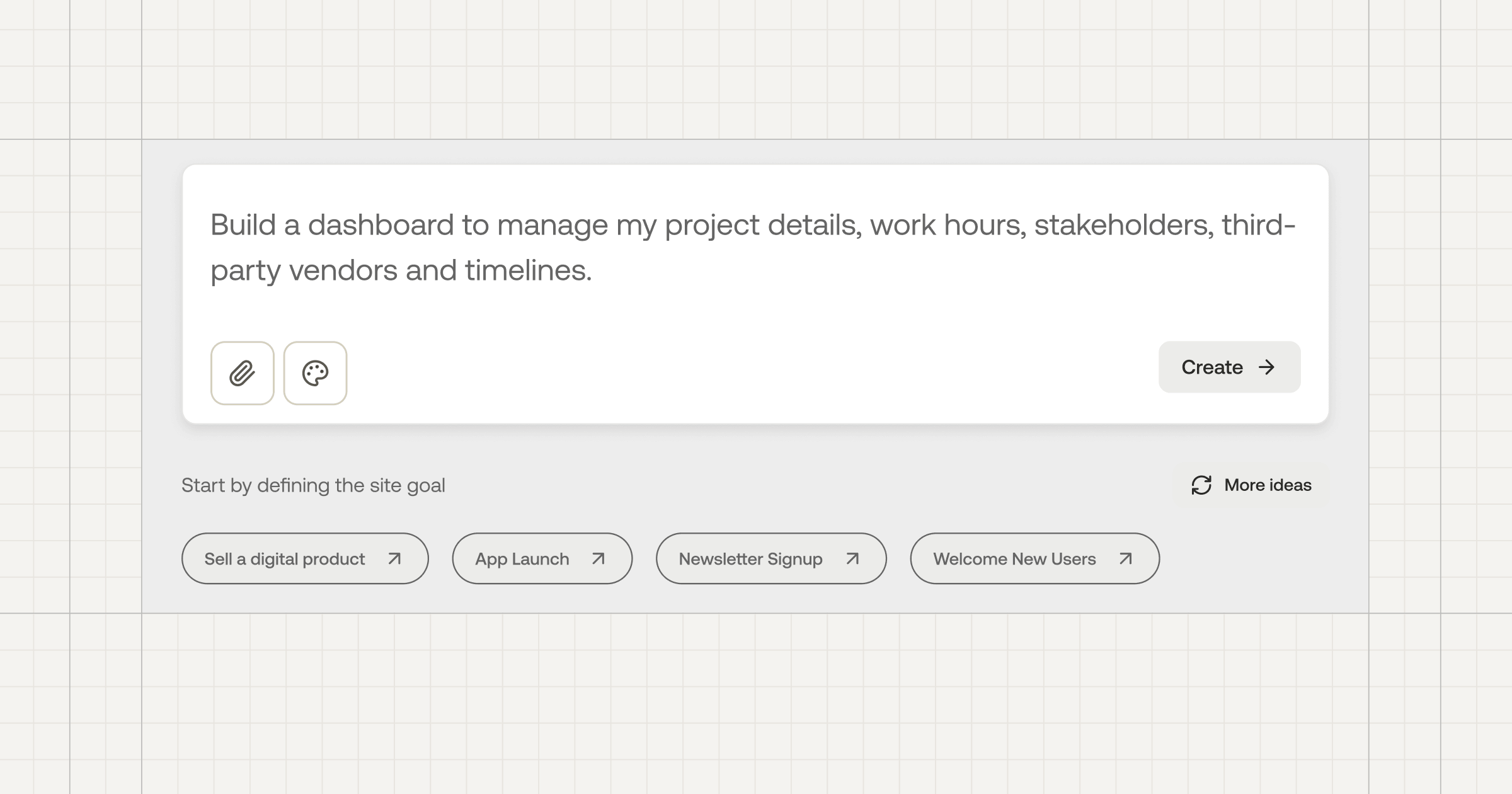
For professional web creators, Sticklight offers a similar starting point: a vibe-coding platform built by the Elementor team and powered by Claude. Like Base44, it starts from a plain-language prompt, then turns that prompt into production-ready websites, apps, dashboards, CMS, and other tools, going beyond websites to make the same creator a full-stack creator, with the combined craft of a senior designer and developer rather than a rough draft.
Sticklight’s flow follows three pillars: prompt, build, and publish. You start in the prompt box, or Plan Mode for more complex projects, and the AI does the first pass. From there, the goal is full control of every pixel, not a lock-in on the first generation.
What Sticklight adds beyond the prompt: Skills and the canvas
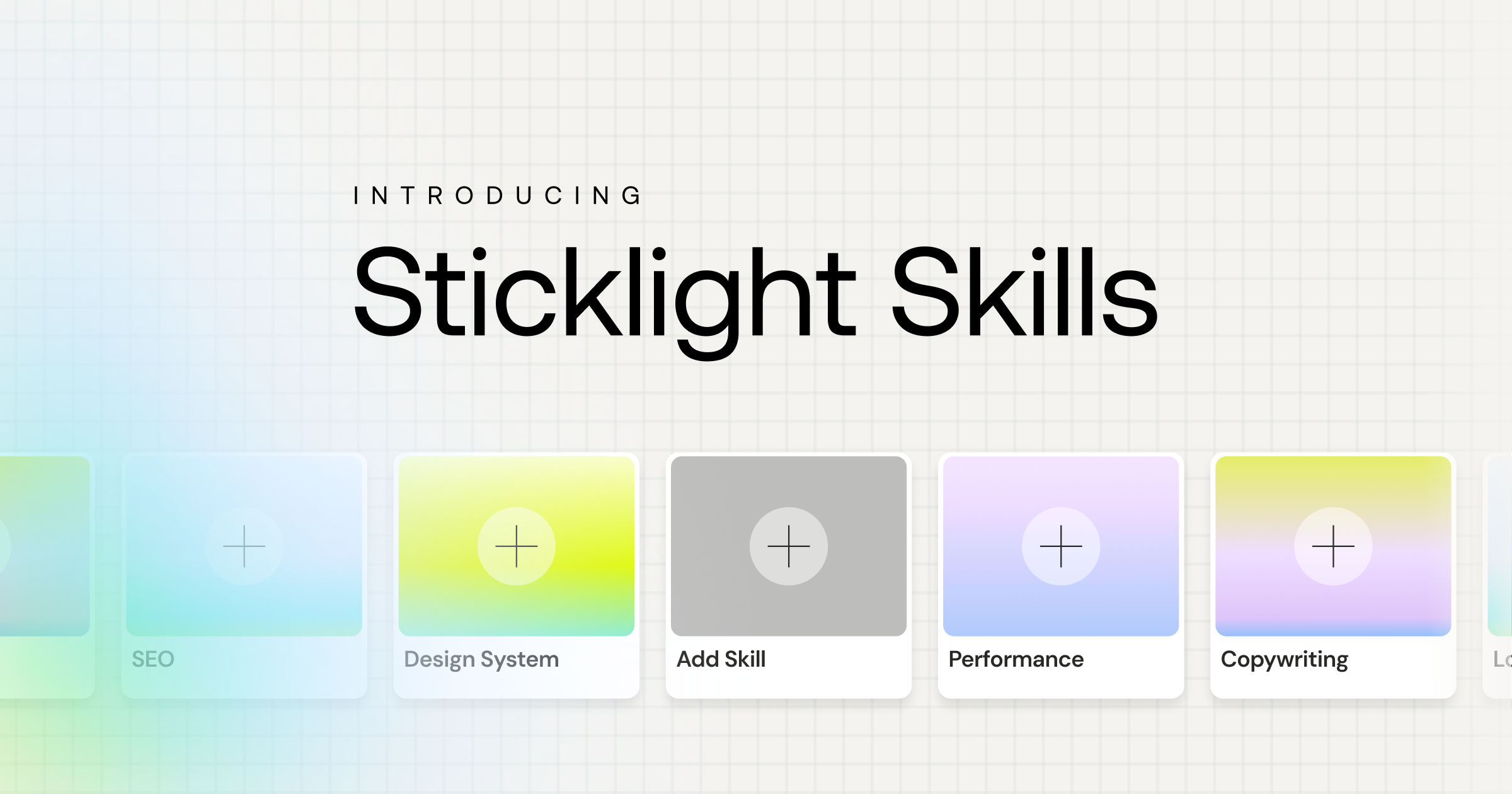
Sticklight’s main differentiator is Skills, packaged units of expert know-how you add to any prompt with one click during the build step. Nine Skills are live today: accessibility, SEO, design system, performance, copywriting, localization, micro-interactions, onboarding, and a 3D web experience skill built on Three.js. The SEO Skill ships meta tags, schema, sitemap, and on-page best practices. Turn on the accessibility Skill and it handles WCAG-compliant markup, focus states, and ARIA attributes.
After the AI builds a first version, you can keep editing by hand or drop into direct code editing on the canvas. Publish adds SEO groundwork, a security scan on every build, a custom domain connection, and app hosting. Agents are on Sticklight’s roadmap and labeled coming soon.
Building on a WordPress or Elementor site
One practical difference for founders who already run a website is that Sticklight connects to and builds on an existing WordPress or Elementor site, rather than asking you to rebuild it elsewhere. If your marketing site, blog, or store already lives on WordPress, Sticklight treats that as a foundation to build on, not a limitation to escape.
That matters if you want to add a booking system, an internal dashboard, or a customer portal without abandoning the site and SEO history you already have. It is worth weighing against a platform like Base44 that hosts everything on its own infrastructure.
Choosing between Base44 and Sticklight
If you want the fastest path from a single prompt to a hosted, credit-metered app, Base44’s agent-driven flow and published pricing are a reasonable starting point to evaluate.
If you are building for clients, already have a WordPress or Elementor presence, or want packaged expertise like SEO and accessibility built into the build step through Skills, compare Sticklight’s prompt, build, and publish flow directly. Neither choice is right for every founder. The honest approach is to prompt both with the same real project and see which output you would want to maintain.
We pulled how Base44 works, its plans, and its pricing for this article in July 2026 from Base44’s own website, its pricing page, and its post on pricing. Public pages change often, so check base44.com for the current details before you decide.
What surprises new builders isn’t how much AI can do. It’s how much clearer their own thinking has to be before the AI can help at all.
Itamar Haim
Built by the Elementor team. Powered by Claude.
Let it glow.