No-Code vs Low-Code: What’s the Difference?

No-code and low-code both let you build software without writing everything from scratch, but the real difference is how much control you keep over the logic underneath. No-code tools rely on visual blocks and preset behavior, so you never touch a line of code, and the platform makes every technical decision for you behind the scenes. Low-code tools work the same way for most tasks, but leave a door open to custom code when a template cannot handle what you need, which is where developers usually step in.
Choosing between no-code vs low-code matters because it shapes what you can build, how fast you can ship it, and who on your team can maintain it later, long after the first version goes live. This article breaks down what each approach actually means, who tends to get the most from it, how the two compare across a few practical dimensions, and how to decide which one fits your next project.
The short answer
No-code vs low-code is really a spectrum of control, not two strictly separate categories with a hard line between them. No-code platforms hand you drag-and-drop screens, ready-made logic, and templates, trading flexibility for speed. Low-code platforms offer the same visual building blocks, then let developers add custom code for the parts generic components cannot cover, trading a bit of simplicity for room to grow as requirements change.
What no-code is, and who it suits
No-code platforms center on a visual editor: you drag elements onto a canvas, wire them together with simple rules, and publish without opening a code editor at all. They handle landing pages, internal forms, simple automations, and early-stage products well, especially when speed matters more than deep customization and the requirements stay fairly standard.
They suit founders, marketers, operations teams, and small business owners who need something live this week rather than this quarter, without hiring a developer to get there. The tradeoff shows up once your logic gets unusual or tightly coupled to another system, since that is often where the tool reaches its limit.
What low-code is, and who it suits
Low-code platforms start from the same visual-first approach but add an escape hatch: custom scripts, API calls, and logic you write yourself when a template falls short. Development still moves faster than coding from zero, because the routine parts, layouts, data models, and integrations, stay visual and reusable while only the tricky pieces get hand-written code.
They suit teams with at least some technical skill, agencies building for clients, and companies that need software to match real business rules instead of a generic pattern. The tradeoff is a steeper learning curve, more decisions along the way, and a bit more upkeep once the project ships.
No-code vs low-code compared
The practical differences show up fastest when you line the two approaches up side by side, across the things that actually affect a project day to day: who can use the tool, how far you can push it, what kind of work it fits best, and how quickly you can get from idea to something live.
| Dimension | No-code | Low-code |
|---|---|---|
| Typical users | Founders, marketers, ops teams | Developers, technical hybrids, agencies |
| Flexibility | Limited to built-in components | Extends with custom code |
| Custom code | None required or allowed | Optional, added where needed |
| Typical use cases | Landing pages, forms, simple automations | Business apps, integrations, internal tools |
| Time to launch | Fastest | Fast, with more setup work |
How to choose between them
Start with what the project actually needs, not with whichever tool is trending. If you are validating an idea, collecting leads, or automating one repetitive task, no-code gets you there fastest and stays simple to maintain. If the project depends on custom logic, unusual integrations, or rules unique to your business, low-code gives you room to grow without starting over later as the project matures.
Also weigh who will maintain it once the initial build is done. A tool your whole team can edit beats a powerful one only one person understands, so match the platform to the skills you actually have on hand today, not the ones you wish you had.
Every project now carries a second brief hiding inside the first one, about what the thing should do once it is alive.
Itamar Haim
Where Sticklight fits
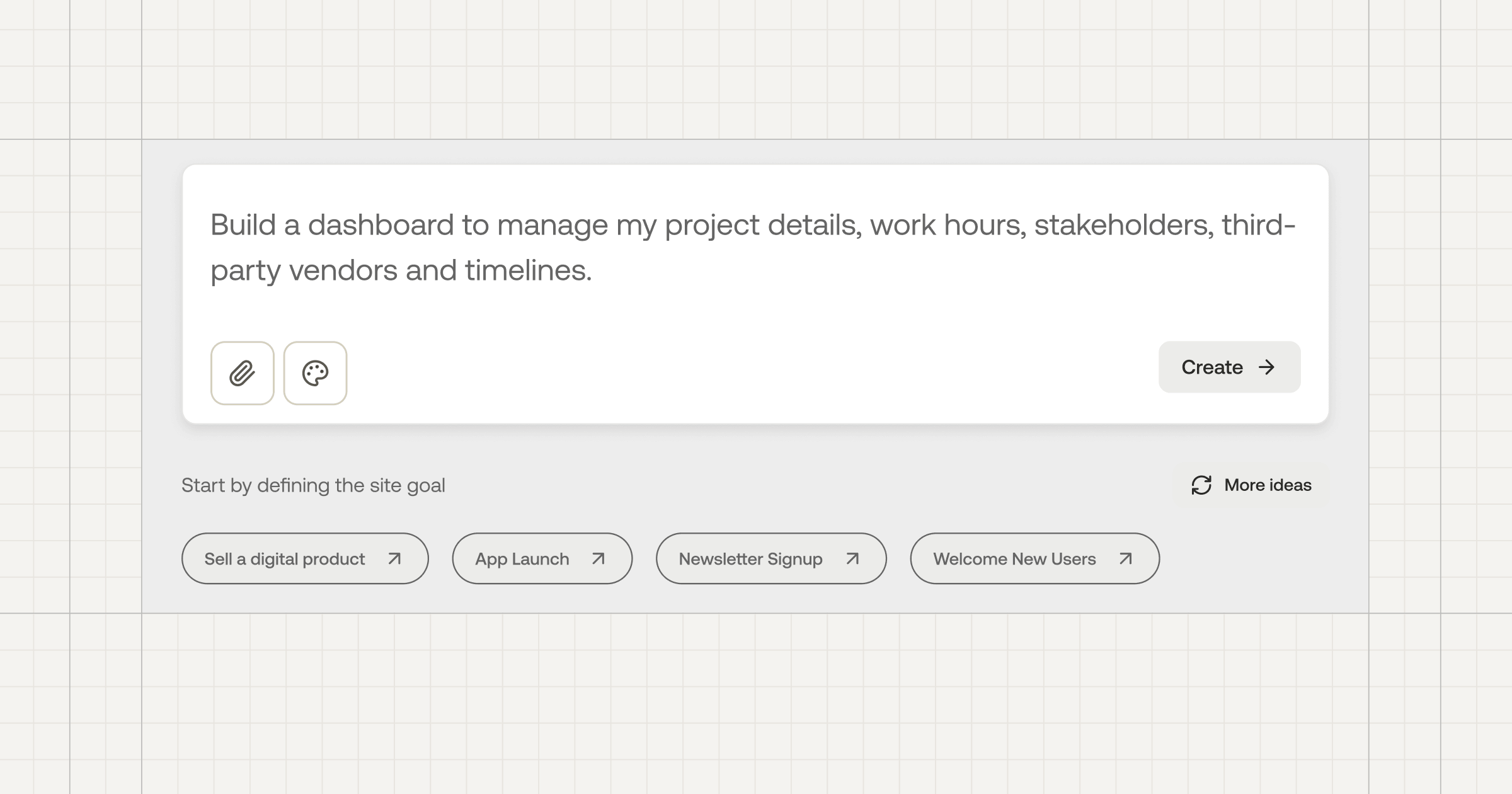
Sticklight sits in an interesting spot next to this whole debate. Instead of asking you to learn a builder’s visual language or drop into custom code, you describe what you want in a prompt, and Sticklight turns it into a production-ready website, app, dashboard, CMS, or tool. It gives you the speed people reach for no-code and the range people reach for low-code, without asking you to pick a lane first.
It is built to work alongside what you already have, including an existing WordPress or Elementor site, rather than replacing it, so you can add a new tool or app without rebuilding what already works. That combination is what turns anyone with an idea into a genuine full-stack creator.
Frequently asked questions
What is the difference between no-code and low-code?
No-code lets you build apps entirely through visual tools with no programming, while low-code uses visual building plus the option to add custom code for more complex needs.
Which is better, no-code or low-code?
Neither is better overall. No-code suits non-developers and simpler apps, while low-code fits teams that need more control and custom logic. The right choice depends on your project and skills.
Can no-code apps scale?
Many can handle real usage, but very complex or high-scale apps may hit limits. Test performance early and choose a platform that fits how far you expect to grow.
Do I need developers for low-code?
Not always, but low-code is designed so developers can extend what you build. Simple low-code apps can be built without one, while advanced features benefit from technical help.
Are no-code and low-code the same as AI app builders?
They overlap. AI app builders add natural-language prompts on top of no-code or low-code building, so you can describe an app and have much of it generated for you.
Built by the Elementor team. Powered by Claude.
Let it glow.