Replit vs Appsmith: how the two platforms compare

Replit and Appsmith come up together when you’re deciding between a cloud IDE built around AI coding agents and an open-source low-code platform for internal tools. They solve different problems, though both let a small team ship working software without provisioning traditional infrastructure.
Here’s what each platform actually offers, based on their own pricing and feature pages, plus where Sticklight fits if you want a production website or app rather than an internal tool or a general-purpose coding environment.
- Replit is a cloud-based development platform with an IDE, AI coding agents, a built-in database, and deployment tools.
- Appsmith is an open-source low-code platform focused on internal applications such as admin panels, dashboards, and CRUD interfaces.
- Replit’s paid plans start at $20/month (Core) and $95/month (Pro), each billed annually at a discount, with a $0/month Starter tier.
- Appsmith’s cloud Free plan is $0/month for up to 5 users, with Business at $15/month per user and Enterprise priced at $2,500/month for 100 users.
- Appsmith also ships a self-hosted Community edition, since its core is open source.
- Sticklight is a separate category: a vibe-coding platform that turns a prompt into a production-ready website, app, dashboard, CMS, or internal tool and publishes it.
What Replit is built for.
Replit is a cloud-based development platform: an IDE paired with AI coding agents, a built-in database, and deployment tools for building and hosting applications. Pricing starts with a $0/month Starter tier that includes free daily Agent credits and one published project. From there you move to Replit Core at $20/month billed annually ($25/month if billed monthly, with $25 in monthly usage credits included), then Replit Pro at $95/month billed annually ($100/month if billed monthly, with $100 in usage credits included). Enterprise pricing is available on request.
On features, Replit runs AI coding agents in parallel, up to 2 on Core and 10 on Pro, plus a built-in database for full-stack apps, multi-user collaboration (5 collaborators on Core, 15 on Pro), password-protected deployments, and a 28-day database rollback window on Pro. Enterprise adds SSO/SAML and single-tenant environments.
What Appsmith is built for.
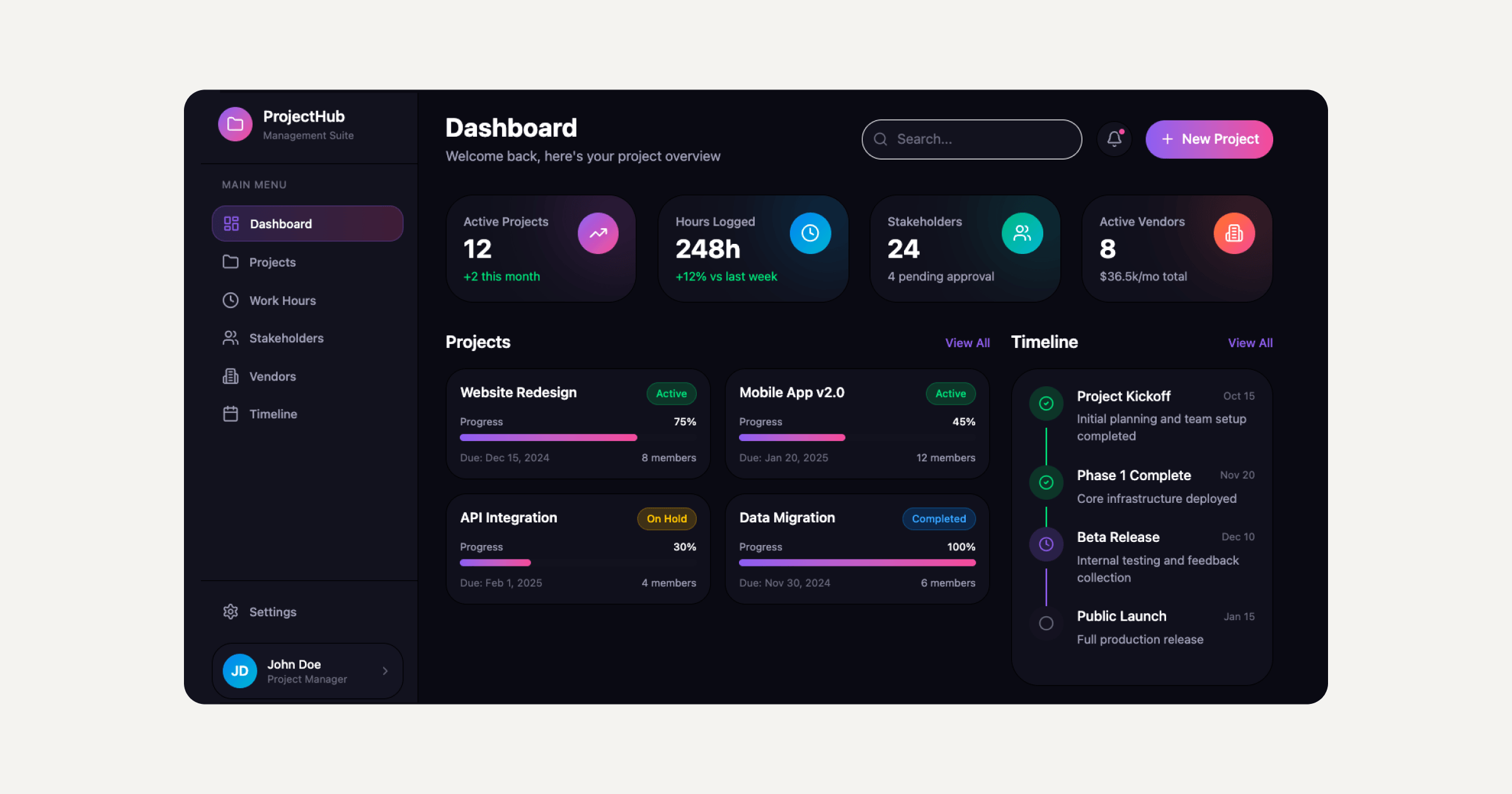
Appsmith is an open-source low-code platform for building internal applications such as admin panels, dashboards, and CRUD interfaces. Its cloud Free plan is $0/month for up to 5 users, capped at 5 workspaces and 3 Git repositories. Business runs $15/month per user for up to 99 users and adds unlimited workspaces and Git repositories along with email and chat support. Enterprise is $2,500/month for 100 users, with unlimited users beyond that baseline and custom scaling. A separate Community edition is free and open source if you want to self-host.
Appsmith includes Git-based version control for applications and connects to external data sources including databases and REST APIs, though its own pricing page doesn’t detail the specific backend architecture. Enterprise adds SAML/OIDC SSO and SCIM provisioning with 24/7 SLA-backed support.
Replit vs Appsmith at a glance.
| Dimension | Replit | Appsmith | Sticklight |
|---|---|---|---|
| What it is | Cloud IDE with AI coding agents and deployment tools | Open-source low-code platform for internal apps | Vibe-coding platform, prompt to production-ready output |
| Output | General-purpose apps built and hosted in the cloud IDE | Admin panels, dashboards, CRUD interfaces | Websites, apps, dashboards, CMS, and internal tools |
| Backend / data | Built-in database included | Connects to external databases and REST APIs | Production-ready output, additive to WordPress and Elementor |
| Publish / hosting | Built-in deployment tools | Cloud-hosted or self-hosted (Community edition) | Publish included as part of the workflow |
| Best for | Developers wanting an AI-assisted cloud coding environment | Teams building internal tools with a low-code, open-source base | Professional creators wanting a full-stack production build from one prompt |
| Entry pricing | $0/month (Starter plan) | $0/month (Free plan, up to 5 users) | Additive to your WordPress/Elementor stack |
Where Sticklight fits in this comparison.
Replit and Appsmith are both worth considering on their own terms: one as a cloud coding environment with AI agents, the other as an open-source low-code base for internal tools. Sticklight is a different kind of platform, built by the Elementor team around a simple flow: prompt, build, publish. Instead of an IDE you write code in or a low-code builder focused on internal admin tools, Sticklight turns your prompt directly into a production-ready website, app, dashboard, CMS, or internal tool, with publishing built into that flow.
If your goal is a finished, production-ready site or application rather than a general coding workspace or an internal-only tool, that combination of full-stack output and built-in publishing is the practical differentiator. Sticklight is also additive to WordPress and Elementor: it works alongside that ecosystem rather than replacing it, which matters if you’re already running on WordPress. AI agents are coming to Sticklight’s roadmap rather than shipped today, so if you’re evaluating agent-driven coding specifically, weigh that against Replit’s current AI agent capabilities.
Choosing between Replit, Appsmith, and Sticklight.
The right choice depends on what you’re building. If you want a flexible cloud IDE with AI coding agents for general software development, and you’re comfortable managing that environment yourself, Replit is the fit. If you specifically need internal admin panels, dashboards, or CRUD interfaces, and want an open-source option you can self-host, Appsmith serves that better. If your goal is a production-ready, publishable website, app, dashboard, or CMS built from a prompt, without assembling a coding environment from scratch, that’s what Sticklight is built for.
I’ve stopped thinking of prompting as instructions and started thinking of it as conversation, the kind where the other side actually listens and tries again.
Itamar Haim
Frequently asked questions
Is Replit or Appsmith better for internal tools?
Appsmith is purpose-built for internal applications such as admin panels, dashboards, and CRUD interfaces, and it includes an open-source Community edition for self-hosting. Replit is a general-purpose cloud IDE with AI coding agents, and you can build internal tools with it too, but it isn’t scoped specifically to that use case.
Does Appsmith have a free plan?
Yes. Appsmith’s cloud Free plan is $0/month for up to 5 users, capped at 5 workspaces and 3 Git repositories, and there’s also a separate free, open-source, self-hosted Community edition.
What does Replit cost beyond the free tier?
Replit Core runs $20/month billed annually ($25/month if billed monthly), including $25 in monthly usage credits. Replit Pro runs $95/month billed annually ($100/month if billed monthly), including $100 in monthly usage credits. Enterprise pricing is custom.
Where does Sticklight fit next to Replit vs Appsmith?
Sticklight isn’t a direct substitute for either tool. It’s a vibe-coding platform that turns your prompt into a production-ready website, app, dashboard, CMS, or internal tool and publishes it, built by the Elementor team as an addition to a WordPress and Elementor workflow rather than a cloud IDE or an internal-tools builder.
Can Appsmith be self-hosted?
Yes, through its Community edition, which is free and open source. The cloud-hosted Free, Business, and Enterprise plans are separate tiers with their own limits, free or paid.
Built by the Elementor team. Powered by Claude.
Let it glow.