
Sticklight vs Lovable: which AI app builder is right for you?

The short answer: Lovable is a solid pick if you want to turn a prompt into a working app or marketing site quickly, inside a single AI-generated project. Sticklight is the better fit if you build professional web work for a living and need production-ready websites, apps, dashboards, CMS, and internal tools from that same prompt, with full control over the result and the option to connect to an existing WordPress or Elementor site.
Both platforms start from the same idea: describe what you want in plain language and let AI build it. Sticklight vs Lovable comes down to what happens after that first prompt, how far the output can go, and how much control and craft you keep once the build starts. This guide walks through both, fairly, so you can pick the one that matches how you actually work.
- Lovable turns prompts into working apps and sites. Sticklight turns prompts into production-ready websites, apps, dashboards, CMS, and internal tools, with the craft of a senior designer and developer.
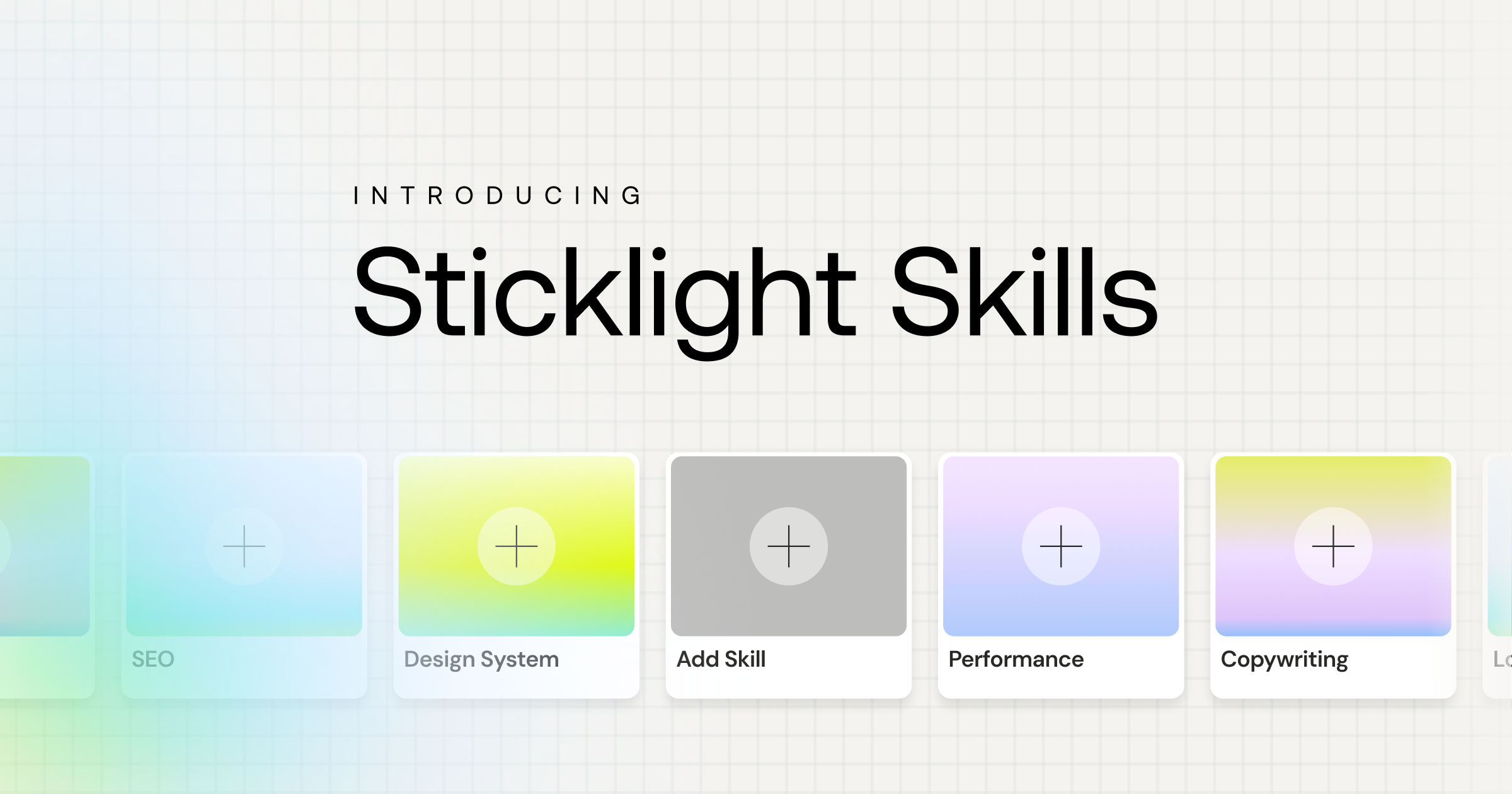
- Sticklight’s Skills system packages expertise, including Accessibility, SEO, Performance, Design System, Copywriting, Localization, Micro-interactions, Onboarding, and 3D Web Experience, added to any prompt with one click.
- Sticklight follows a prompt, build, publish flow, with a visual canvas for hands-on editing after the AI does the first pass.
- An existing WordPress or Elementor site plugs into Sticklight, which extends what’s already there instead of forcing a rebuild from scratch.
- Sticklight is built by the Elementor team and powered by Claude, with plans (Free, Pro, Team, Enterprise) that scale with seats and features rather than page count.
- Neither platform is a universal fix. The right choice depends on what you’re building and who it’s for.
Sticklight vs Lovable: the short answer
Start with what you’re trying to ship. Lovable suits a founder or developer who wants to move from an idea to a working prototype or a simple marketing site as fast as possible, inside one AI-native project.
Sticklight is built for a different job: people who build the web for clients or for themselves, at a professional standard, and need the output to hold up as a real, shippable product across more than one type of surface (a website today, a dashboard or internal tool next month).
What Lovable does well
Lovable is an AI app builder that turns a written prompt into a working application. It’s known for helping people move from an idea to a functioning prototype or marketing site without writing code by hand. For founders testing a concept, that speed is genuinely useful.
We’re keeping this comparison to what’s verifiable and widely known, so we won’t list Lovable’s specific features, pricing, or benchmarks here. At a high level, it’s a prompt-to-app tool built around rapid iteration on a single project.
What Sticklight is built for
Professional web creators are the target audience for Sticklight, a vibe-coding platform built by the Elementor team and powered by Claude. It turns a plain-language prompt into production-ready websites, apps, dashboards, CMS, and internal tools, with the combined craft of a senior designer and developer. AI does the heavy lifting from the first prompt, and the creator keeps full control of every pixel after that.
The positioning is straightforward: go beyond websites, become a full-stack creator. Sticklight is built for people who build the web for a living and need the finished product to meet real requirements, not just look like a demo.
Beyond websites: apps, dashboards, CMS, and internal tools
One of the clearest differences in a Sticklight vs Lovable comparison is scope. Sticklight isn’t limited to a single project type. From the same prompt-first flow, you can build websites, landing pages, web apps, dashboards, CMS setups, booking systems, forms, databases, and internal tools.
That matters if your work doesn’t stop at a marketing site. An agency might need a client website one month and an internal reporting dashboard the next. Sticklight treats all of that as the same kind of job: describe it, build it, publish it.
Skills: packaged expertise you add with one click
A Skill is a packaged unit of expert know-how you add to any prompt with one click during the build phase, and it’s Sticklight’s core differentiator. Nine Skills are live today: Accessibility, SEO, Design System, Performance, Copywriting, Localization, Micro-interactions, Onboarding, and 3D Web Experience.
Practically, that means you don’t have to remember to ask for WCAG-compliant markup or the right meta tags and schema. The Accessibility Skill ships focus states and ARIA attributes. The SEO Skill ships meta, schema, sitemap, and on-page best practices. You add the Skill, and the expertise comes with it.
Skills also compound across projects: the tenth product you ship tends to be faster and sharper than the first. Agents, a further layer of automation, is coming soon and not yet live on Sticklight.
Prompt, build, publish, and the visual canvas
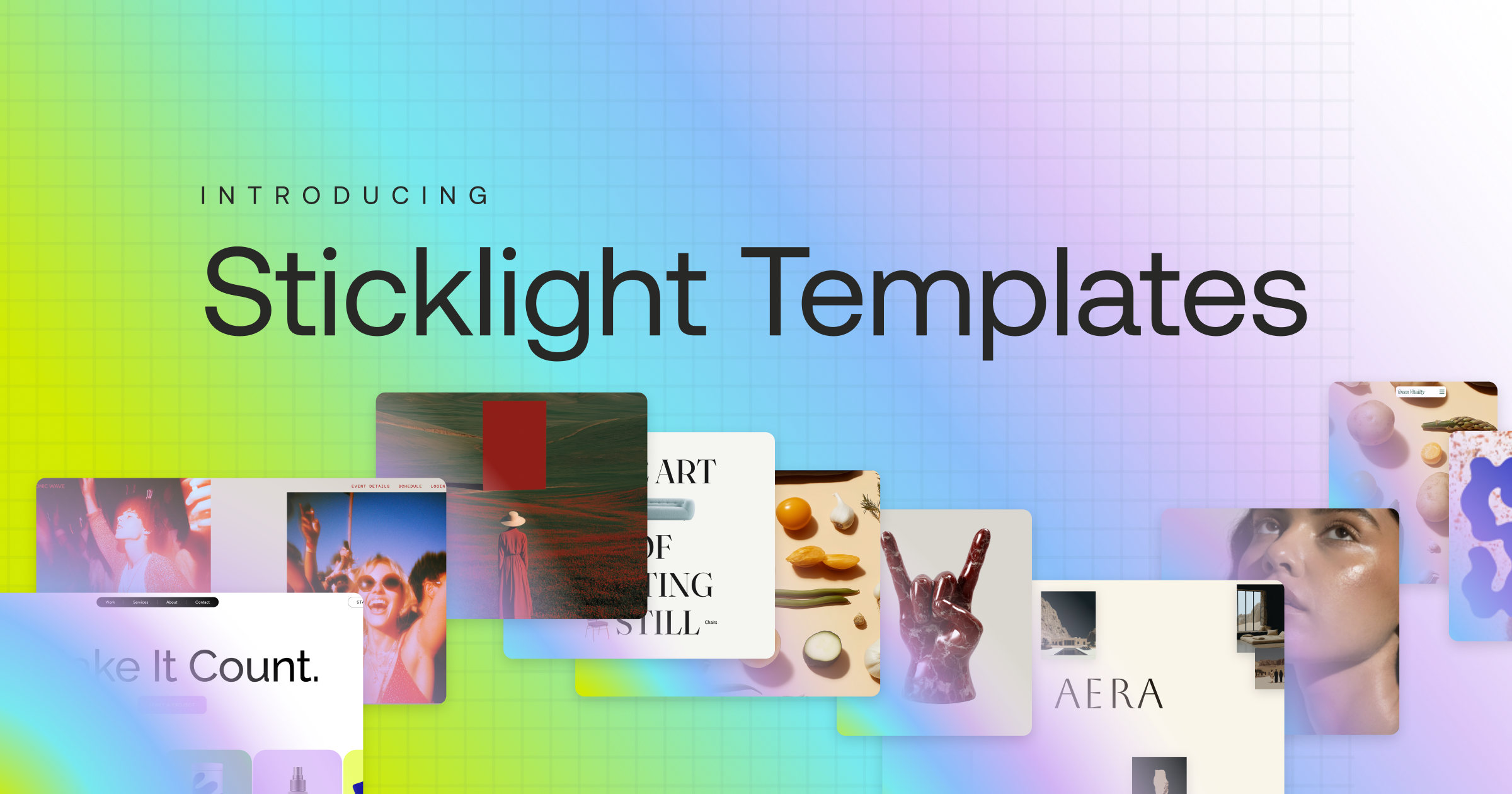
Sticklight’s flow has three pillars: prompt, build, and publish. You can start from the main prompt box, use Plan Mode to break down a complex task, connect Sticklight MCP to your existing tools, remix a Template, or use a Connector suited to your use case.
During build, AI produces the first pass, and then you take over on a visual canvas. You can edit by hand, adjust design details, or work directly in the code, all in the same workspace. Full control after the AI build is a deliberate part of how Sticklight works: the prompt gets you moving fast, but it doesn’t lock you out of the craft.
Publishing includes SEO built in, a security scan on every build, custom domain connection, and app hosting, so the step from finished build to live product doesn’t require a separate tool.
Connecting to and extending an existing WordPress or Elementor site
If you already run a site on WordPress or Elementor, Sticklight doesn’t ask you to abandon it. It connects to and extends what you have, treating your existing site as a source of truth you build on rather than a limitation to escape. That’s an additive relationship: Elementor and Sticklight share the same mission of helping web creators build, at different moments in that creator’s path.
For an agency with years of client sites already built in WordPress, or a freelancer with an existing Elementor portfolio, that means new work doesn’t require starting from zero.
Sticklight vs Lovable: a side-by-side view
Both tools share a starting point: describe what you want, and AI builds a first version. Where they differ is scope, control, and what happens after that first prompt.
- Best for quick prototypes and marketing sites: Lovable, if you want to test an idea fast in a single AI-generated project.
- Best for production-ready, professional output: Sticklight, built to the standard of a senior designer and developer, not only a demo.
- Range of what you can build: Lovable centers on apps and sites; Sticklight spans websites, apps, dashboards, CMS, booking systems, and internal tools from the same flow.
- Packaged expertise: Sticklight’s Skills add accessibility, SEO, performance, and more with one click; we’re not making claims about Lovable’s equivalent, since this comparison stays to verifiable, high-level facts.
- Existing WordPress or Elementor sites: Sticklight connects to and extends them, which matters if you’re not starting from a blank page.
- Who it suits: Lovable fits founders and developers moving fast on a new idea; Sticklight fits agencies, freelancers, studios, and independent creators shipping professional, client-ready work.
Neither list is exhaustive, and neither tool is the wrong choice on its own. The decision comes down to whether you need a fast prototype or a production-ready build you can hand to a client or ship as your own product.
Nobody scales a product by accident, they scale the habits they built while it was still small enough that nobody was paying attention.
Itamar Haim
Built by the Elementor team. Powered by Claude.
Let it glow.
