Vibecode vs UI Bakery: comparing two prompt-and-build platforms

Vibecode and UI Bakery get compared a lot, but they’re not built for the same job. Vibecode turns natural-language prompts into mobile apps and websites for non-technical creators. UI Bakery is a drag-and-drop editor built specifically for internal tools, dashboards, and admin panels.
Here’s what each platform actually does, with pricing stated only where it’s confirmed from an official source, plus where Sticklight fits in as a third option for creators already working in WordPress and Elementor.
- Vibecode focuses on turning natural-language prompts into mobile apps and websites for non-technical creators and entrepreneurs; its official pricing page didn’t expose verifiable dollar figures at the time of research.
- UI Bakery is a low-code platform for internal tools and dashboards, with confirmed cloud pricing that includes a free tier and paid Builder plans from $20 a month billed annually.
- UI Bakery ships a hosted PostgreSQL database and more than 80 drag-and-drop components; Vibecode’s backend is not confirmed from official sources.
- Both platforms tie AI usage into billing: Vibecode describes credit-based billing pegged to AI cost, and UI Bakery bundles monthly AI credit allotments into its paid tiers.
- Sticklight, built by the Elementor team and powered by Claude, is a separate option for professional creators who want production-ready, full-stack output that works alongside an existing WordPress or Elementor site.
What Vibecode is
Vibecode is an AI natural-language app generation platform, built on Claude, aimed at non-technical creators and entrepreneurs. It generates mobile apps, websites, and content-management-style tools from prompts. Billing is credit-based, and the vendor describes it as passing through AI cost directly, where credits map roughly one to one with AI usage, with monthly and annual billing options.
Vibecode’s official pricing page renders its plan cards through JavaScript, so exact dollar figures for its tiers couldn’t be extracted and verified here. Check their site for current pricing. Vibecode’s backend is not confirmed from official sources and isn’t verifiable at this time.
What UI Bakery is
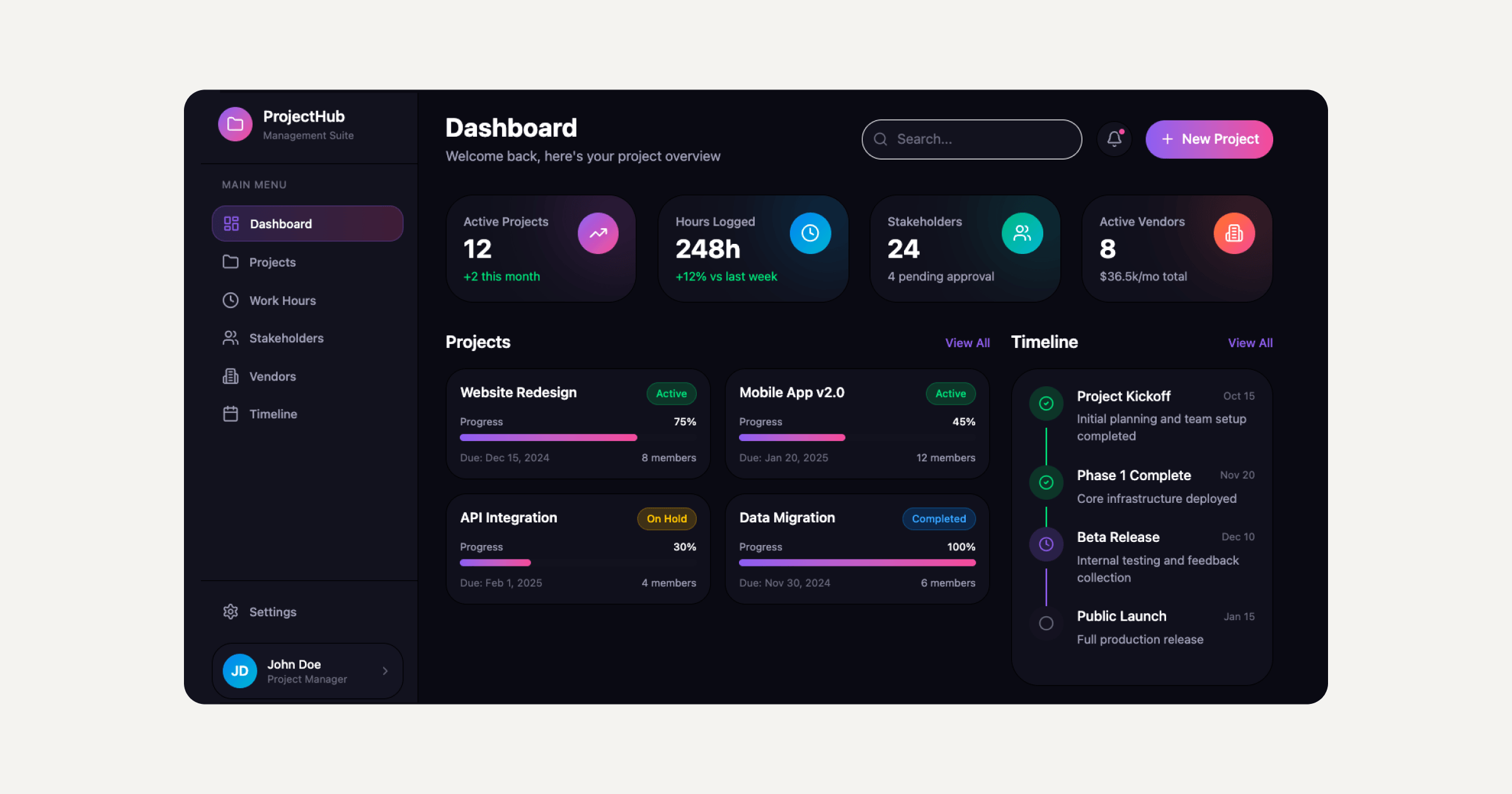
UI Bakery is a low-code platform for building web applications such as internal tools, dashboards, admin panels, and customer portals through a drag-and-drop editor. It includes a hosted PostgreSQL database with a visual table and data editor, more than 80 pre-built drag-and-drop UI components, and connections to external databases, REST APIs, and third-party services with no limit on the number of data source connections. It supports both cloud and self-hosted deployment, and its enterprise self-hosted tier allows bringing a customer-owned AI model.
UI Bakery’s pricing is confirmed from its official pricing page. Cloud plans start with a Free tier at $0 per developer per month, followed by Builder at $20 a month billed annually (or $25 a month billed monthly), and Team at $35 a month billed annually (or $40 a month billed monthly), each per developer per month. Enterprise cloud pricing is custom and quote-based. Self-hosted mirrors this with a Free tier, a Team tier at the same $35 to $40 per developer per month, and a custom-quoted Enterprise tier. Paid tiers include monthly AI credit allotments in the $25 to $40 range depending on plan.
Vibecode vs UI Bakery at a glance
| Dimension | Vibecode | UI Bakery | Sticklight |
|---|---|---|---|
| What it is | AI prompt-to-app generator built on Claude | Low-code drag-and-drop platform for internal tools | Vibe-coding platform for professional web creators |
| Output | Mobile apps, websites, CMS-style tools | Internal tools, dashboards, admin panels, customer portals | Production-ready websites, apps, dashboards, CMS, and internal tools |
| Backend / data | Not confirmed from official sources | Hosted PostgreSQL (5GB on paid tiers), plus external database and API connections | Not detailed for this comparison; publishes production-ready output |
| Publish / hosting | Not detailed in official sources reviewed | Cloud or self-hosted deployment | Publish included as part of the prompt-to-build flow |
| Best for | Non-technical creators building mobile apps and websites from prompts | Teams building internal tools and dashboards with a low-code editor | Professional creators wanting full-stack output from one prompt |
| Entry pricing | Check their site for current pricing | Free (Cloud), $0 per developer per month; paid plans from $20/month billed annually | Additive to your WordPress/Elementor stack |
Where Sticklight fits in
Sticklight is a third option worth naming alongside Vibecode and UI Bakery, especially if you’re already working in WordPress and Elementor. It follows a prompt, build, publish flow: you give it a prompt, and production-ready output comes out, covering websites, apps, dashboards, CMS setups, and internal tools, with publishing included. It’s built by the Elementor team and powered by Claude, and it’s additive to WordPress and Elementor rather than a replacement for either, so it works alongside the ecosystem you may already be using. AI agents are on Sticklight’s roadmap, coming soon rather than something it ships today. As with the other two platforms, no dollar figures are stated here for Sticklight.
Which platform fits your project
If you want a mobile app or a standalone website generated from a prompt, Vibecode’s stated focus lines up with that use case, though you should check current pricing directly on its site since confirmed figures weren’t available for this comparison. If you want an internal tool, dashboard, or admin panel with a data layer already built in, UI Bakery’s confirmed feature set and published pricing make it easier to scope in advance. If you’re already building on WordPress or Elementor and want one prompt to produce production-ready, full-stack output without leaving that ecosystem, Sticklight is the more logical fit of the three.
The shift was not technical first. It was in what I let myself imagine a single person could deliver.
Itamar Haim
Frequently asked questions
Is Vibecode or UI Bakery a better fit for internal tools like dashboards and admin panels?
UI Bakery is purpose-built for that category, with a hosted database, a visual data editor, and more than 80 drag-and-drop components aimed at internal tools, dashboards, admin panels, and customer portals. Vibecode’s stated focus is mobile apps, websites, and CMS-style tools rather than internal tooling.
Does UI Bakery have a free plan?
Yes. UI Bakery lists a Free tier at $0 per developer per month for both its cloud and self-hosted deployments, confirmed directly from its official pricing page.
Is Vibecode free to use?
That’s not confirmed either way. Vibecode’s official pricing page didn’t expose verifiable dollar figures for this comparison, so no specific price, including any free tier, can be confirmed here. Check their site for current pricing.
Where does Sticklight fit into the Vibecode vs UI Bakery comparison?
Sticklight is a separate, third option rather than a direct substitute for either. It’s aimed at professional creators who want one prompt to generate production-ready, full-stack output, including websites, apps, dashboards, CMS, and internal tools, and it’s additive to an existing WordPress or Elementor setup.
Can I self-host UI Bakery?
Yes. UI Bakery supports self-hosted deployment in addition to its cloud offering, with its own Free, Team, and Enterprise self-hosted tiers, the Enterprise self-hosted tier also allowing a customer-owned AI model.
Built by the Elementor team. Powered by Claude.
Let it glow.