
What Is a Code Editor?

A code editor is a software application built for writing and editing source code. It treats a file as code rather than plain text, so it can highlight syntax, catch obvious mistakes, and help you move through a project faster than a general-purpose writing tool would.
Nearly every programmer keeps one open all day, since it is the window where most of the actual work of writing software happens: typing functions, fixing typos, and rereading logic before it runs.
What a code editor does
At its core, a code editor is a text editor that understands the language you are writing in. It reads your file, recognizes keywords, functions, and variables, and displays them in a way that makes the structure of the code easier to follow than a plain block of text would. Many editors also watch for basic errors as you type, such as a missing bracket or an unclosed string, and point them out before you try to run anything.
Beyond reading code, most editors also help you manage files and folders, search across an entire project, and connect to version control so you can see what has changed since your last save.
Key features that make a code editor useful
A handful of features separate a code editor from a general writing tool.
- Syntax highlighting, which colors keywords, strings, and comments so the structure of the code is visible at a glance.
- Autocomplete, which suggests function names, variables, and common patterns as you type, cutting down on typos and lookup time.
- Extensions, which add support for new languages, linters, themes, and tools without changing the core editor itself.
Together, these features turn a blank file into something closer to a guided workspace, one that reduces small errors and speeds up repetitive typing.
Code editor vs. plain text editor
A plain text editor, like the basic notepad app that ships with most operating systems, treats every file the same way: as unformatted text. It has no idea whether you are writing a grocery list or a script, so it offers no highlighting, no autocomplete, and no error checking. A code editor adds all of that language awareness on top of basic text editing, which is why writing code in a plain text editor quickly feels slow and error-prone by comparison.
Code editor vs. IDE
An IDE, or integrated development environment, bundles a code editor together with a debugger, build tools, and other utilities in one application. A code editor on its own is lighter and starts faster, but it usually needs separate tools or extensions to run, test, or debug a project. Many code editors can be extended with plugins until they cover most of what an IDE offers, which is part of why the line between the two categories has blurred over the years. As a rule of thumb, a code editor focuses on writing and reading code well, while an IDE adds the surrounding workflow of running and debugging that code in the same window.
Common code editors you will come across
Developers use a range of code editors depending on the language, project size, and personal preference. Some are lightweight and general-purpose, built to open quickly and handle almost any file type. Others are terminal-based, favored by developers who rarely leave the command line. A third group leans on extensions to add near-IDE functionality, such as debugging or integrated terminals, while still starting up faster than a full IDE would. Most editors in this category are free to download, though some offer paid plans for teams or additional support.
Where Sticklight fits
Sticklight is a vibe-coding platform for professional web creators. Instead of opening a code editor and typing each line by hand, you describe what you want to build in a prompt, and Sticklight turns that into a production-ready website, app, dashboard, CMS, or tool.
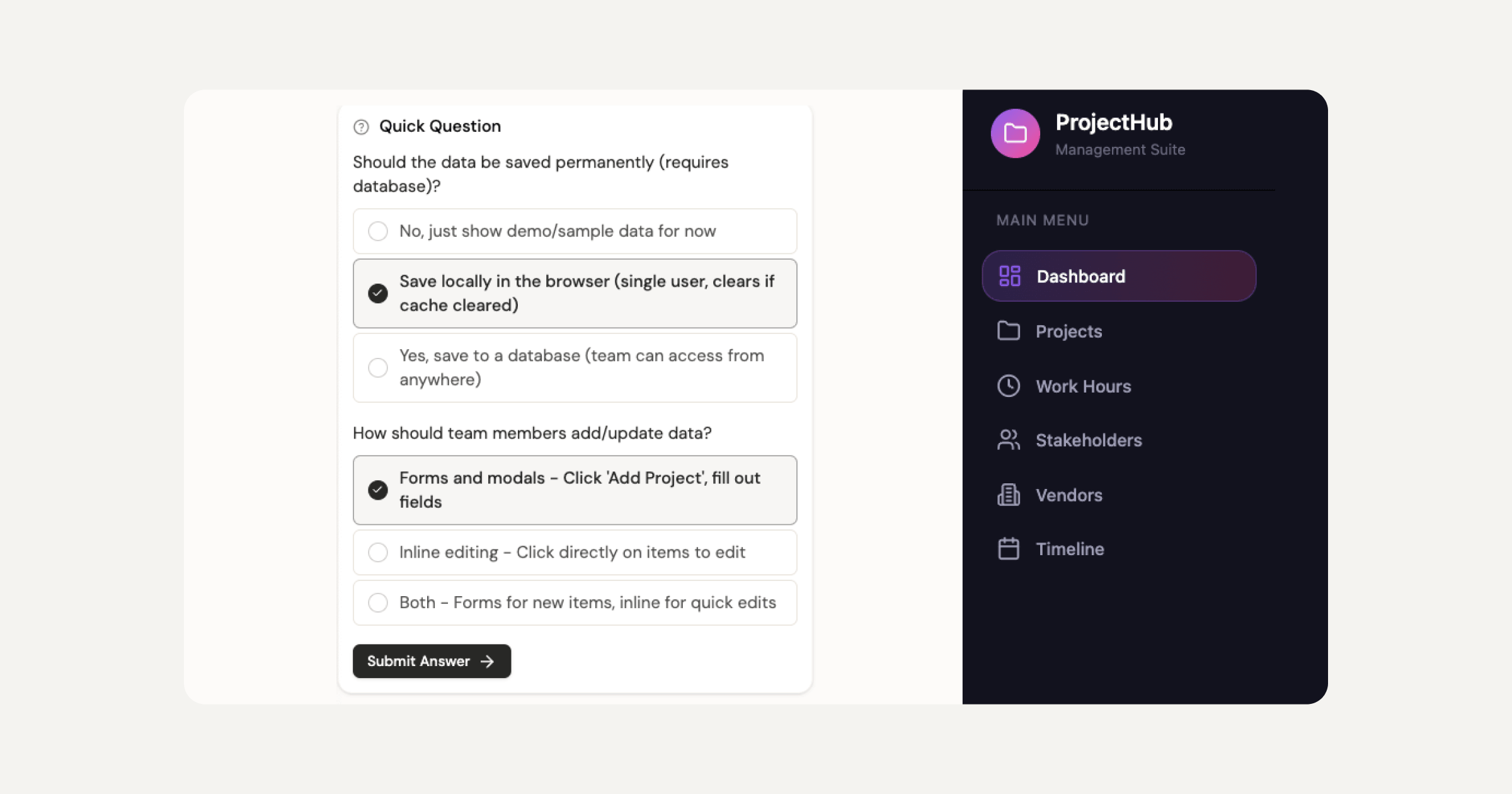
That does not replace the code editor entirely so much as change when and how often you need one. Sticklight is built for people who want to move from idea to working software without managing an editor, a debugger, and a build pipeline themselves, and it pushes beyond websites toward full-stack creation. WordPress and Elementor remain part of that picture, extending what you can publish and customize once a project takes shape.
Frequently asked questions
What is the difference between a code editor and an IDE?
A code editor focuses on writing and reading code with features like syntax highlighting and autocomplete, while an IDE bundles a code editor together with a debugger, build tools, and other utilities in one application.
Do I need a code editor to start learning to code?
Yes, a code editor is one of the first tools most beginners install, since it makes reading and writing code far easier than a plain text editor. Many are free and simple to set up.
Can a code editor run or execute my code?
Most code editors are built for writing and editing code, not running it, though many can be extended with plugins or an integrated terminal to run scripts without leaving the app.
What does syntax highlighting actually do?
Syntax highlighting colors different parts of your code, such as keywords, strings, and comments, so the structure of a file is easier to scan and mistakes stand out visually.
Are code editors free to use?
Many popular code editors are free to download and use, though some offer optional paid plans aimed at teams, added support, or extra features.
Built by the Elementor team. Powered by Claude.
Let it glow.
