What Is a Compiler?

A compiler is a program that translates source code written in one language, usually a human-readable one like C, Java, or Rust, into another form a computer or runtime can execute, such as machine code or bytecode. It does this translation once, ahead of time, producing an output file you can run again and again without repeating the process.
Compilers exist because computers only execute specific low-level instructions, while people write in languages built for clarity and structure. The compiler bridges that gap, checking your code for errors and producing something fast enough to run in production.
What a compiler actually does.
At its core, a compiler takes a text file full of source code and produces a new file the target system can run. Along the way it also acts as a gatekeeper: it checks that your syntax is valid, that your types line up, and that you have not referenced a variable or function that does not exist. If something is wrong, the compiler stops and reports the error instead of letting broken code slip through.
This checking step is a big part of why compiled languages tend to catch mistakes early. A missing bracket or a mismatched type shows up the moment you try to compile, well before that code ever runs in front of a user.
The compilation steps at a high level.
Most compilers move through the same general stages, even though the details differ by language and tool.
- Lexing: the raw text is broken into tokens, such as keywords, names, numbers, and symbols.
- Parsing: those tokens are organized into a tree structure that reflects the code’s grammar and logic.
- Semantic analysis: the compiler checks types, scopes, and references for correctness.
- Optimization: the compiler rewrites parts of the code internally to run faster or use less memory.
- Code generation: the compiler produces the final output, typically machine code or bytecode.
Each stage passes its result to the next, so an error caught early, like an invalid token, stops the process before the compiler wastes time analyzing code that was never valid to begin with.
Machine code versus bytecode.
Not every compiler produces the same kind of output. Some compilers, like those for C or Rust, translate source code straight into machine code, the raw instructions a specific processor understands. That file runs directly on the operating system with no extra translation step, which is part of why compiled languages are often associated with fast startup and execution.
Other compilers produce bytecode instead, a compact, portable instruction set meant to run on a virtual machine rather than directly on hardware. Java compiles to bytecode for the Java Virtual Machine, and C# compiles to a similar format for the .NET runtime. Bytecode trades a bit of raw speed for the ability to run the same compiled file across different operating systems and hardware.
Compiler versus interpreter.
A compiler translates an entire program before any of it runs, producing a standalone output you can execute later. An interpreter, by contrast, reads and executes source code line by line, or statement by statement, at the moment the program runs, without producing a separate executable file first.
Languages like Python and Ruby are typically run through interpreters, or through interpreters paired with just-in-time compilation, which compiles small pieces of code as they run to speed things up. Many modern languages blend the two approaches: a language might compile to bytecode ahead of time and then interpret or further compile that bytecode at runtime, which is exactly how JavaScript engines and the Java Virtual Machine behave.
Where compilers show up in everyday web and app work.
Compilers are not just something backend engineers deal with. A TypeScript file gets compiled down to plain JavaScript before it reaches a browser. A Sass or Less stylesheet gets compiled into standard CSS. Mobile apps written in Swift or Kotlin get compiled into the machine code their devices run. Even build tools that bundle and minify frontend assets are running compiler-like steps behind the scenes, translating code you wrote into a form the browser or device can use efficiently.
Understanding this helps explain why a small typo can produce a build error instead of a runtime crash, and why some languages feel instant to test while others need a build step first. The compiler is doing real work in between, and that work shapes how a project’s development cycle feels day to day.
Where Sticklight fits
Sticklight is a vibe-coding platform built for professional web creators: you describe what you want in plain language, and it turns that prompt into a production-ready result, whether that is a website, an app, a dashboard, a small content system, or a working tool. All the compiling, bundling, and build steps that normally sit between your code and a working product happen behind the scenes, so you can focus on what you are building rather than the toolchain underneath it.
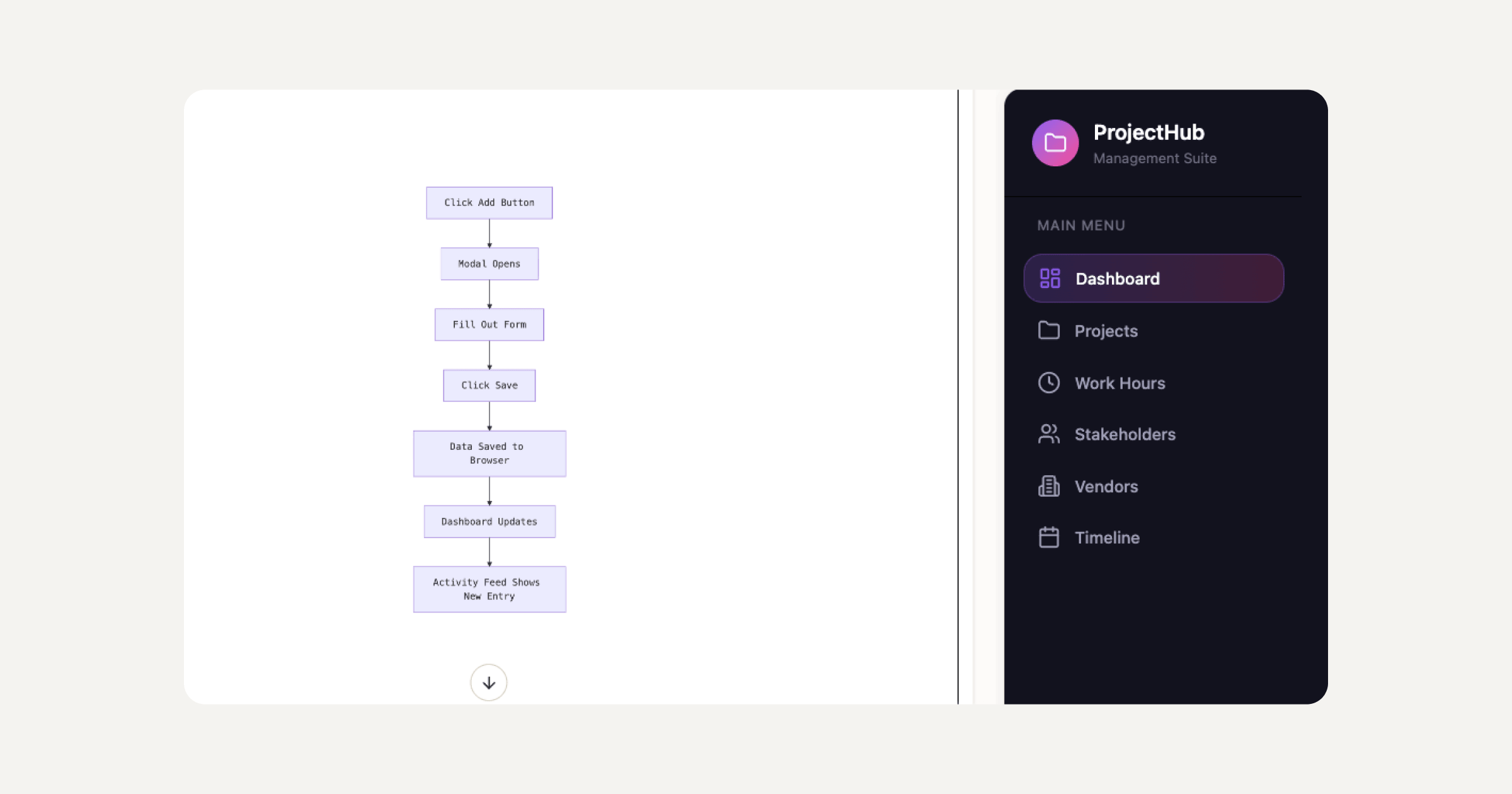
That range is the point. Sticklight is built to go beyond a single website and toward being a full-stack creator, handling the pieces that used to require separate languages, separate compilers, and separate build pipelines. WordPress and Elementor remain solid ways to extend what a site can do, and Sticklight adds a faster, prompt-first path alongside them for building everything from a landing page to a full application.
Frequently asked questions
What is the simplest definition of a compiler?
A compiler is a program that translates source code written by a person into a form a computer or runtime can execute, such as machine code or bytecode.
What is the difference between a compiler and an interpreter?
A compiler translates the whole program ahead of time into a standalone file you can run later, while an interpreter reads and executes source code line by line as the program runs.
What are the main steps a compiler goes through?
Most compilers move through lexing, parsing, semantic analysis, optimization, and code generation, turning raw source text into checked, structured, and finally executable output.
What is the difference between machine code and bytecode?
Machine code runs directly on a specific processor, while bytecode is a portable instruction set meant to run on a virtual machine, trading some raw speed for the ability to run across different systems.
Do I need to understand compilers to build software today?
Not in detail, since most modern tools handle compiling behind the scenes, but knowing roughly what a compiler does helps explain build errors and why some languages need a build step before they run.
Built by the Elementor team. Powered by Claude.
Let it glow.