What Is a Framework?

A framework is a pre-built structure of code that handles the repetitive, foundational parts of building software, so a developer can focus on what makes an app unique. Instead of writing routing, data handling, or page rendering from scratch every time, you build on top of a framework that already provides those pieces.
Frameworks exist for nearly every kind of software: web apps, mobile apps, backend services, and even testing. What they share is the same basic idea. They give you a skeleton and a set of rules, and your job is to fill in the parts specific to your project.
What a framework actually is.
At its core, a framework is a collection of reusable code, tools, and conventions that someone else has already written and tested. It defines how different parts of an application fit together, such as how a request from a browser gets turned into a response, or how data moves from a database to a screen. A framework differs from a plain code library because it controls the overall structure of the program. You write code that plugs into the framework, rather than the framework being a tool you call whenever you need it.
That distinction shapes how much a framework can do for you. A library might help you format a date. A framework decides how your entire application is organized, and asks you to work within that organization.
How a framework works.
Most frameworks follow a pattern often called inversion of control. In regular code, your program calls functions when it needs them. With a framework, the framework calls your code at the right moments, such as when a page loads, a button is clicked, or new data arrives. This is sometimes described as “don’t call us, we’ll call you.”
To make that work, frameworks usually rely on a few shared mechanisms:
- A defined folder or file structure so the framework knows where to find your code.
- Configuration files that set options like routes, environment variables, or build settings.
- Lifecycle hooks, moments where your code runs automatically, such as before a page renders.
- Built-in tools for common tasks like handling forms, managing state, or connecting to a database.
The key parts most frameworks share.
Frameworks differ in language and purpose, but many organize themselves around a similar set of building blocks. Routing decides which piece of code runs for a given URL or action. Components or templates handle what gets shown to the user. A data layer manages how information is stored, fetched, and updated. Middleware sits between steps in a request, often used for things like checking permissions before a page loads.
Some frameworks also enforce a specific architectural pattern, such as separating an application into a model, a view, and a controller. Others leave more of that structure open, but still provide the underlying pieces you need to assemble one yourself.
Why frameworks matter.
Building an application without a framework means solving the same foundational problems that thousands of other developers have already solved: how to route a URL to a page, how to keep a user logged in, how to avoid common security mistakes. A framework packages those solutions so a team can spend its time on what actually makes their product different. It also helps developers work together, since a project that follows a well-known framework’s conventions lets a new team member recognize the file structure and understand roughly how the codebase fits together.
Frameworks show up at nearly every layer of software development. Frontend frameworks handle what a user sees and interacts with in a browser or app. Backend frameworks handle server logic, databases, and how data gets sent back to a client. Mobile frameworks let a team build for phones and tablets using a shared codebase, and testing frameworks provide the structure for writing and running automated checks on code. A single project often combines more than one, such as a frontend framework for the interface paired with a backend framework for the server.
Where to start with frameworks.
The most common path is to pick one framework tied to a language you already know a little of, and build something small with it, like a basic page or a simple form that saves data. Official documentation is usually a good starting point, since it walks through the framework’s structure in the order its creators intended.
It also helps to build the same small project twice: once following a tutorial closely, and once from memory afterward. That second pass is where the framework’s patterns start to feel familiar instead of like a list of rules to memorize.
Where Sticklight fits
Sticklight is the vibe-coding platform for professional web creators, built for people who would rather describe what they need than wire up a framework’s routing and data layer by hand. Ask it for a page, a dashboard, or a full app, and it handles the underlying structure for you, producing production-ready code without asking you to learn a framework’s conventions first.
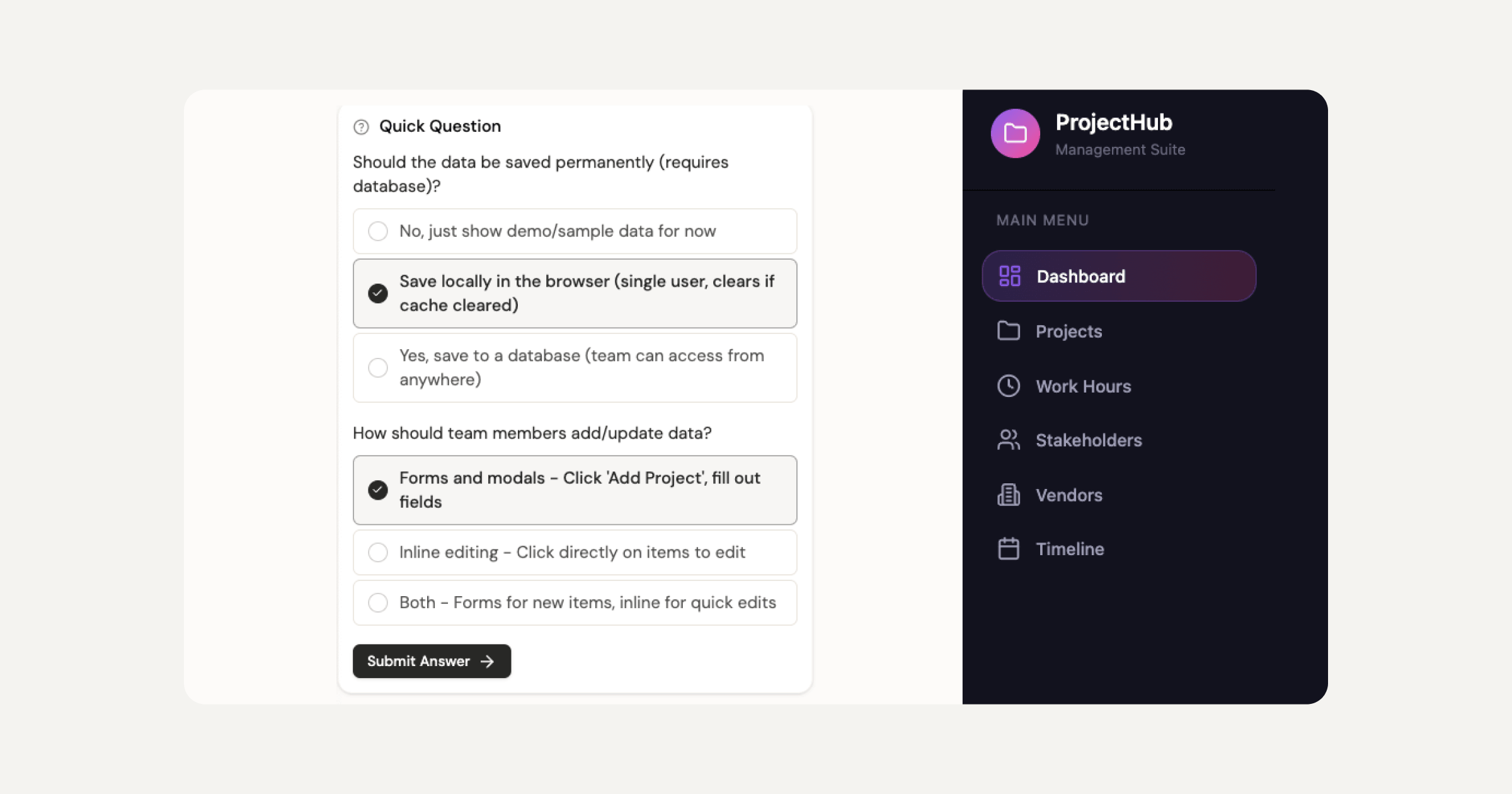
That reach goes beyond a single website. Sticklight takes a creator from a prompt to production-ready websites, apps, dashboards, CMS platforms, and tools, becoming a full-stack creator’s starting point rather than just a page builder. WordPress and Elementor extend that work further, giving you more ways to publish and manage what Sticklight helps you build.
Frequently asked questions
What is the difference between a framework and a library?
A library is a tool your code calls whenever it needs it, while a framework controls the overall structure of the application and calls your code at set moments, such as when a page loads.
Do I need to learn a framework to build a website or app?
Not always. Small projects can be built without one, but most teams use a framework once an app grows, since it saves time on routing, data handling, and other repeated problems.
Can a project use more than one framework at the same time?
Yes, this is common. A project might pair a frontend framework that handles what users see with a separate backend framework that manages the server and data.
How long does it take to learn a framework?
It varies with the framework and your existing coding background, but most developers can build a simple project within a few days once they understand the basic file structure and conventions.
Are frameworks only used for web development?
No, frameworks exist for mobile apps, backend services, automated testing, and other areas of software, though web development is where the term comes up most often.
Built by the Elementor team. Powered by Claude.
Let it glow.