
What Is a Landing Page?

A landing page is a single, standalone web page built to drive one specific action, such as signing up for a trial, downloading a guide, registering for a webinar, or buying a product. Unlike most pages on a website, it strips away the main navigation and other distractions so every visitor’s attention flows toward that one outcome.
If you have ever asked what is a landing page and how it differs from a regular web page, you are not alone, since the two get confused constantly. This article covers what a landing page is, how it differs from a homepage, what it is used for, what makes it convert, and how to build one step by step.
What is a landing page
At its core, a landing page answers one question for one visitor arriving from one specific source, whether that is a paid ad, an email link, or a social post. It matches the promise that brought the visitor there, then guides them toward a single next step without offering competing paths or menu items to wander off through.
Most landing pages share a small set of building blocks: a clear headline, supporting copy that explains the offer, a form or button for the call to action, and some form of proof such as testimonials, logos, or numbers. Everything else gets cut, because a landing page succeeds by removing choices, not adding them.
Landing page vs homepage
A homepage introduces your whole business and links out to everything: products, pricing, about, blog, support. It has to serve many different visitors with many different intents, so it stays broad by design. A landing page does the opposite. It serves one audience segment with one message and one goal, which is why it converts at a noticeably higher rate for that specific purpose.
Think of your homepage as a lobby and a landing page as a private meeting room booked for one conversation. Sending paid traffic to a homepage usually wastes budget, because visitors land, get curious, click around, and leave without converting. A dedicated landing page keeps that same visitor focused on the one thing you actually want them to do.
What a landing page is used for
Landing pages show up wherever a business needs a focused conversion point tied to a specific campaign. Common uses include paid search and social ad campaigns, lead capture for newsletters or gated content, product or feature launches, event and webinar registration, and limited-time promotions where every click needs to count toward one measurable action.
What makes a landing page convert
High-converting landing pages tend to share the same handful of traits, regardless of industry or offer. Get these right and the page does its job; skip one and conversions quietly leak away no matter how good the traffic is.
- A clear headline that states the offer and its benefit in one glance
- One call to action, repeated if needed, but never competing with a second goal
- Real proof: testimonials, reviews, logos, numbers, or case results
- Fast load speed, since slow pages lose visitors before the message even loads
How to build a landing page
Start by naming the single goal the page needs to achieve and who it is for, since that decision shapes every line of copy and every design choice after it. Write focused copy that speaks to that one visitor’s problem and leads directly to the call to action, skipping anything that does not serve that goal.
From there, design around the message rather than around decoration, keep the layout simple, and publish. Once the page is live, treat it as a draft rather than a finished product. Test headlines, calls to action, and images against real traffic, then keep the version that performs better and repeat.
Where Sticklight fits
Sticklight turns a plain-language prompt into a production-ready landing page, complete with layout, copy structure, and working components, without you having to touch a page builder or start from a blank canvas. It fits naturally into the process above: describe the goal and the audience, and Sticklight builds the page around that single conversion point, the same discipline that makes landing pages work in the first place. That is part of what makes it possible to go from idea to full-stack creator so quickly.
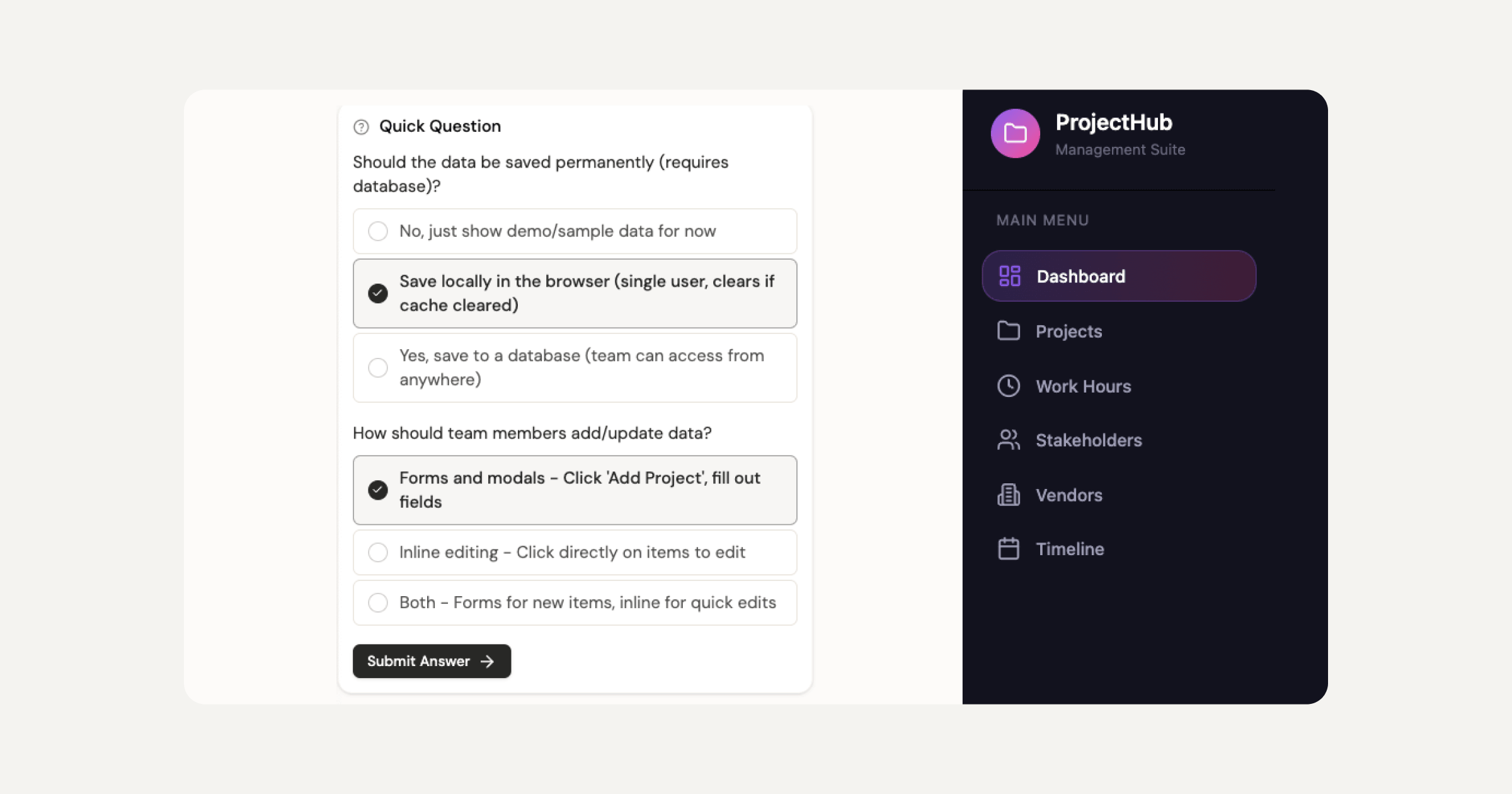
Sticklight is built to sit alongside the tools you already use rather than replace them. If you run WordPress or Elementor for your main site, Sticklight is a natural companion for the focused, single-purpose pages that campaigns need, while your existing site keeps handling everything else.
Frequently asked questions
What is a landing page?
A landing page is a standalone web page built around a single goal, such as capturing a lead or driving a signup, with focused content and one main call to action.
How is a landing page different from a homepage?
A homepage introduces your whole site and links everywhere, while a landing page targets one campaign or offer and keeps visitors focused on a single action.
What makes a good landing page?
A clear headline, a focused message, one primary call to action, supporting proof such as testimonials, and a fast, mobile-friendly design.
How long should a landing page be?
As long as it needs to make the case and no longer. Simple offers can convert with a short page, while considered purchases may need more detail.
Do I need to code to build a landing page?
No. Many tools let you build and publish a landing page without code, and modern builders can generate one from a short description.
Built by the Elementor team. Powered by Claude.
Let it glow.
