What Is a REST API?

A REST API is a set of rules that lets two pieces of software exchange data over the web using standard HTTP requests, the same protocol your browser uses to load a page. It gives one system a predictable way to ask another system for information, or to create, change, and remove it, without needing to know how that other system is built inside.
Almost every app you use leans on one. Checking a weather forecast, posting a comment, tracking a delivery, or loading a product list usually means your device is sending a request to a REST API and getting a response back in a few hundred milliseconds.
How a REST API works.
REST stands for representational state transfer, a style of building web services rather than a single piece of software. A REST API organizes everything around resources, which are just the things a system manages, such as a user, an order, or a photo. Each resource gets its own address, called an endpoint, and a client talks to that address using a small set of HTTP methods.
- GET reads a resource, like fetching a list of orders.
- POST creates a new resource, like adding a new order.
- PUT or PATCH updates an existing resource.
- DELETE removes a resource.
The API does not keep track of what happened in a previous request. Each call carries everything the server needs to understand it, which is part of what makes REST predictable and easy to scale.
Why JSON is the common language.
Most REST APIs send their responses as JSON, a lightweight text format that stores data as simple key and value pairs. A request for a user might return a name, an email address, and an account status, all wrapped in a structure that both humans and programs can read without much effort. JSON is not the only option (some older APIs use XML), but it has become the default because it is compact, easy to parse, and works naturally with JavaScript and most modern programming languages.
Why REST APIs matter.
REST APIs are what let separate systems cooperate without being welded together. A mobile app, a website, and a backend database can all be built by different teams, in different languages, and still work together as long as they agree on the same set of endpoints and data formats. That separation is also what makes it possible to update one part of a system, say the mobile app’s design, without having to rebuild the server that powers it.
This pattern shows up constantly: a payment processor exposing endpoints so online stores can charge a card, a mapping service exposing endpoints so delivery apps can calculate routes, or an internal company tool exposing endpoints so other internal tools can pull shared data. Once a REST API is published, any client that can send an HTTP request can use it.
Where a beginner should start.
The easiest way to get a feel for REST APIs is to use one. Public APIs for weather, movies, or open data sets are a good first stop because they usually need little or no setup and come with clear documentation describing each endpoint. Reading that documentation is worth doing slowly at first: note which endpoints exist, which HTTP method each one expects, and what the JSON response looks like.
From there, most people move on to calling an API from code, often with a small script that sends a GET request and prints the result. Once that feels familiar, building a simple API of your own, even one with a single endpoint that returns a fixed piece of data, tends to make the whole idea click faster than reading about it does.
Where Sticklight fits
Sticklight is the vibe-coding platform for professional web creators, built for people who want to describe what they need and get a production-ready result instead of stitching one together by hand. Ask it for something that connects to a REST API, whether that is pulling live data into a dashboard or wiring up a form that posts to an external service, and it turns that prompt into working code you can ship.
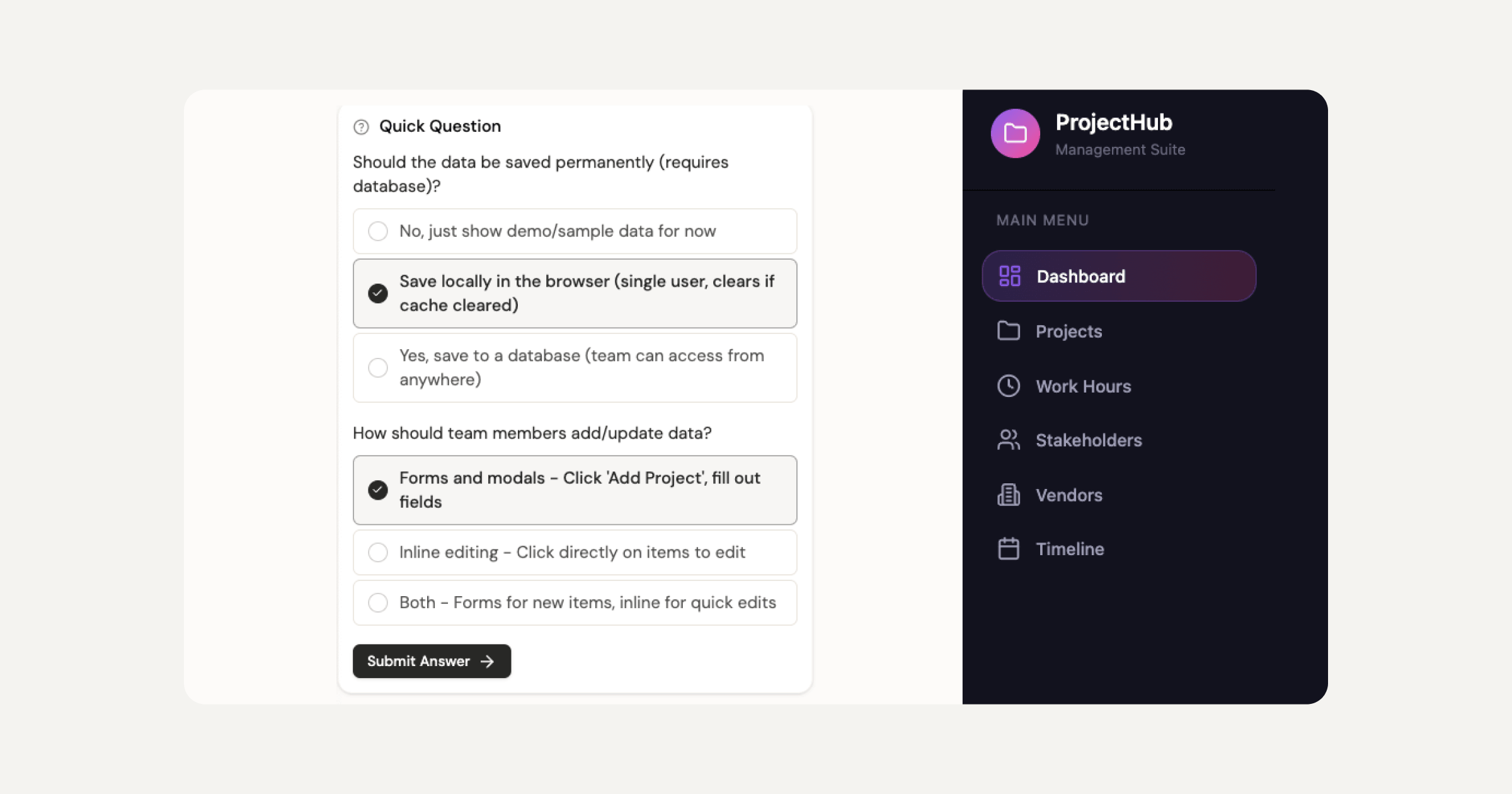
That reach goes beyond a single website. Sticklight is built to take a creator from a prompt to production-ready websites, apps, dashboards, CMS platforms, and internal tools, so the same REST API knowledge that powers one project carries over to the next. WordPress and Elementor sit alongside that work as ways to extend what you build, giving you more surface to publish and manage content on top of what Sticklight generates.
Frequently asked questions
What does REST stand for in REST API?
REST stands for representational state transfer, a style for designing web services around resources, endpoints, and standard HTTP methods rather than a single specific technology.
What is the difference between an API and a REST API?
An API is any interface that lets two programs communicate. A REST API is one common style of API that uses HTTP requests and resource-based endpoints, so it is a specific type of API rather than a separate concept.
Do I need to know JSON to use a REST API?
It helps a lot. Most REST APIs send and receive data as JSON, so being able to read a JSON response and understand its key and value structure makes working with any REST API much easier.
Can a REST API be used without writing code?
Yes, tools exist that let you send requests to a REST API through a simple interface, and some platforms let you connect an API to an app or workflow with prompts instead of manual coding.
Is REST the only way to build a web API?
No, other styles exist, such as GraphQL and SOAP, each with different tradeoffs. REST remains widely used because its structure is simple to learn and works well for most common use cases.
Built by the Elementor team. Powered by Claude.
Let it glow.