
What Is a Sales Funnel?

A sales funnel is the path someone takes from first hearing about a product to becoming a paying customer. It gets its name from the shape: many people enter at the top, and only a fraction make it through to a purchase at the bottom.
Marketers and founders map this path in stages so they can see where prospects drop off and where to focus their effort. Understanding the funnel helps a team spend time and budget on the parts of the journey that actually move people forward.
How a sales funnel works
A funnel works by grouping the buyer’s journey into a small number of stages, then tracking how many people move from one stage to the next. At each stage, some visitors leave and some continue, which is why the funnel narrows as it goes.
Teams typically track this with a mix of website analytics, email open and click rates, and sales conversations. The goal is not to force everyone through, but to remove friction so that people who are a genuine fit find it easy to keep going.
The stages of a sales funnel
Most funnels are built around four core stages, though the exact labels vary by industry:
- Awareness: a person discovers the business exists, often through search, social media, or a referral.
- Interest: they start comparing options and looking at content like blog posts, reviews, or demos.
- Decision: they weigh specific offers, pricing, and features against alternatives.
- Action: they make a purchase, sign up, or otherwise convert.
Some teams add a fifth stage after the purchase, focused on retention and repeat business, since keeping an existing customer is usually less costly than finding a new one.
Why a sales funnel matters
Without a funnel view, it is easy to focus only on the final sale and miss where prospects actually get stuck. A funnel turns a vague goal like “get more customers” into a measurable question: which stage has the biggest drop-off, and what would fix it.
This matters for budget too. If most visitors never move past awareness, more ad spend will not help until the interest stage improves. If people stall at the decision stage, the fix might be clearer pricing or a stronger comparison page rather than more traffic.
Common uses for a sales funnel
Sales funnels show up across many kinds of businesses, not just traditional retail:
- Software companies use them to track free trial signups through to paid plans.
- Service businesses use them to move inquiries through consultations to booked work.
- Online stores use them to track browsing, cart additions, and completed checkouts.
- Content creators use them to turn readers into email subscribers and then customers.
In each case, the stages look a little different, but the underlying idea stays the same: understand the steps, then measure and improve them one at a time.
Where to start
The simplest way to start is to write down the actual steps a real customer took the last time someone bought from you, then check that against your website and marketing. Look for the point where the story breaks down: a page with no clear next step, a form that asks for too much, or a gap between an ad’s promise and the landing page it leads to.
From there, add basic tracking, such as page views and form submissions, so the stages are measurable rather than guesswork. Small, focused fixes at the weakest stage tend to produce better results than a full rebuild.
Where Sticklight fits
Sticklight is a vibe-coding platform for professional web creators. You describe what you need in plain language, and it turns that prompt into production-ready websites, landing pages, apps, dashboards, CMS setups, and other tools, so building each stage of a funnel, such as a landing page, a signup form, or a simple dashboard to track conversions, does not require a separate build process for every piece.
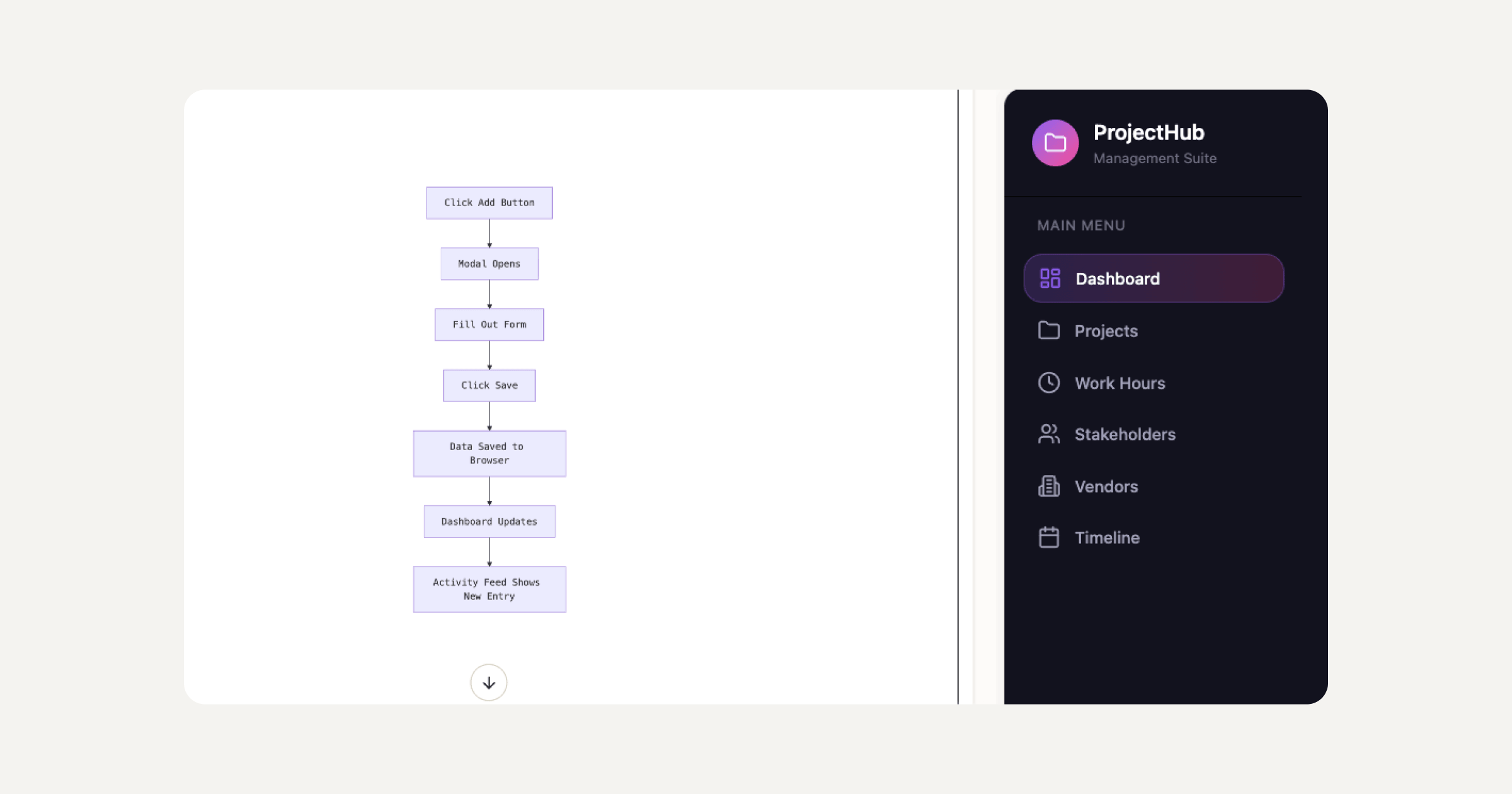
That range is part of what makes Sticklight go beyond a website builder toward becoming a full-stack creator: the same prompt-to-build approach that ships a landing page can also stand up the tool behind it. WordPress and Elementor remain solid, proven ways to build and extend a site, and pairing that foundation with Sticklight gives a creator more ways to bring a funnel idea to life.
Frequently asked questions
What is the difference between a sales funnel and a marketing funnel?
The terms are often used to describe the same journey, but a marketing funnel usually covers the earlier stages, like awareness and interest, while a sales funnel extends further to include the decision and action stages where a purchase actually happens.
How many stages should a sales funnel have?
Most funnels use three to five stages, commonly awareness, interest, decision, and action, with an optional retention stage after the sale. The right number depends on how complex the buying process is for a given business.
What tools do I need to track a sales funnel?
Basic tracking can start with website analytics and form submission data, then expand to email marketing metrics and a simple spreadsheet or CRM as the business grows. The tool matters less than consistently tracking the same stages over time.
How is a sales funnel different from a customer journey map?
A sales funnel focuses on how many people move toward a purchase at each stage, while a customer journey map focuses on the experience and emotions a person has along the way, including after they become a customer.
What counts as a healthy conversion rate between funnel stages?
This varies widely by industry, price point, and traffic source, so there is no single number that applies everywhere. It is usually more useful to compare a funnel against its own past performance and look for stages that lag behind the rest.
Built by the Elementor team. Powered by Claude.
Let it glow.
