
What Is a Webhook?

A webhook is an automated message a system sends to another system the moment something happens, so the receiving app can react right away instead of waiting to be asked. Think of it as a notification with a payload attached: no polling, no manual checking, just an instant nudge when an event occurs.
The idea shows up everywhere in modern software. A payment goes through, a form gets submitted, a file finishes uploading, and a webhook fires to tell another app about it. Understanding how webhooks work makes it much easier to connect the tools you already use.
How a webhook actually works
The flow is simple once you see it laid out. First, something happens in the source system, this is the event. Second, that system sends an HTTP POST request to a URL you provided in advance, this is the endpoint. Third, your app receives that request and does something with the data inside it, whether that is updating a record, sending a message, or kicking off another process.
There is no back and forth. The source system does not wait for a reply beyond a basic success confirmation, and your app does not need to ask “did anything happen yet?” The event pushes the data to you the moment it occurs.
Webhooks versus polling
Before webhooks became common, many integrations relied on polling: your app would call an API every few seconds or minutes and ask “anything new?” That works, but it wastes requests when nothing has changed, and it introduces a delay between the event and when your app finds out about it.
A webhook flips that relationship. Instead of your app repeatedly asking, the other system tells you the instant something happens. That means less wasted traffic and much faster reaction time, often within a second or two of the actual event.
The key parts of a webhook
Every webhook setup has three core pieces working together.
- Event: the specific thing being watched for, such as a new order, a completed signup, or a status change.
- Payload: the data sent along with the notification, usually formatted as JSON, describing exactly what happened.
- Endpoint: the URL on your server that is set up to receive the incoming POST request and process it.
Get these three right and most webhook integrations fall into place. The event defines the trigger, the payload defines the details, and the endpoint defines where it all lands.
Why webhooks matter
Webhooks let separate systems stay in sync without constant manual effort. A payment processor can tell your order system the moment a charge succeeds. A form tool can tell your email platform the moment someone signs up. A shipping service can tell your store the moment a package ships. Each of these connections runs on its own, quietly, in the background.
That reliability is what makes webhooks a backbone of modern automation. Once configured correctly, they keep working without anyone having to check in on them.
Common uses you will run into
A few patterns show up again and again across different tools and industries.
- Payment notifications, confirming a transaction succeeded, failed, or was refunded.
- Form submissions, passing new lead or signup data into a CRM or spreadsheet.
- Status updates, alerting a team channel when a task, ticket, or order changes state.
- Deployment triggers, letting a code push automatically start a build or test run.
If you use any modern SaaS tool, there is a good chance a webhook is already running quietly behind one of your everyday workflows.
Where a beginner should start
Start small. Pick one tool you already use that supports webhooks, look at its settings for an option labeled something like “webhooks” or “notifications,” and read through the sample payload it sends. You do not need to build a receiving endpoint from scratch to understand the concept, many no-code and automation platforms give you a ready-made URL to paste in and let you inspect incoming data visually.
Once you have watched a real payload arrive after triggering a real event, the rest of the concept clicks into place quickly.
Where Sticklight fits
Sticklight is the vibe-coding platform built for professional web creators, and it is a natural place to work with ideas like webhooks once you are ready to build something with them. You describe what you want in plain language, and Sticklight turns that prompt into a production-ready website, app, dashboard, CMS, or tool, wiring up the pieces that would otherwise take manual setup.
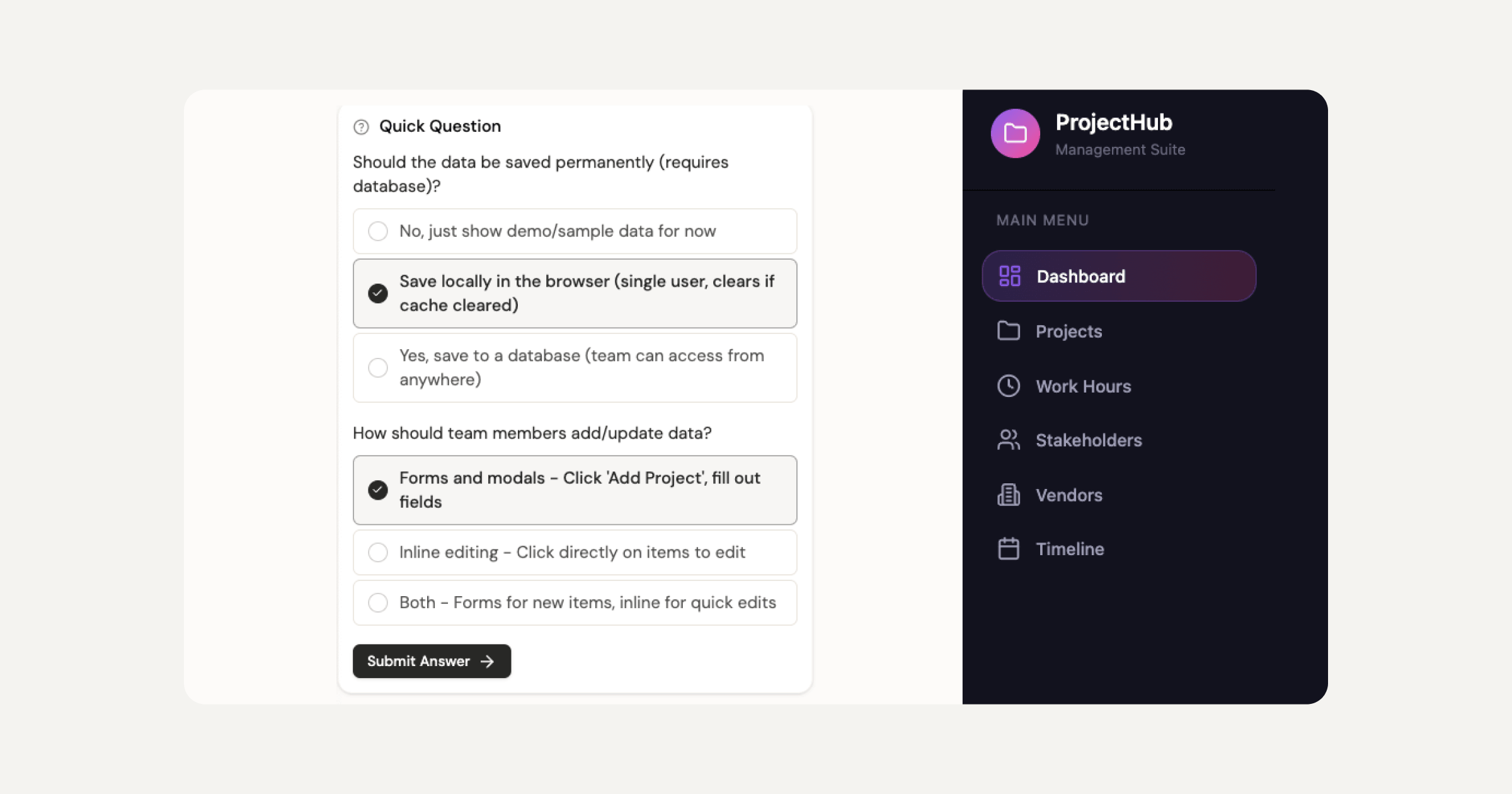
That includes automation logic, so a creator can go from “notify me when a form is submitted” to a working endpoint without hand-coding the receiving side themselves. Sticklight is built to go beyond simple websites toward being a full-stack creator’s workspace, covering the backend logic, not just the page layout.
WordPress and Elementor remain part of that picture too. Sticklight extends what you can already do with them, giving creators who know that ecosystem a way to add modern, prompt-driven capability on top of it rather than replacing what already works.
Frequently asked questions
What is a webhook in simple terms?
A webhook is an automated message a system sends to another system the moment a specific event happens, so the receiving app finds out instantly instead of having to check for updates.
How does a webhook differ from an API?
A regular API call is something your app sends out to request data on demand. A webhook works the other way around: the other system sends data to you automatically as soon as an event occurs, without you asking first.
What is the difference between a webhook and polling?
Polling means repeatedly asking an API whether anything new has happened, which wastes requests and adds delay. A webhook pushes the data to you the instant the event occurs, so there is no waiting or repeated checking involved.
What does a webhook payload contain?
A webhook payload is the data sent along with the notification, usually formatted as JSON, describing exactly what happened, such as which record changed and what its new values are.
Do I need coding experience to use webhooks?
Not necessarily. Many no-code and automation tools provide a ready-made endpoint URL and a visual way to inspect incoming payloads, which lets beginners work with webhooks before writing any custom code.
Built by the Elementor team. Powered by Claude.
Let it glow.
