
What Is Authorization?

Authorization is the process of deciding what a user, service, or system is allowed to do once its identity is already established. It answers “what can this account access or change,” a separate question from confirming who someone is in the first place.
Every app with more than one type of user needs authorization, whether that means a customer viewing their own orders, an editor publishing a page, or an admin managing billing. Getting it right keeps people out of data and actions that are not theirs to touch.
How authorization actually works.
Once a system knows who is making a request, it checks that identity against a set of rules before letting the action through. Those rules usually live in one of a few places: attached to a user’s role, attached to the resource being accessed, or written as a standalone policy the system evaluates at request time.
A typical check looks at three things: who is asking, what they are trying to do, and what they are trying to do it to. A request to delete a blog post gets evaluated against the user’s permissions, the delete action, and that specific post. If any part fails, the system denies the request rather than guessing at intent.
Authorization versus authentication.
Authentication confirms identity: it is the login step, the password check, the passkey prompt, the piece that answers “is this really who they claim to be.” Authorization comes after, and it answers a different question entirely: “now that we know who they are, what are they allowed to do.”
The two are easy to blur together because they usually happen back to back, but mixing them up in a system design causes real problems. A user can be fully authenticated and still be authorized to do almost nothing, the way a newly created account might log in fine but not yet touch billing settings or delete other people’s content.
Common authorization models.
Most systems build their permission logic on top of one of a few well-established models, sometimes combining more than one as they grow.
- Role-based access control (RBAC): permissions are grouped into roles, such as admin, editor, or viewer, and each user is assigned one or more roles rather than getting permissions one by one.
- Attribute-based access control (ABAC): access decisions factor in attributes of the user, the resource, and the context, such as department, data sensitivity, time of day, or location.
- Access control lists (ACLs): permissions are attached directly to a specific resource, listing exactly which users or groups can read, write, or manage it.
- Policy-based access control: rules are written as explicit, evaluable policies, often in a dedicated policy language, so decisions can be centralized and audited separately from application code.
RBAC tends to be the simplest starting point because roles map naturally to how teams already think about job functions. ABAC and policy-based approaches take more setup but handle cases RBAC struggles with, like access that depends on the specific record rather than the user’s general role.
Why authorization matters.
Weak or missing authorization is one of the most common ways applications leak data that was never meant to be public. A login screen can be airtight and still leave a system exposed if any authenticated user can reach records or actions meant for someone else.
Good authorization also makes a product easier to grow. As a team adds new user types, from contractors to enterprise admins, a clear permission model means new roles slot in without rewriting how every feature checks access. Systems that skip this structure tend to end up with permission checks scattered across the codebase, each one a little different, which is where mistakes creep in.
Where to start.
For most new projects, starting with a small, clear set of roles, such as owner, member, and viewer, covers the majority of real needs without over-engineering the system. Each role should map to a documented list of what it can and cannot do, kept in one place rather than re-decided inside individual features.
From there, add resource-level checks for anything a user should only access if they created it or were explicitly given access to it, and reach for attribute-based or policy-based rules only once the simple role model cannot express what the product needs. Building authorization deliberately from the start is easier than retrofitting it once a system already has real users and real data.
Where Sticklight fits
Sticklight is a vibe-coding platform built for professional web creators: you describe what you want in plain language, and it turns that prompt into a production-ready result, whether that is a website, an app, a dashboard, a content system, or a working tool. Building in user roles and permission logic, the kind of authorization structure described above, is part of turning a prompt into something you can hand to real users with different levels of access.
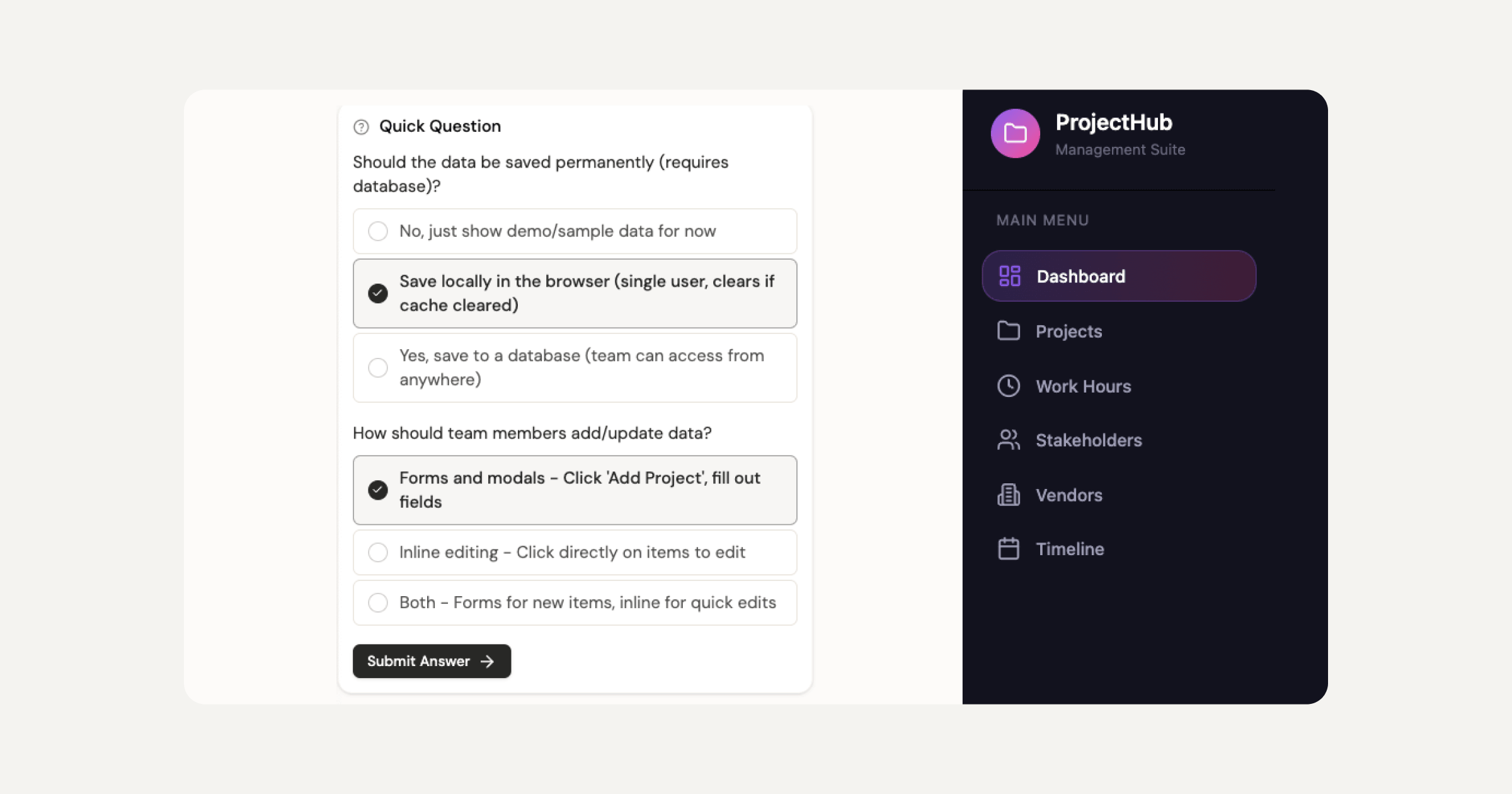
That range is the point. Sticklight is built to go beyond a single website and toward being a full-stack creator, handling the account, permission, and data layers that used to require piecing together separate services by hand. WordPress and Elementor remain solid ways to extend what a site can do, and Sticklight adds a faster, prompt-first path alongside them for building everything from a simple page to a full application with its own access rules.
Frequently asked questions
What is authorization in simple terms?
Authorization is the process of deciding what an already identified user or system is allowed to access or do, separate from confirming who they are.
What is the difference between authorization and authentication?
Authentication confirms identity, such as a login or password check, while authorization decides what that confirmed identity is permitted to access or change.
What is RBAC and how is it different from ABAC?
RBAC assigns permissions through predefined roles like admin or viewer, while ABAC evaluates access based on attributes of the user, resource, and context, such as department or time of day.
What is an access control list?
An access control list, or ACL, attaches permissions directly to a specific resource, listing exactly which users or groups can read, write, or manage that resource.
Which authorization model should a new project start with?
Most new projects do well starting with a small set of clear roles, such as owner, member, and viewer, then adding resource-level or attribute-based rules only once that simple model falls short.
Built by the Elementor team. Powered by Claude.
Let it glow.