

What Is Back-End Development?

Back-end development is the work of building and maintaining everything that happens behind the scenes when someone visits a website or opens an app. It covers the server that processes requests, the database that stores information, and the application logic that decides what happens next, all of it running quietly while the visitor only sees the finished page in front of them.
In short, back-end development is the engineering that makes a site actually work: it connects the interface people see to the data and rules that power it, handling things like user accounts, payments, search, and content updates so the front end has something real to display. Without it, a page is just a static shell with nothing behind it.
Servers and databases
A server is simply a computer that stays on, waits for requests, and sends back a response. When someone loads a page, submits a form, or logs in, that action travels to a server, which runs the relevant code and decides what to send back. Everything from checking a password to loading a product page starts with a request reaching a server somewhere.
Databases handle the other half of the job: storage. They hold user accounts, orders, articles, settings, and anything else that needs to persist between visits. A well-organized database lets the back end find and update the right piece of information quickly, even as a site grows and the amount of stored data keeps expanding over time.
APIs and how systems talk
An API, short for application programming interface, is the agreed-upon way that different parts of a system exchange information. When a front end needs data, it asks the back end through an API rather than reaching into the database directly. This keeps the two sides cleanly separated and lets each one change independently without breaking the other.
A well-designed API acts like a contract: it defines exactly what can be asked for and what shape the answer will take. That predictability is what allows a mobile app, a website, and other services to all pull from the same back end at once, each one getting consistent data without needing to know how the system stores it.
Back end versus front end
The front end is what a visitor sees and interacts with: layout, buttons, images, and text. The back end is what makes those elements meaningful, checking credentials, fetching the right content, and saving new input. Neither works well alone. A polished interface with no back end has nothing to display, and a strong back end with no front end has no way to be used.
The two sides usually rely on different tools and different ways of thinking. Front-end work is concerned with what appears on screen and how it responds to a click or a scroll. Back-end work is concerned with correctness, consistency, and making sure the right data reaches the right place every single time, even under heavy use.
What a back-end developer does
A back-end developer designs how data flows through a system: what gets stored, how it is validated, and how it reaches the front end in a usable form. The role blends writing server-side code with planning database structure and connecting outside services, always with an eye on keeping the whole system reliable as requirements change and traffic grows.
- Writing and maintaining server-side application logic
- Designing and managing databases
- Building and documenting APIs
- Setting up authentication and access control
Much of the job is invisible by design. A visitor never sees the queries, the validation checks, or the background jobs that keep a site running smoothly, they only notice when something goes wrong. That makes careful, methodical work one of the most valuable habits a back-end developer can have.
Security and scaling basics
Security starts with the basics: verifying who a user is, checking that submitted data is what it claims to be, and encrypting sensitive information both in transit and at rest. A back end that skips these steps leaves an opening that a front end alone can never close, no matter how careful the visual design looks.
Scaling is about staying steady as demand grows. That can mean caching frequent requests, spreading traffic across multiple servers, or optimizing slow database queries before they become a bottleneck. Good back-end architecture anticipates growth early, so a busier day turns into a normal day instead of a broken one.
Where Sticklight fits
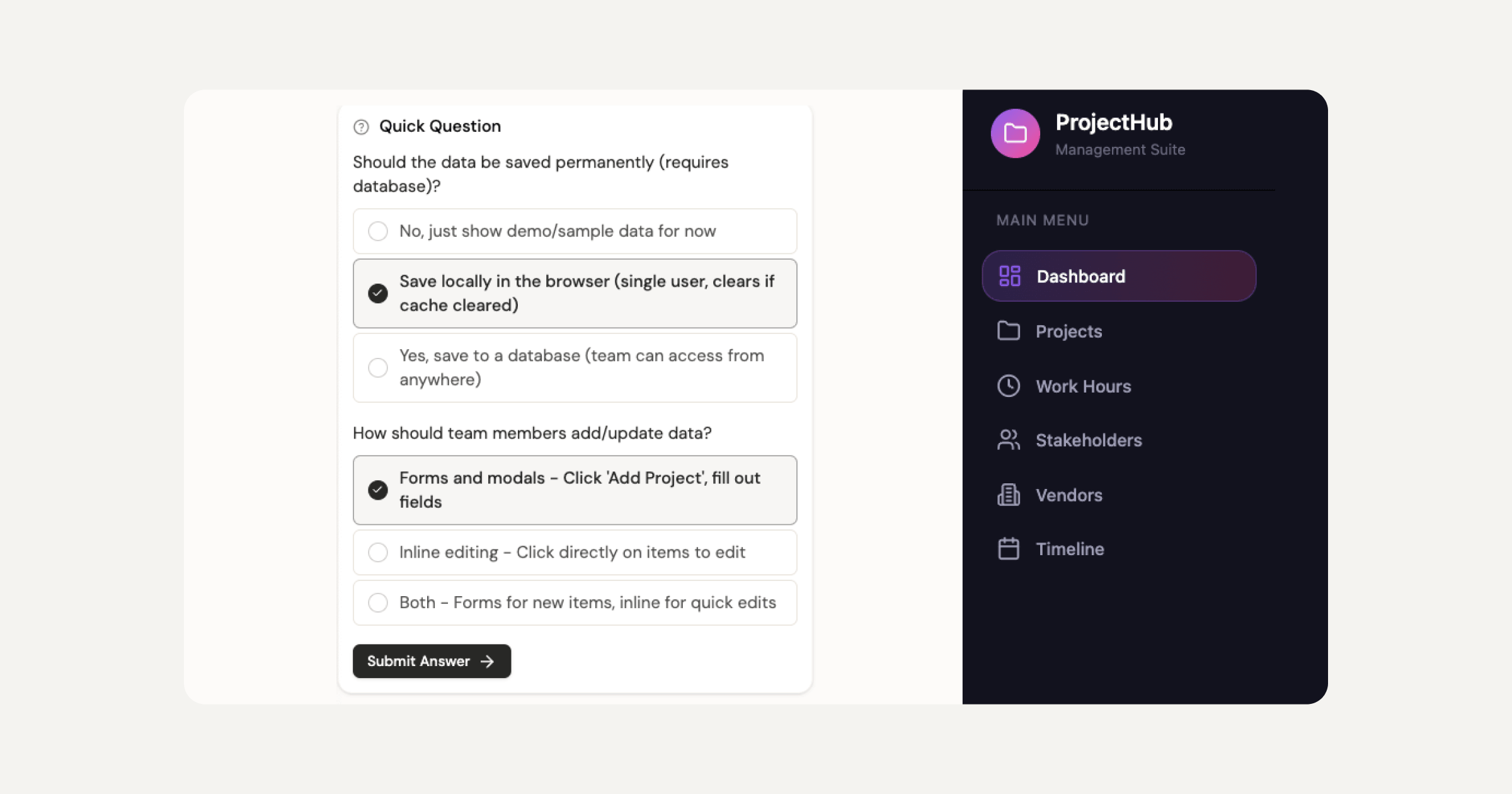
Sticklight is a vibe-coding platform that turns a plain-language prompt into a production-ready website, app, dashboard, or tool, wiring up the back end along the way. Instead of manually setting up servers, databases, and APIs from scratch, a person can describe what they need and let Sticklight assemble the working system behind it.
This sits alongside the tools people already use to build for the web. Elementor and WordPress remain strong choices for designing and managing content-rich sites, and Sticklight adds a way to spin up the custom, data-driven pieces a project needs beyond the page itself, so the two approaches work well side by side.
Frequently asked questions
What is back-end development?
Back-end development is the practice of building the parts of a website or app that run on a server, out of sight of users. It handles data, logic, and how information moves between the database and the front end.
What is the difference between back-end and front-end development?
Front-end development covers what users see and interact with in the browser, while back-end development covers servers, databases, and logic behind the scenes. Full-stack developers work across both.
What does a back-end developer do?
A back-end developer builds and maintains servers, databases, and the logic that powers an app. They create and connect the systems that store data, handle requests, and keep everything running securely.
What technologies are used in back-end development?
Back-end work often involves server languages, databases, and APIs that connect services together. The exact stack varies by project, but the goal is to store, process, and deliver data reliably.
Do I need to code to build a back end?
Traditionally yes, but modern tools can generate back-end logic, databases, and connections from a description, so you can build working systems faster and adjust the code when you need more control.
Built by the Elementor team. Powered by Claude.
Let it glow.
