
What Is Caching?

Caching is the practice of storing a copy of data somewhere fast to reach, so the next request for that same data can be answered without redoing the original work. Instead of rebuilding a page or refetching a file from scratch every time, the system just hands back the saved copy.
That shortcut is why caching matters so much for speed. A cached response can load in milliseconds because it skips database queries, image processing, or a slow trip across the internet, and it repeats that saving for every visitor who asks for the same thing.
What caching actually does.
Every time a browser loads a page, something has to generate the content: a server runs code, a database returns rows, a template gets assembled into HTML. That work costs time. Caching stores the finished result, or some piece of it, in a location that is quicker to read than redoing the work, then serves that stored copy on the next matching request instead of starting over.
A cache can live in several places at once, and most fast sites use more than one layer together. Each layer catches requests before they reach the slower step behind it, so the parts of a system that are hardest to scale end up doing the least work.
Common web caching layers.
The browser cache lives on your own device. When you load a page, the browser saves files like stylesheets, scripts, and images, along with instructions on how long to keep them, then reuses those files on your next visit instead of downloading them again. That is why a second visit to a site often feels noticeably faster than the first.
A CDN, short for content delivery network, is a set of servers spread across many physical locations that store copies of a site’s files close to where visitors actually are. A request gets answered by a nearby CDN node instead of traveling all the way to one origin server, cutting down travel distance and easing load on the origin.
- Page cache: stores the final rendered HTML of a page, so it skips the database and template work on repeat visits.
- Object cache: stores smaller pieces, like the result of one database query, so they can be reused across many pages.
Server and page caching work behind the scenes: once a page is built the first time, the server saves that rendered result and hands it to later visitors instead of rebuilding it from scratch, which matters most for content that does not change on every load.
Cache invalidation, in plain terms.
The hard part of caching is not storing data, it is knowing when a stored copy is no longer accurate and needs to be replaced. That process is called cache invalidation, and it is the reason caching has a reputation for being tricky even though the basic idea is simple.
Most systems handle this with a mix of two approaches: a time limit, where a cached item automatically expires and gets refreshed after a set period, and an event-based clear, where an action like publishing a new page or updating a price tells the cache to drop the old copy right away. Get the timing wrong in either direction, and visitors either see stale content for too long, or the site loses caching’s speed benefit because it keeps rebuilding things it did not need to.
A note on stale content.
Stale content is what a cache serves when it holds onto an old version longer than it should, so a visitor sees yesterday’s price, an stale announcement, or a page that does not match what was just published. It usually happens when a cache’s expiration window is set too long, or when an update does not trigger the clear it was supposed to.
The fix is rarely to remove caching altogether, since that trades speed for accuracy across the whole site. Most setups instead shorten the cache duration for content that changes often, and rely on explicit invalidation for anything time-sensitive, so the speed benefit stays in place for the parts of a site that genuinely do not change much.
Where Sticklight fits
Sticklight is a vibe-coding platform built for professional web creators: you describe what you want in plain language, and it turns that prompt into a production-ready result, whether that is a page, a full site, an app, a dashboard, a small content system, or a working tool. Setting up sensible caching, from page-level rules to knowing which pieces of a system should be cached and which should not, is exactly the kind of groundwork Sticklight can build correctly from the start, instead of leaving it as an afterthought once a site is already slow.
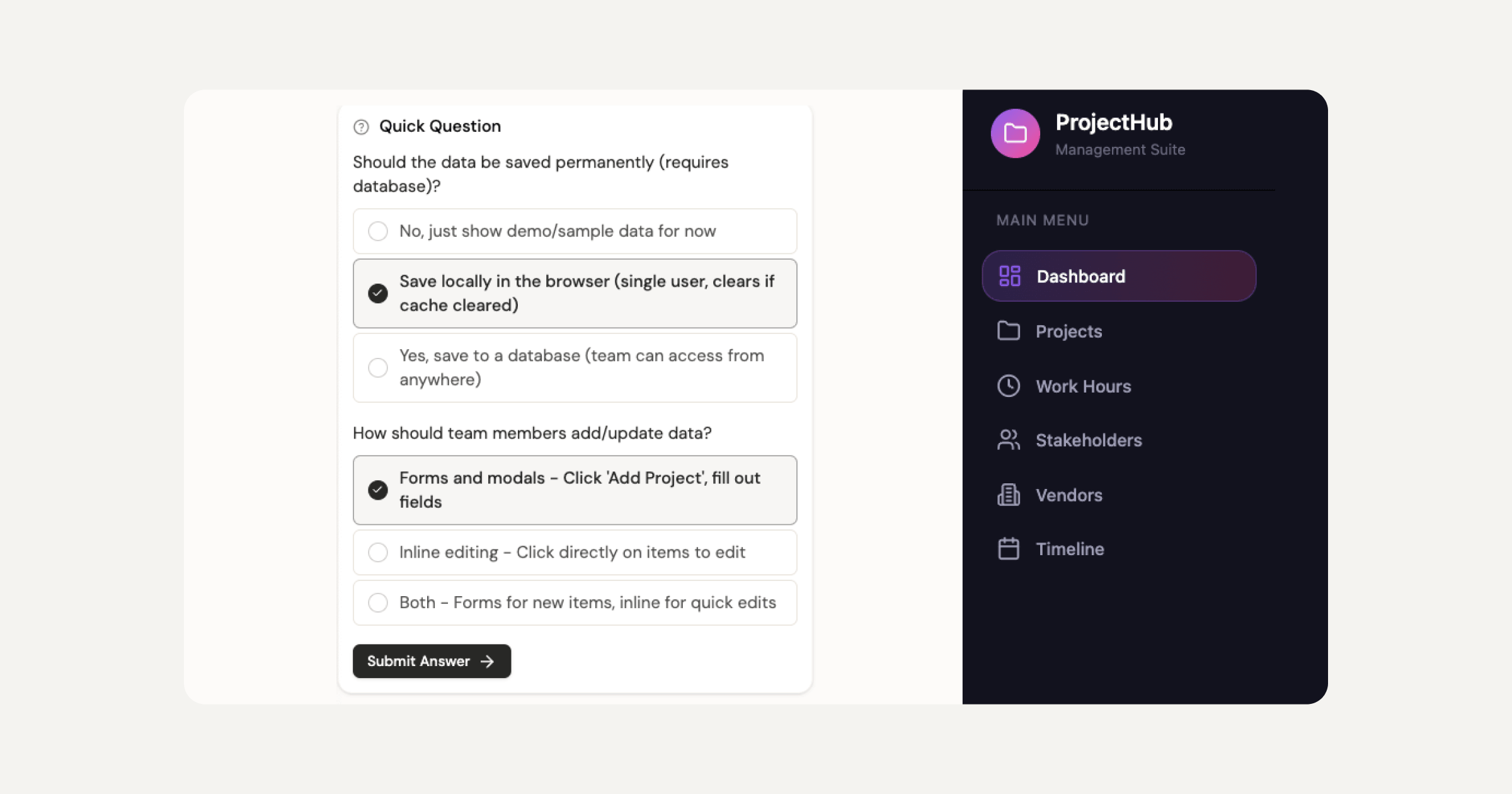
That range is the point. Sticklight is built to go beyond a single website and toward being a full-stack creator, so the same prompt-driven approach that gets your caching layers right can also build the dashboard where you monitor performance, the tool that clears a cache after a content update, or the app sitting behind your site. WordPress and Elementor remain solid ways to extend what a site can do, and Sticklight adds a faster, prompt-first path alongside them for building and tuning the systems, caching included, that keep a site quick.
Frequently asked questions
What is caching in simple terms?
Caching means storing a copy of data somewhere fast to reach, so the next request for it gets answered from that saved copy instead of redoing the original work, like a database query or a full page build.
Why does caching make a website faster?
Building a page from scratch takes time: a server has to run code, query a database, and assemble a template. A cache skips those steps by serving an already finished result, which is why cached responses load much faster than uncached ones.
What is the difference between a CDN and a browser cache?
A browser cache stores files locally on your own device after your first visit. A CDN is a network of servers in different physical locations that store copies of a site’s files so a nearby server can answer a request instead of the original server having to.
What does cache invalidation mean?
Cache invalidation is the process of clearing or refreshing a stored copy once it no longer matches the real, current version of the content, either after a set time limit expires or when an update event triggers a clear.
Why would a website show outdated or stale content?
Stale content usually appears when a cache holds a copy longer than it should, either because its expiration window is set too long or because an update did not trigger the clear it was supposed to.
Built by the Elementor team. Powered by Claude.
Let it glow.