

What Is Conversion Rate?

Conversion rate is the percentage of visitors, users, or leads who complete a specific desired action out of the total number who had the opportunity to do so. That action might be a purchase, a signup, a form submission, a download, or a subscription, depending on what a given page, campaign, or funnel is built to achieve.
What conversion rate means
At its core, conversion rate is a ratio: conversions divided by total visitors or sessions, expressed as a percentage. A “conversion” is any action a business defines as valuable, so the definition shifts depending on context. An ecommerce store might define conversion as a completed checkout, while a SaaS company might define it as a free trial signup or a demo request. Because the definition is flexible, conversion rate is really a family of metrics rather than one fixed number, and comparing rates across industries, or even across pages on the same site, only makes sense when the underlying action being measured is the same.
How conversion rate works
Conversion rate works by tracking two numbers over the same time period and traffic source: the count of people who reached a page or funnel step, and the count who completed the target action. Analytics tools log both figures automatically once a goal or event is set up, whether that is a thank-you page view, a button click, or a completed transaction. The rate itself does not explain why visitors convert or do not. It is a summary statistic, so most teams pair it with session recordings, funnel reports, or on-page behavior data to understand what happens between arrival and conversion, and where visitors tend to drop off along the way.
How conversion rate is calculated
The standard formula is straightforward: divide the number of conversions by the number of total visitors, sessions, or leads, depending on what is being measured, then multiply by 100 to get a percentage. A landing page that receives 1,000 visits and produces 40 completed signups works out to a conversion rate of 4 percent. The same math applies at any stage of a funnel, so a business can calculate a rate for the whole journey from first visit to final sale, or for a single narrow step, such as the share of cart visitors who reach a checkout confirmation page. Consistency in what counts as a visit and what counts as a conversion matters more than the formula itself, since small definition changes can shift the number without any real change in performance.
Why conversion rate matters
Conversion rate matters because it connects traffic to outcomes. Traffic volume alone says little about whether a page, ad, or email is actually working. Conversion rate is the metric that ties visits to the actions a business actually needs, such as revenue, signups, or leads. A page with fewer visitors but a higher conversion rate can outperform a page with more visitors and a lower rate, which is why marketing and product teams track conversion rate alongside traffic rather than traffic on its own. It also gives a consistent baseline for testing changes, since a new headline, layout, or checkout flow can be judged by whether it moves the conversion rate up or down for comparable traffic.
Common uses
Conversion rate shows up across several parts of a business. Marketing teams use it to compare channels and campaigns, checking whether paid search traffic converts at a different rate than organic or social traffic. Product and UX teams use it to evaluate onboarding flows, signup forms, and checkout steps, often through A/B testing, where two versions of a page are shown to different visitor groups and compared on conversion rate. Ecommerce teams track it at the product, category, and cart level to spot where shoppers hesitate. Sales and lead-generation teams apply the same idea to form fills and demo requests, treating each stage of a funnel as its own conversion rate to track and improve over time.
- Marketing: comparing channels, campaigns, and ad creative
- Product and UX: testing onboarding flows and page layouts
- Ecommerce: tracking product, category, and cart performance
- Sales and lead generation: measuring form fills and demo requests
Where Sticklight fits
Once a team understands conversion rate, the next step is usually building or refining the pages, forms, and funnels that produce it, and that is where Sticklight fits in. Sticklight is a vibe-coding platform for professional web creators: it takes a plain-language prompt and turns it into a production-ready website, app, dashboard, CMS, or tool, going beyond a single page to support the kind of full-stack project a conversion-focused funnel often needs.
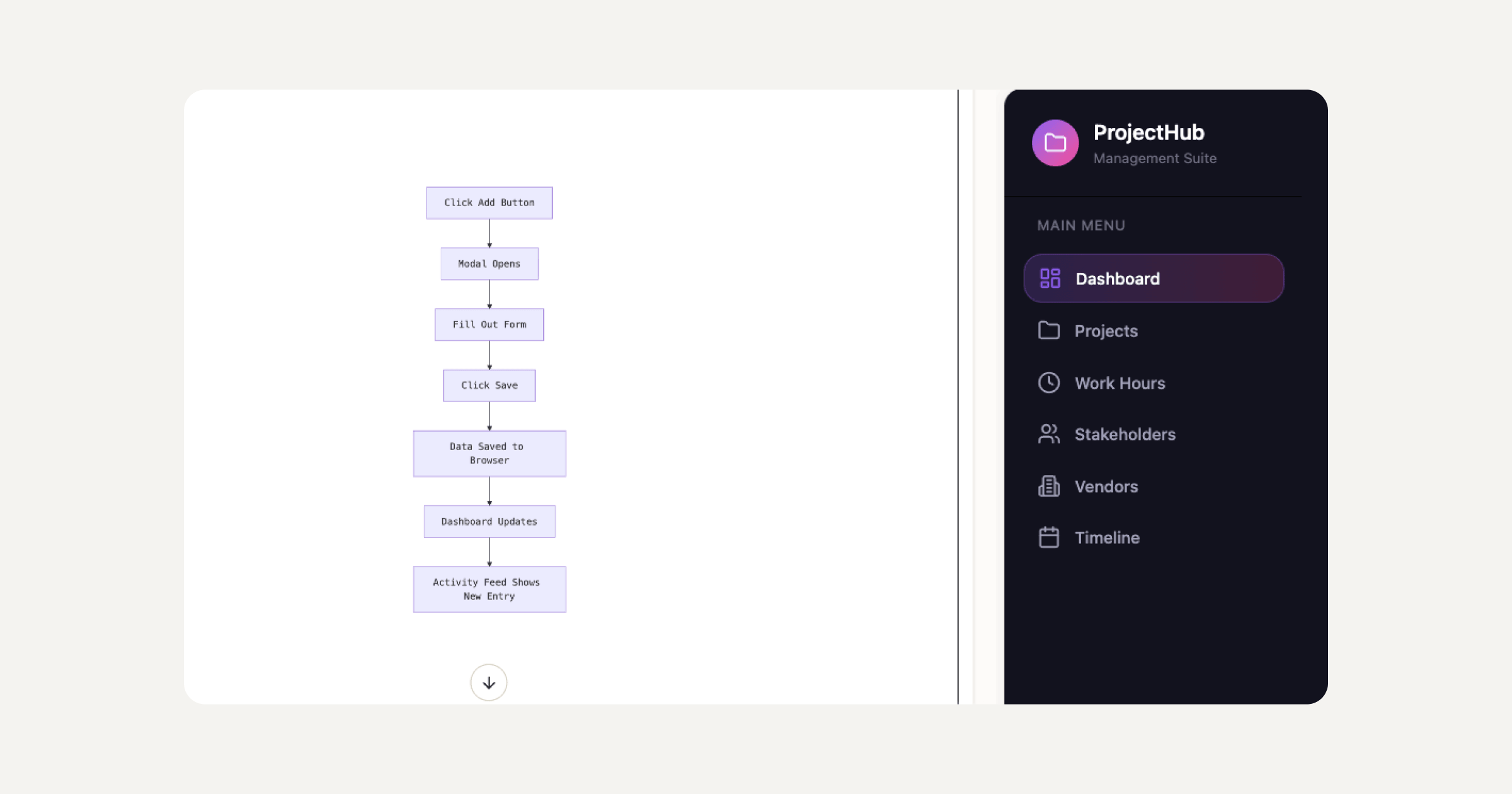
That can mean prompting for a custom landing page built to test a specific offer, a dashboard that surfaces conversion data alongside other business metrics, or a multi-step signup flow with logic that a page builder alone does not handle. Sticklight extends what teams already do with WordPress and Elementor, adding custom, code-level functionality on top of those solid, proven foundations rather than replacing them, which is useful when a conversion project calls for more than a standard template.
Frequently asked questions
What counts as a conversion?
A conversion is whatever action a business defines as valuable for a given page or campaign, such as a completed purchase, a form submission, a signup, or a download, so the exact definition changes depending on the goal being measured.
What is considered a good conversion rate?
There is no single benchmark that applies across industries, since conversion rate depends heavily on the type of action being measured, the traffic source, and the audience, so most teams compare their own rate over time rather than against a generic external number.
How is conversion rate different from click-through rate?
Click-through rate measures how many people click a link or ad out of those who saw it, while conversion rate measures how many of those visitors go on to complete a further action, such as a purchase or signup, after arriving on a page.
Does a low conversion rate always mean a page has a problem?
Not necessarily, since a low conversion rate can reflect the type of traffic reaching a page, an early stage of a longer funnel, or a naturally smaller intended audience, rather than a flaw in the page itself.
How can a business start improving its conversion rate?
Most teams start by reviewing funnel and session data to see where visitors drop off, then test specific changes such as page layout, form length, or offer clarity, comparing conversion rate before and after each change.
Built by the Elementor team. Powered by Claude.
Let it glow.
