What Is Docker?

Docker is an open-source platform for building, packaging, and running applications in containers. It lets a developer bundle an app with everything it needs, code, libraries, and configuration, into a single unit that runs the same way on a laptop, a test server, or a production machine.
It is one of the most widely used tools for this kind of packaging, and the name is often used loosely to mean “containers” even though Docker is a specific platform built around that idea.
How Docker works
Docker’s core pieces are images, containers, and a Dockerfile. A Dockerfile is a plain text file that lists the steps to assemble an application: which base system to start from, what to install, what files to copy in, and what command to run when it starts. Docker reads that file and builds an image, a saved, read-only package containing the app and everything it depends on.
A container is a running instance of an image. Starting a container takes the packaged image and runs it as an isolated process on the host machine, with its own filesystem and network connection but sharing the host’s operating system kernel rather than booting a separate one. Multiple containers can run side by side on the same machine, each isolated from the others.
Images, containers, and registries
Once an image is built, it can be pushed to a registry, a storage service for images that teams and deployment tools pull from. Docker Hub is the default public registry, and many organizations also run private ones. Pulling an image from a registry gives an exact, versioned copy of an application, so anyone on a team, or any server in a pipeline, starts from the same files.
This registry step is what makes Docker useful beyond a single machine. An image built once can be pulled and run unchanged on a colleague’s laptop, a testing environment, or a cloud server, without re-installing dependencies by hand each time.
Why developers use it
The main reason teams adopt Docker is consistency across environments. Before containers, a common problem was code that ran fine on a developer’s machine but failed elsewhere because a library version, an operating system setting, or a missing dependency was different. Docker addresses this by defining the environment once, in a Dockerfile, and reproducing it exactly wherever the image runs.
Docker containers also start quickly, usually in a second or two, and use fewer resources than running each app in its own full operating system. That makes it practical to run many small services on one machine, restart them often during testing, or spin up a fresh, disposable environment for each automated test run.
Docker vs a virtual machine
A virtual machine emulates an entire computer, including its own operating system kernel, on top of a hypervisor. That gives strong isolation between workloads, but each virtual machine carries the weight of a full OS, which uses more memory, disk space, and startup time.
A Docker container skips that extra operating system layer and isolates at the process level instead, sharing the host’s kernel. It starts faster and uses fewer resources, though its isolation depends on that shared kernel rather than separate virtual hardware. Many systems combine both: virtual machines to provision the underlying servers, and Docker containers running inside them to package the applications.
Common uses
Docker shows up across most stages of building and running software:
- Packaging a web app or API so it behaves identically in development, staging, and production
- Microservices, where each service ships as its own container with its own dependencies
- Continuous integration pipelines, where a fresh container spins up to run a test suite and then is discarded
- Local development, so a team runs the same database or backend services without installing each one manually
- Deployment to cloud platforms, often coordinated by an orchestration tool that schedules containers across multiple machines
For someone getting started, the usual path is installing Docker, writing a Dockerfile for a small existing project, building an image from it, and running that image locally before moving on to multi-container setups.
There is a version of good enough and a version I would put my name on, and only one of those ever ships.
Itamar Haim
Where Sticklight fits
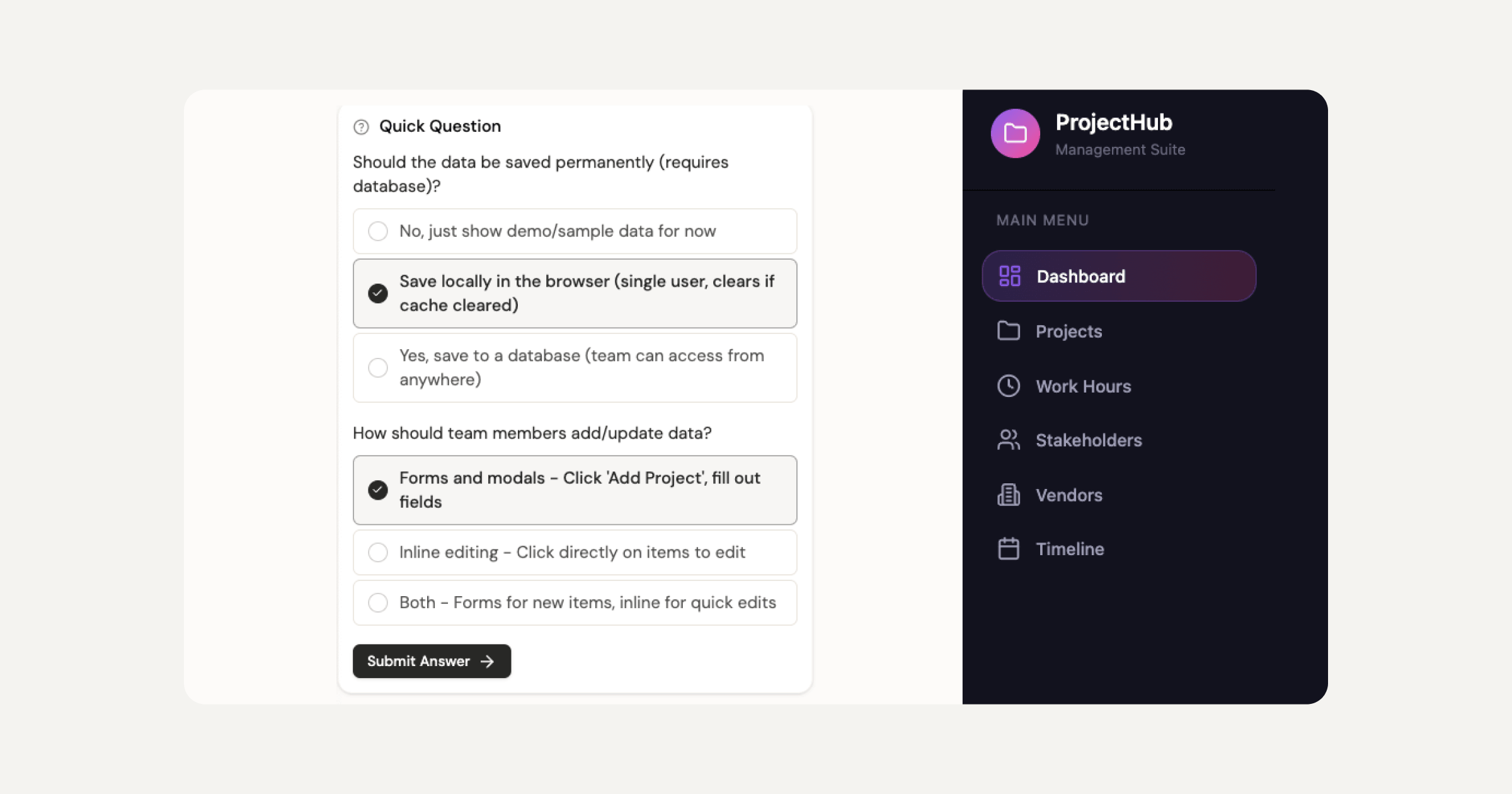
Sticklight is the vibe-coding platform for professional web creators. You describe what you want in a prompt, and Sticklight turns it into a production-ready website, app, dashboard, CMS, or tool, handling the underlying build and infrastructure work rather than asking you to configure a Dockerfile or manage containers yourself. The platform is built to go beyond websites, helping creators become full-stack builders who ship complete products.
WordPress and Elementor remain a strong part of how many creators work, and Sticklight is designed to extend that world rather than replace it: what you build with Sticklight can sit alongside a WordPress site or an Elementor-built page, adding new capabilities without requiring a rebuild from scratch.
If the idea of packaging and running applications through tools like Docker feels like more infrastructure than you want to manage directly, Sticklight is a reasonable place to start turning a prompt into a working product instead.
Frequently asked questions
What is Docker in simple terms?
Docker is an open-source platform that packages an application with everything it needs to run, code, libraries, and settings, into a container that behaves the same way on any machine.
What is the difference between a Docker image and a Docker container?
An image is a saved, read-only package built from a Dockerfile, while a container is a running instance created from that image, isolated from other processes on the same host.
Is Docker the same thing as a virtual machine?
No. A virtual machine emulates a full computer with its own operating system kernel, while Docker containers share the host’s kernel and isolate at the process level, which makes them start faster and use fewer resources.
What is a Dockerfile used for?
A Dockerfile is a plain text file listing the steps to build an image, such as the base system, dependencies to install, files to copy in, and the command to run on startup.
Where should someone start learning Docker?
A good starting point is installing Docker, writing a Dockerfile for a small existing project, building an image from it, and running that image locally before trying multi-container setups.
Built by the Elementor team. Powered by Claude.
Let it glow.