What Is Front-End Development?

Front-end development is the practice of building everything a person sees and interacts with on a website or app screen: the layout, the buttons, the images, the type, and the way all of it responds to a click, a scroll, or a tap. It runs on the client side, meaning the code executes in the visitor’s own browser rather than on a distant server, which is why this discipline is often called the visual and interactive layer of the web.
At its core, front-end development combines three technologies working in concert. One gives a page its structure, one gives it style, and one gives it behavior, so a static layout can turn into something that actually responds to a person. A front-end developer’s job is to take a design and turn it into a working interface that loads quickly, looks right on any screen, and keeps working smoothly as content and features grow.
HTML, CSS, and JavaScript, explained
HTML organizes content into headings, paragraphs, links, and sections, giving a page the skeleton that browsers and screen readers can understand. CSS controls color, spacing, fonts, and layout, turning that skeleton into something visually coherent. JavaScript adds behavior, from a menu that opens on click to a form that validates itself before it submits.
These three layers are meant to work together rather than compete. A page can technically exist with markup alone, but it will look plain and behave passively. Style and interactivity are what make a page feel finished, and most front-end work involves moving fluidly between all three depending on what a screen needs to do.
Front-end versus back-end development
Back-end development handles what happens out of sight: databases, servers, authentication, and the logic that decides what data a page should show. Front-end development takes that data and presents it in a way people can actually use, handling everything rendered directly in the browser. The two sides constantly exchange information, usually through an API, but they solve different problems.
A useful way to think about the split is that the back end decides what is true and the front end decides how that truth is shown and interacted with. Many real products blur the line, and plenty of developers work across both, but the distinction still shapes how teams organize their work and their skill sets.
What a front-end developer actually does
Day to day, a front-end developer translates a design into working code, then makes sure that code holds up across browsers, devices, and edge cases a mockup never shows. That includes building reusable components, wiring up interactions, optimizing how quickly a page loads, and fixing the small inconsistencies that appear once real content and real users get involved.
Much of this work now happens with the help of component-based frameworks and build tools that handle repetitive plumbing, so developers can focus on structure and behavior instead of rewriting the same patterns by hand. Choosing the right tool for a given project matters as much as writing the code itself.
Responsive design and accessibility
A front-end build has to hold up on a small phone screen, a tablet, and a wide desktop monitor, adjusting layout, spacing, and image sizing along the way rather than simply shrinking everything down. Responsive design accounts for a range of practical concerns at once, including:
- Flexible layouts that reflow instead of breaking at odd widths
- Readable text and touch targets sized for smaller screens
- Keyboard navigation and screen reader support
- Sufficient color contrast for people with low vision
- Sensible behavior when a connection is slow or a feature fails to load
Accessibility overlaps heavily with responsive design because both are ultimately about making an interface usable under different conditions, whether that condition is screen size, connection speed, or the way a person navigates the page.
Where to start learning front-end development
Most people begin with the fundamentals: enough HTML to structure a page, enough CSS to style it, and enough JavaScript to make it interactive. Building small real projects, like a simple landing page or a to-do list, tends to teach more than reading theory alone, because it forces the same debugging and layout decisions professional work requires.
From there, most learners move toward a framework, version control, and basic tooling for building and deploying a site. None of this has to happen at once. A steady sequence of small, working projects builds real fluency faster than trying to absorb the entire field before writing a single line of code.
Where Sticklight fits
Sticklight is a vibe-coding platform that turns a prompt into a production-ready front end that looks and works right from the first draft. Instead of starting from a blank file and wiring up structure, style, and behavior by hand, a person can describe what they want and get a working interface to refine, which is especially useful for people who understand the concepts above but want to move faster from idea to working page.
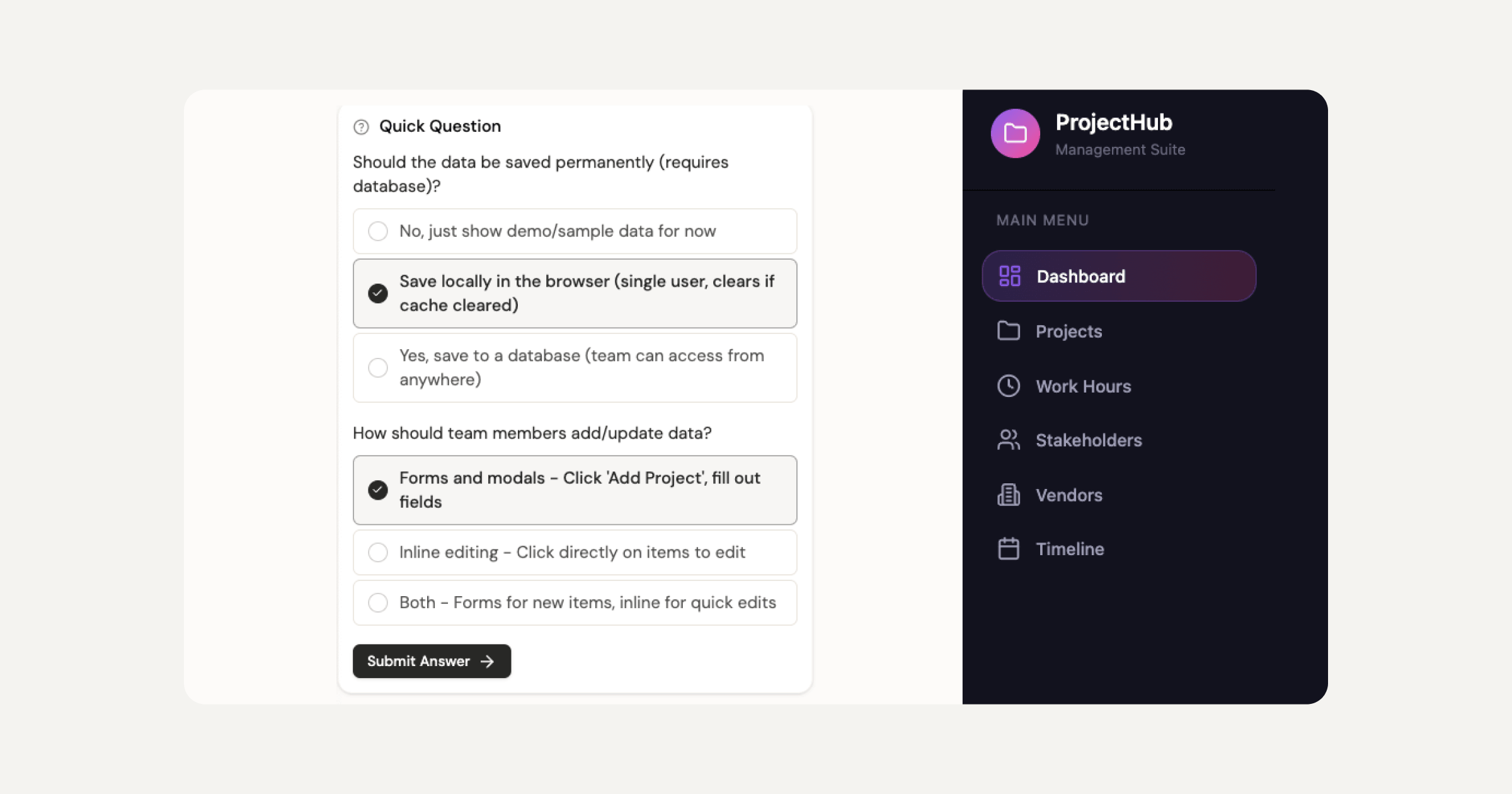
None of this replaces the value of tools like WordPress or page builders like Elementor. Many projects still benefit from a full content management system, a theme ecosystem, or a visual builder for ongoing edits, and Sticklight simply adds another way to get a front end built quickly when speed and precision matter most.
Frequently asked questions
What is front-end development?
Front-end development is the practice of building the parts of a website or app that people see and interact with in the browser. It covers layout, styling, and behavior, turning a design into a working interface.
What is the difference between front-end and back-end development?
Front-end development covers what users see and click in the browser, while back-end development covers servers, databases, and logic behind the scenes. Full-stack developers work across both sides.
What languages are used in front-end development?
The core of front-end work is HTML for structure, CSS for styling, and JavaScript for behavior. Many projects also use frameworks and libraries that build on these to speed up development.
What does a front-end developer do?
A front-end developer turns designs into working interfaces, writes the code that controls layout and interaction, makes sites work across devices, and keeps pages fast, accessible, and easy to use.
Do I need to code to build a front end?
Traditionally yes, but modern tools can generate front-end code from a description, so you can build working interfaces faster and adjust the HTML, CSS, and JavaScript when you need more control.
Built by the Elementor team. Powered by Claude.
Let it glow.