What Is HTML?

HTML stands for HyperText Markup Language. It is the markup language that structures every web page you visit, telling the browser what each piece of content is, a heading, a paragraph, a link, an image, so it can display the page correctly.
On its own, HTML is not a programming language. It does not calculate, loop, or make decisions. It simply describes structure and meaning, and the browser reads that description to build the page you see.
How HTML actually works
An HTML document is made of elements. Each element usually has an opening tag, some content, and a closing tag, like <p>Hello</p> for a paragraph. Tags can also carry attributes, extra bits of information written inside the opening tag, such as a link’s destination or an image’s source file.
The browser reads this tagged text from top to bottom and turns it into the Document Object Model, a structured tree it can render on screen. That tree is also what lets scripts and styles reach into the page later and change specific parts of it.
The core building blocks
A handful of elements do most of the work on a typical page:
- Headings, from a top-level title down through smaller subheadings, that organize content into a hierarchy
- Paragraphs, for blocks of regular text
- Links, which connect one page to another or to a section within the same page
- Images, which embed a picture using a reference to its file
- Lists, ordered or unordered, for grouping related items
Learn these five and you can already read and write the skeleton of most web pages.
How HTML relates to CSS and JavaScript
HTML, CSS, and JavaScript split the work of a web page into three jobs. HTML provides the structure and content: what exists on the page and in what order. CSS handles the look: colors, spacing, fonts, and layout. JavaScript adds behavior: what happens when someone clicks a button or scrolls the page.
Think of HTML as the frame of a house, CSS as the paint and furniture, and JavaScript as the wiring that makes the lights turn on. Each one can technically stand alone, but a real web page usually needs all three working together.
Why HTML still matters
Every website, no matter how it was built or what framework sits behind it, ultimately sends HTML to the browser. Search engines read HTML to understand what a page is about. Screen readers and other assistive technology rely on well-structured HTML to describe a page to people who cannot see it. Getting the structure right affects both how findable your content is and how usable it is for everyone.
Where to start as a beginner
The fastest way to learn HTML is to open a plain text file, add a few tags, and view the result in a browser. Start with headings and paragraphs, then add a list, a link, and an image. Once that feels comfortable, move on to forms and tables, then bring in a bit of CSS to see how structure and style connect.
Reading the HTML behind pages you already use is also useful. Most browsers let you inspect any page’s markup directly, which turns other people’s sites into free lessons.
Where Sticklight fits
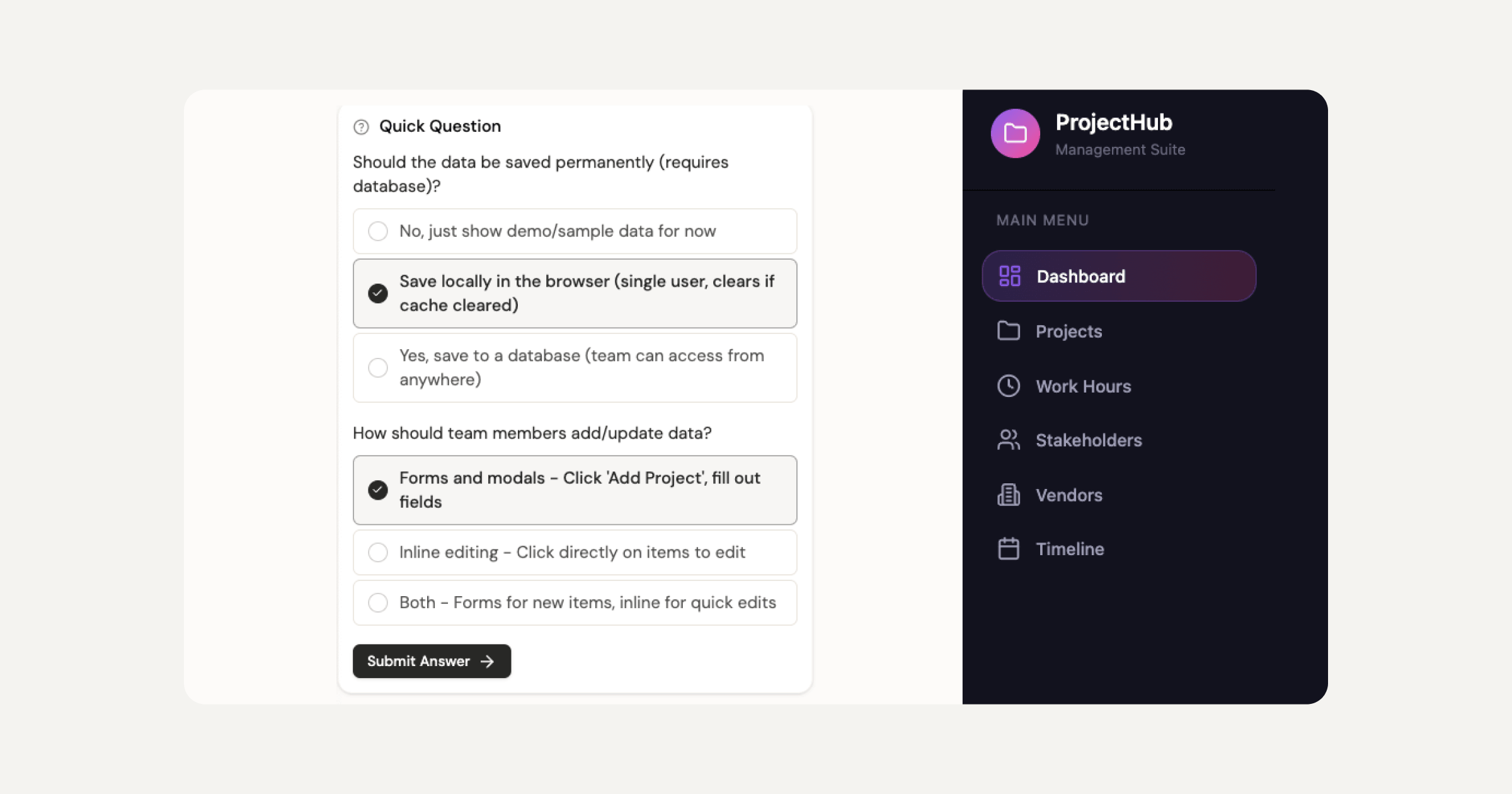
Sticklight is the vibe-coding platform for professional web creators. You describe what you want in plain language, and Sticklight turns that prompt into a production-ready website, app, dashboard, CMS, or tool, handling the underlying HTML, styling, and logic for you. It is built for creators who want to move beyond hand-coding individual pages toward becoming a full-stack creator.
WordPress and Elementor remain excellent ways to extend what you build. They add content management, visual page editing, and a wide plugin ecosystem on top of the sites Sticklight helps you create, giving you more ways to grow a project once it exists.
Frequently asked questions
Is HTML a programming language?
No. HTML is a markup language, it describes the structure and content of a page rather than performing calculations or logic. Programming behavior on a page comes from a separate language like JavaScript.
Do I need to know HTML to build a website today?
Not always, many modern tools let you build a site visually or from a prompt. Even so, a basic grasp of HTML helps you understand how the pages you create are structured underneath.
What is the difference between an HTML element and an HTML tag?
A tag is the markup itself, like the opening and closing angle-bracket text. An element is the complete unit, the opening tag, its content, and its closing tag, together.
Can a web page work with only HTML and no CSS or JavaScript?
Yes. The page will display as plain, unstyled text and images with no interactive behavior, but the browser can still read and show it because HTML alone defines valid structure.
How long does it take to learn basic HTML?
Most beginners can learn the core tags, headings, paragraphs, links, images, and lists, within a few focused hours. Real fluency comes from practicing on actual pages over the following weeks.
Built by the Elementor team. Powered by Claude.
Let it glow.