What Is JavaScript?

JavaScript is the programming language that makes web pages interactive. Where HTML gives a page its structure and CSS gives it style, JavaScript is what lets that page respond: open a menu, validate a form, update a total without reloading, or show new content the moment you click something.
It started as a browser-only tool in the mid-1990s and has since grown into one of the most widely used languages in the world, running not just in browsers but on servers, in mobile apps, and inside countless everyday tools.
What JavaScript actually does
At its core, JavaScript lets a web page change after it has loaded. Without it, a page is static: what you see when it loads is all you get. With JavaScript, a page can react to what a visitor does. It can check whether an email address looks valid before a form submits, load new products into view as you scroll, animate a dropdown, or fetch fresh data and display it without a full page refresh.
That range of behavior is why JavaScript shows up in so many kinds of projects: interactive menus and sliders, form validation, dashboards, real-time chat or live updates, and full applications where the entire experience runs in the browser. A page built only with HTML and CSS can look great, but it cannot think or respond. JavaScript is what gives it behavior.
How JavaScript works, in the browser and beyond
When you visit a website, your browser downloads the HTML, CSS, and JavaScript for that page and runs the JavaScript using a built-in engine. That engine reads the code, reacts to events like clicks and keystrokes, and updates what is on screen in real time. This is why JavaScript is often called a client-side language: it commonly runs on the visitor’s own device, inside the browser.
JavaScript is not limited to browsers anymore. Using environments like Node.js, the same language can run on a server too, handling requests, talking to databases, and powering the backend of an application. That means a developer can use one language for both the part a visitor sees and the part working behind the scenes.
How JavaScript relates to HTML and CSS
These three technologies are usually described as the foundation of the web, and each one has a distinct job. HTML defines the content and structure of a page, like headings, paragraphs, images, and buttons. CSS controls how that content looks, including color, spacing, and layout. JavaScript controls behavior, meaning what happens when someone interacts with the page.
Think of a simple contact form. HTML lays out the input fields and the submit button. CSS makes it look tidy and on-brand. JavaScript checks the fields are filled in correctly and sends the data along without the page reloading. None of the three replaces the others. They work together.
Key ideas, and why JavaScript matters
A few concepts show up constantly once you start reading about JavaScript. Variables are named containers that hold information, such as a username or a price, so it can be reused and changed. Functions are reusable blocks of instructions that run when called, which keeps code organized instead of repeated everywhere. Events are actions that happen on a page, like a click or a keypress, and JavaScript is built around listening for those events and reacting to them.
- Variables: store and update information as a page runs
- Functions: package logic so it can be reused instead of rewritten
- Events: trigger a response when a visitor does something
JavaScript matters because it is the language that turns a static page into something people can actually use, and it runs in every major browser without extra installation. For anyone learning to build for the web, it is usually the third piece to pick up after HTML and CSS, since it is what makes the other two feel alive. A good starting point is small: change text on a button click or make an element show and hide. Those small exercises teach the same core ideas that larger applications rely on.
Where Sticklight fits
Sticklight is the vibe-coding platform for professional web creators. You describe what you want in plain language, and Sticklight turns that prompt into a production-ready result, whether that is a website, an app, a dashboard, a CMS, or an internal tool. Understanding what JavaScript does helps make sense of what is happening under the hood, but Sticklight is built so you do not have to write it by hand to get a working, polished result.
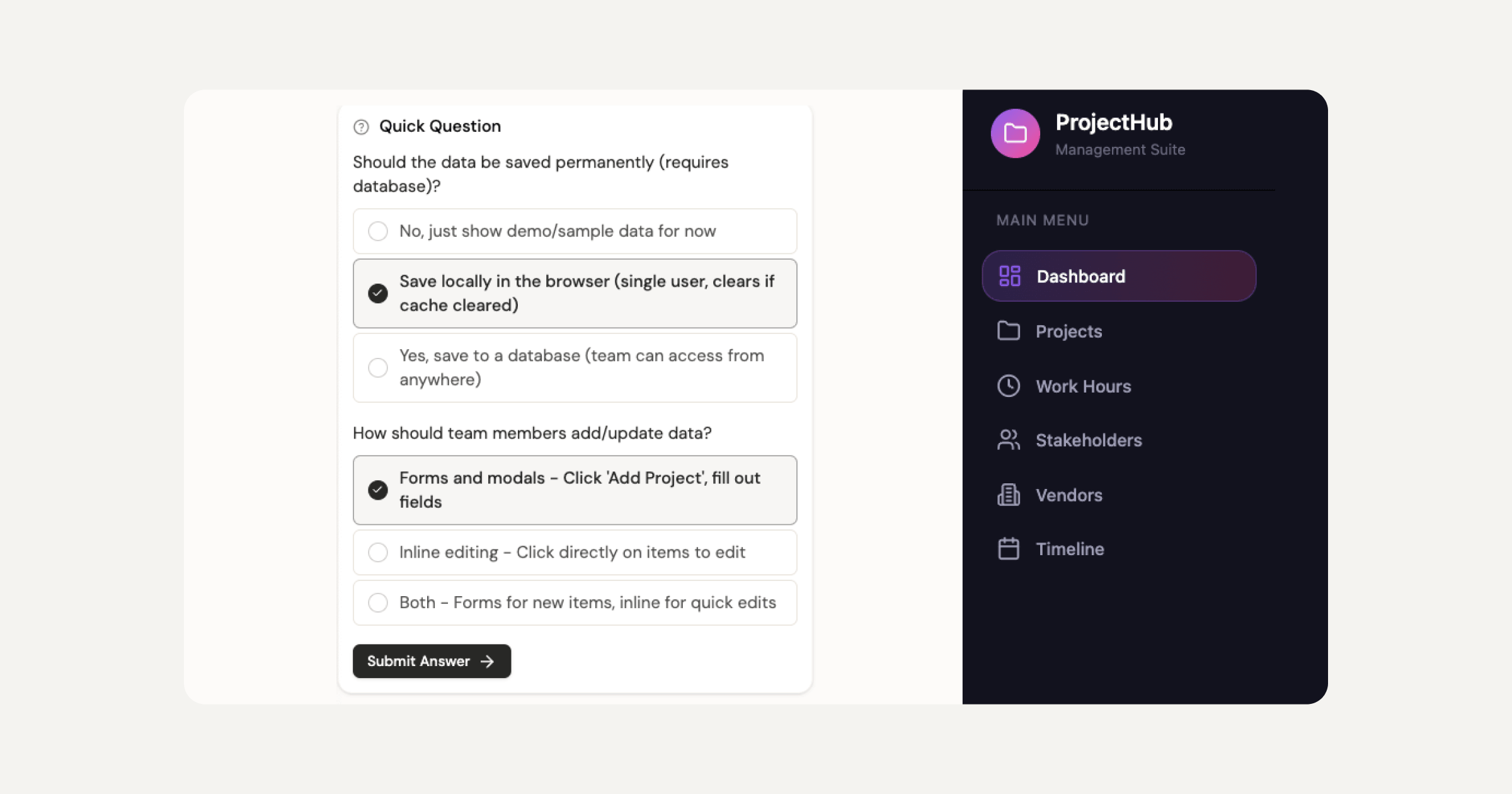
That scope is intentional. Sticklight is built to go beyond websites, toward being a full-stack creator for anyone building on the web, whether the goal is a simple landing page or a complete application with real functionality behind it.
WordPress and Elementor remain part of that picture too. They extend what you can do once a site exists, giving you familiar tools for content and design on top of what Sticklight builds, rather than being replaced by it.
Frequently asked questions
What is JavaScript used for?
JavaScript is used to make web pages interactive, handling things like menus, form checks, animations, and loading new content without a full page reload. It also runs on servers and in mobile apps, so the same language can power both the front end and the back end of a project.
Is JavaScript the same as Java?
No, they are separate languages with different creators, different syntax, and different typical uses, despite the similar name. JavaScript was built for the web, while Java is a general-purpose language often used for backend systems and Android apps.
Do I need to know HTML and CSS before learning JavaScript?
It helps to know the basics of HTML and CSS first, since JavaScript is usually used to change what those two already built. Understanding structure and style first makes it easier to see what JavaScript is actually doing when it updates a page.
Can JavaScript run outside a web browser?
Yes. Environments like Node.js let JavaScript run on a server, where it can handle requests, work with databases, and support the backend of an application, not just the part a visitor sees in the browser.
How long does it take to learn the basics of JavaScript?
Most beginners can grasp core concepts like variables, functions, and events within a few weeks of steady practice, though real fluency comes from building small projects over time. Starting with tiny exercises, like changing text on a click, builds the same foundation larger projects rely on.
Built by the Elementor team. Powered by Claude.
Let it glow.