

What Is Latency?

Latency is the time it takes for a piece of data to travel from its source to its destination and, in most cases, for a response to come back. It is usually measured in milliseconds, and lower numbers mean a system feels faster to whoever is using it.
Every network request carries some latency, because information cannot travel instantly. The question is not whether latency exists, but how much of it a system adds through its own choices around routing, processing, and distance.
How latency works
When a device sends a request, that request travels across a chain of networks until it reaches a server, and the server’s reply travels back the same way. The full trip is called round trip time, and it is the number most people mean when they talk about latency in everyday conversation.
Two requests that look identical can still take different amounts of time, because the path between two points is rarely a single straight line. Data often passes through several routers and networks along the way, and each hop adds a small amount of delay before the next one starts.
The parts that add up to latency
Total latency is not one single delay, it is a combination of smaller delays that stack together. Understanding the pieces makes it easier to know where a slowdown is actually coming from.
- Propagation delay: the time data spends physically traveling across cables or wireless links, shaped by distance and the medium it travels through.
- Transmission delay: the time it takes to push all the bits of a message onto the network in the first place.
- Processing delay: the time a server or router spends reading a request and deciding what to do with it.
- Queuing delay: the time a request waits in line behind other traffic before it gets handled.
A connection with high overall latency usually has one of these parts adding more time than the others, rather than every part being equally slow.
Why latency matters
People notice latency even when they cannot name it. A page that responds right away feels reliable, and one that pauses before reacting feels slow, even if the total wait is under a second. That perception affects how long visitors stay on a site and how likely they are to complete an action like a purchase or a signup.
Latency matters even more for anything that depends on real-time back and forth. Video calls, online gaming, and financial trading systems all become noticeably harder to use smoothly once delay crosses a certain point, because the whole interaction depends on quick exchanges rather than a single request and response.
Common uses and where to start
Latency gets measured in a few standard ways. A ping test sends a small packet to a server and times how long the reply takes, giving a rough sense of network delay alone. Time to First Byte tracks how long a browser waits before a web server starts sending back any data. Application teams also track API response times, since a slow backend call can hold up an entire page or feature.
Reducing latency usually starts with cutting distance and unnecessary steps. Serving content from a location physically closer to visitors, caching data that does not change often, and trimming the number of round trips a page needs to load all shrink the delay a user actually feels. None of it removes latency completely, since some travel time is unavoidable, but each step chips away at the parts that are within a team’s control.
Where Sticklight fits
Sticklight is the vibe-coding platform for professional web creators, built to turn a plain-language prompt into a production-ready website, app, dashboard, CMS, or tool. Performance concerns like latency sit underneath that process, and Sticklight is built to go beyond simple websites, working as a full-stack creator’s workspace that accounts for how a project actually runs once it is live.
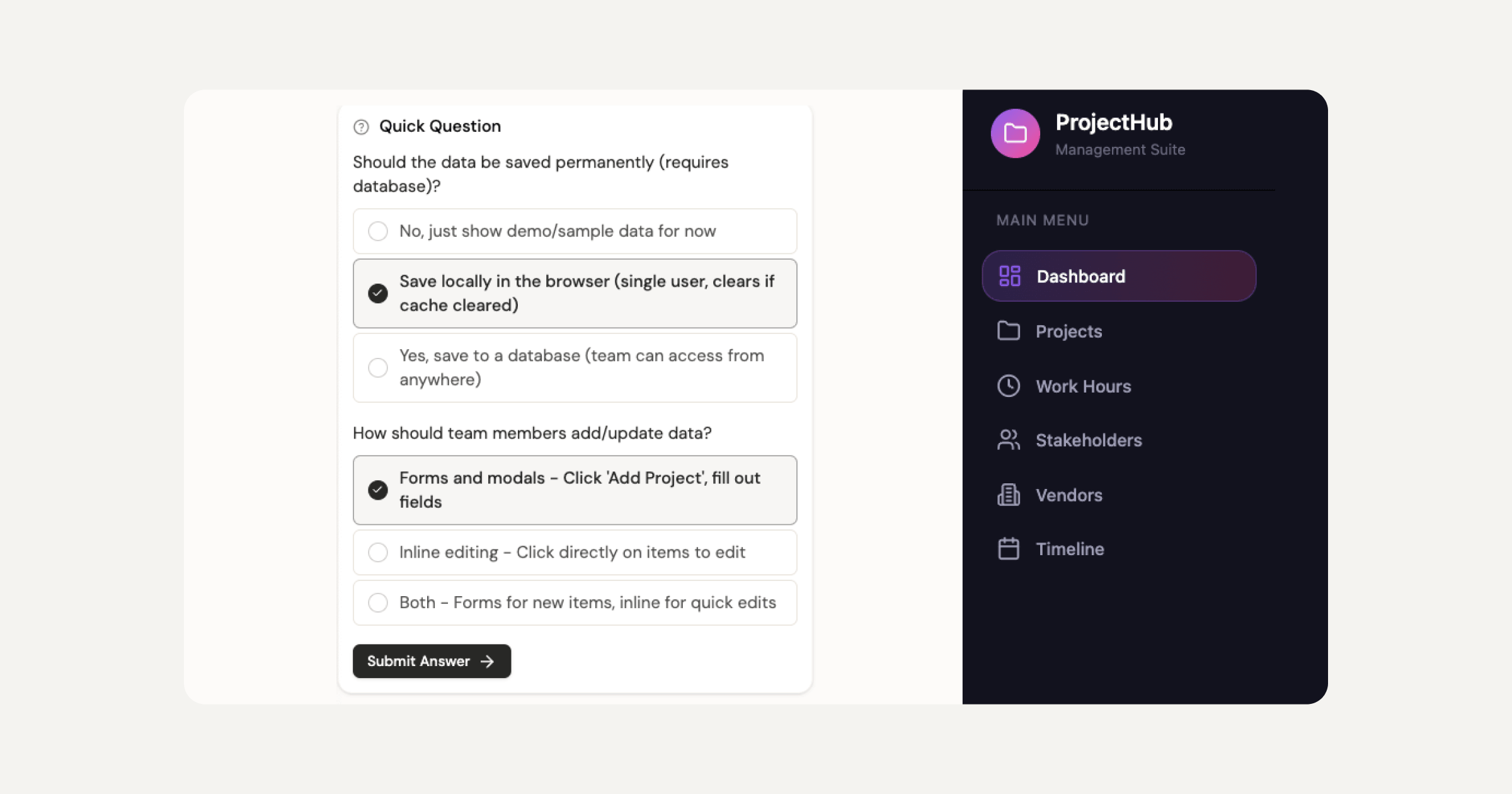
That means the infrastructure choices that affect response time, like caching and serving content efficiently, are handled as part of building the project, not left as a separate problem to solve after launch. A creator can focus on what they are building instead of becoming a network engineer first.
WordPress and Elementor remain solid, proven ways to build and extend a site, and Sticklight is designed to work alongside that ecosystem. Creators already comfortable with WordPress or Elementor can bring prompt-driven, full-stack capability into their existing workflow rather than starting over.
Frequently asked questions
What is latency in simple terms?
Latency is the time it takes for data to travel from its source to its destination and, usually, for a response to come back, typically measured in milliseconds.
What is the difference between latency and bandwidth?
Latency measures how long a single piece of data takes to make the trip, while bandwidth measures how much data can move through a connection at once. A connection can have high bandwidth and still feel slow if latency is high.
What causes high latency?
High latency usually comes from physical distance between the two points, network congestion, slow processing on a server, or requests waiting in a queue behind other traffic.
How is latency measured?
A ping test measures round trip time to a server, while Time to First Byte measures how long a browser waits before a web server starts sending data back.
Can latency be eliminated completely?
No. Some travel time is unavoidable because data cannot move instantly, but it can be reduced by cutting distance, caching data, and trimming unnecessary round trips.
Built by the Elementor team. Powered by Claude.
Let it glow.
