
What is prompt engineering? Your guide to better AI conversations

Prompt engineering is the practice of writing clear, specific instructions that help an AI system understand exactly what you want, so it gives you a better result on the first try. It is not a technical discipline reserved for engineers. It is closer to giving good directions: the more precise your request, the less guessing the AI has to do, and the closer the output lands to what you had in mind.
Anyone who talks to an AI tool, whether that is a chatbot, a writing assistant, or a platform that builds real software from a description, is already doing a version of prompt engineering. The question is how well you do it. This guide covers what the practice involves, the principles that make prompts work, and how it plays out when the thing you are prompting is a working website, app, or dashboard rather than a paragraph of text.
- Prompt engineering is the practice of writing clear, specific instructions to get better results from AI, not a technical skill reserved for programmers.
- The strongest prompts share four traits: specificity, context, a clearly described outcome, and room to iterate.
- Most weak prompts fail for the same reasons: they are too vague, skip context, or try to do too much at once.
- Small, repeatable techniques, like describing the audience, giving examples, and asking for one thing at a time, improve results immediately.
- In Sticklight, prompting is how you build. A clear prompt becomes a real website, app, or dashboard, and you refine it by prompting again or adjusting directly on the canvas.
- Skills in Sticklight add packaged expertise, such as accessibility or SEO, to a prompt with one click, so you do not have to spell out every requirement yourself.
Why clear instructions change your results
AI models respond to what you actually say, not what you meant to say. A vague request like “write something about our product” gives the model almost nothing to work with, so it fills the gaps with generic assumptions. A specific request like “write a three-sentence product description for a project management tool aimed at freelance designers, focused on saving time on client approvals” gives the model a real target to aim for.
This is the whole premise behind prompt engineering. The AI is not reading your mind, it is pattern-matching against the words you give it. The clearer those words are, the more the output looks like what you pictured, and the fewer rounds of back-and-forth it takes to get there.
The core principles of prompt engineering
Good prompt engineering rests on a few habits that apply equally to a one-paragraph request and a working app.
- Be specific. Replace general requests with concrete ones. Name the format, the length, the tone, and the exact thing you want covered.
- Give context. Tell the AI who the output is for, what problem it solves, and any constraints that matter, like a brand voice or an existing structure.
- Describe the outcome. Instead of “make a landing page,” describe what success looks like: a page that explains the offer and gets a visitor to book a call.
- Iterate. Treat the first response as a draft, not a verdict. Point out what is close and what is off, and let the AI adjust from there.
These four principles work together. Specificity and context set the AI up to succeed on the first attempt, and iteration turns a decent draft into something you would actually ship.
Common mistakes that weaken your prompts
Most disappointing AI results trace back to a small set of avoidable habits.
- Being too vague. “Make it better” or “make it pop” gives the AI no direction on what better means to you.
- Skipping context. Asking for a homepage without mentioning the audience, the industry, or the goal forces the AI to guess at all three.
- Asking for everything at once. A single prompt that tries to define copy, layout, and functionality together often produces something muddled. Breaking the request into stages works better.
- Treating the first output as final. Many people stop after one attempt and settle for a result that never quite fit.
- Forgetting the audience. A prompt that does not say who the result is for tends to produce something generic.
None of these mistakes require technical knowledge to fix, mostly just a moment of slowing down before you hit enter.
Techniques that make any prompt stronger
A few habits consistently improve results, regardless of what you are prompting for.
- Lead with the goal. State what you are trying to achieve before you list the details.
- Use examples when you can. Pointing to a reference, whether a tone you like or a layout you admire, narrows the range of outputs fast.
- Set boundaries. Mention what to avoid, not only what to include. “No jargon” or “keep it under 100 words” are prompts too.
- Ask one thing at a time. A focused prompt is easier to satisfy than a long list of loosely related requests.
- Review, then adjust. Name the specific gap and prompt again with that gap in mind, rather than starting over.
None of this is about a magic phrase. It is closer to editing: say what you want, look at what came back, and adjust until the two match.
From prompt to product: how this works in Sticklight
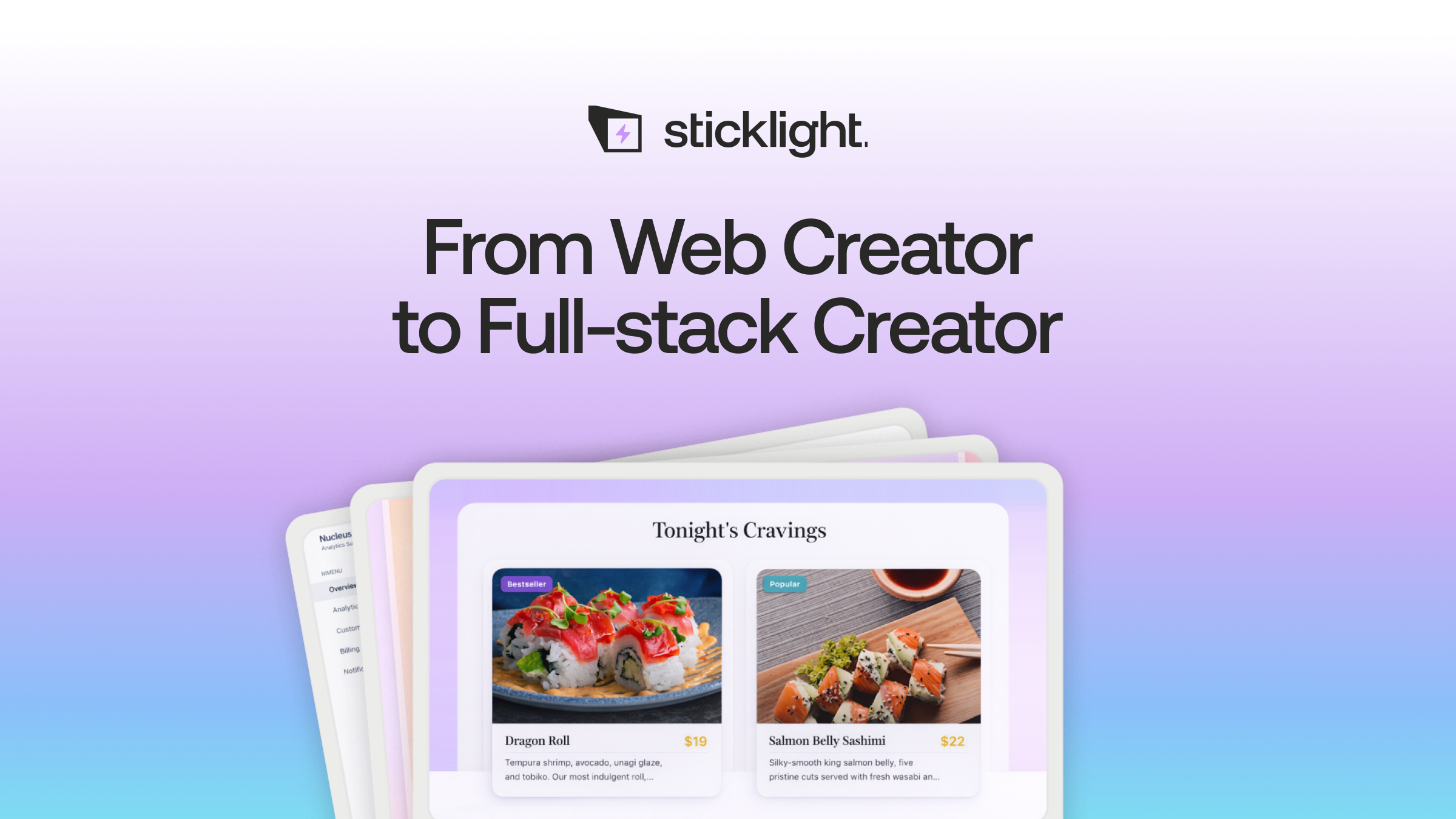
Prompting is how you actually build in Sticklight, the vibe-coding platform built by the Elementor team and powered by Claude. Instead of writing a prompt to get a paragraph of text, you write a prompt to describe a website, an app, or a dashboard, and Sticklight turns that description into production-ready work across the Prompt, Build, and Publish flow.
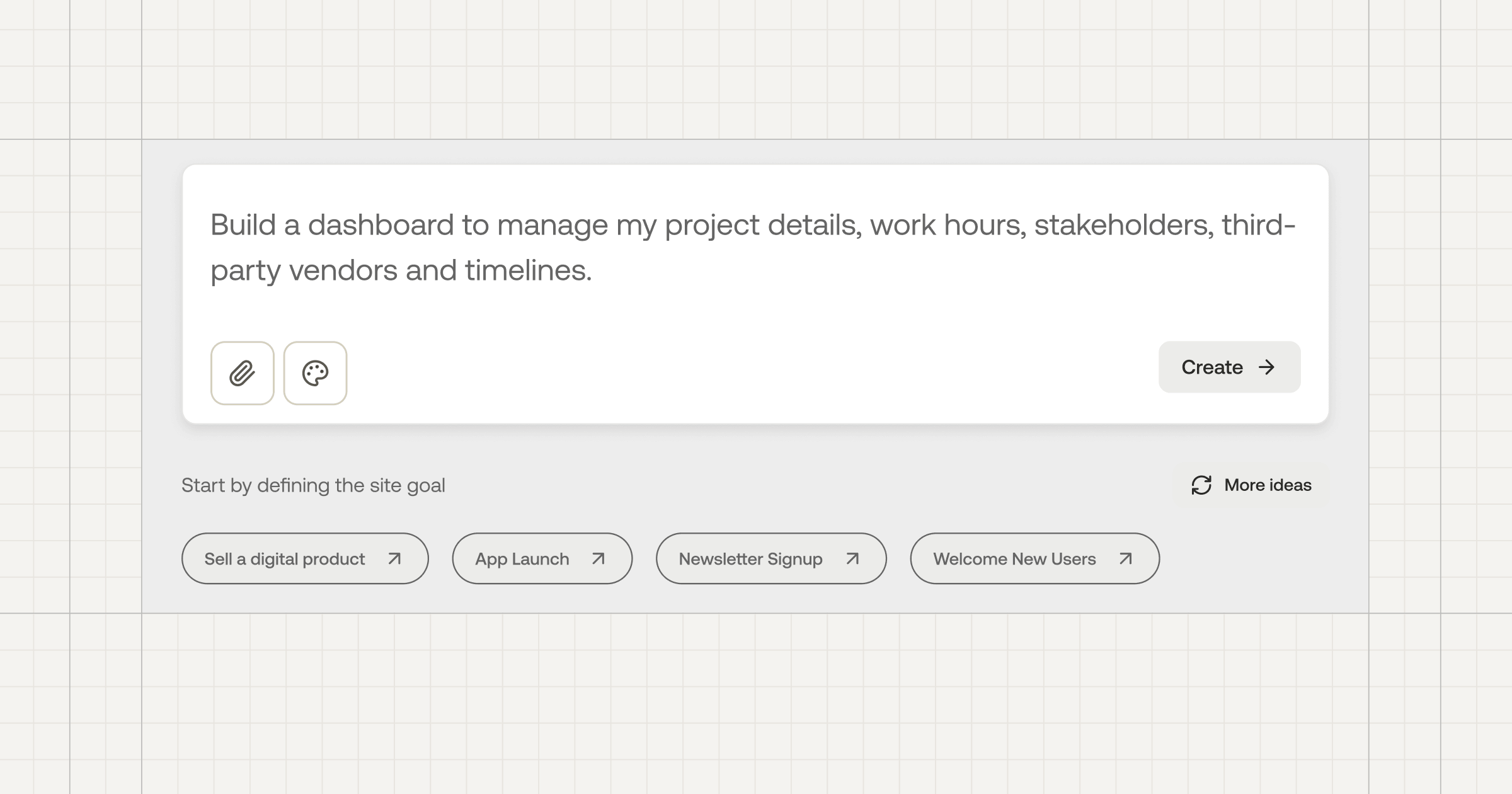
The same principles apply here as anywhere else. A prompt like “build me a site” leaves too much open. A prompt that describes the purpose of the project, who it serves, the sections it needs, and the tone you are going for gives Sticklight something concrete to build from. The more context and specificity you bring to the Prompt step, the closer the first build lands to what you had in mind.
Refining as you go: iterate on the canvas
Prompt engineering does not stop once the first version exists. In Sticklight, you can keep prompting to adjust what has been built, describing what you would like changed the way you would describe a fix to a person. You can also work directly on the canvas, editing by hand or going into the code, so AI never locks you out of the details that matter to a professional creator.
This back-and-forth, prompt, review, adjust, is the same iteration principle covered earlier, applied to real product work.
Skills: expertise you do not have to spell out
One challenge with prompt engineering is that some expertise is hard to describe in a sentence. You might know a page needs to be accessible or search-optimized without knowing how to phrase that requirement precisely, or without wanting to write out every technical detail yourself.
This is what Skills solve inside Sticklight. A Skill is a packaged unit of expert know-how you can add to any prompt with one click during the Build phase. Skills already live in Sticklight cover areas such as accessibility, SEO, design systems, performance, copywriting, localization, micro-interactions, onboarding, and 3D web experiences. Add the SEO Skill and your build comes with meta tags, schema, and on-page best practices applied automatically, no matter how detailed your original prompt was. Agents are on the Sticklight roadmap as a coming-soon capability that will extend this idea further.
Prompting well is a skill like any other. You get better by doing it badly many times over, then paying close attention to the attempt that finally worked.
Itamar Haim
Built by the Elementor team. Powered by Claude.
Let it glow.
