
What Is SaaS?

SaaS, short for software as a service, is a way of delivering software over the internet so you use it through a browser instead of installing it on your own computer. The company that builds the software also hosts it, runs the servers, and keeps everything patched and updated behind the scenes, so nothing depends on your own hardware.
Instead of buying a license and setting up the program yourself, you sign up for an account, log in, and start working right away. Your data lives in the provider’s cloud rather than on your hard drive, and you can pick up exactly where you left off from any device that has an internet connection, whether that is a laptop, a tablet, or a phone.
How SaaS works
With SaaS, the actual application runs on servers owned and managed by the provider, not on your own hardware. You access it through a web browser or a lightweight app, log in with your account, and the interface loads from the cloud. Nothing needs to be downloaded or configured before you can start using it.
Because the provider controls the infrastructure, they also handle the parts that used to fall on the user, such as security patches, server capacity, and uptime. When the company releases a new feature or fixes a bug, every customer gets the update automatically the next time they log in, with no manual install required from anyone.
SaaS vs traditional software
Traditional software is bought once, installed on a single machine, and updated by downloading new versions yourself whenever one comes out. It usually lives entirely on your device, which means your files stay local and the program keeps working the same way whether or not you happen to be online.
SaaS flips that arrangement around. You pay a recurring subscription instead of a one-time fee, and the software stays current without any action needed on your part. The tradeoff is that you generally need an internet connection to use it, since the application and your data both live on the provider’s servers rather than yours.
Common examples of SaaS
SaaS shows up in nearly every category of business tool today, often without people thinking about the label at all. If you send email through a browser, chat with teammates in an app, or track a project on a shared board, you are almost certainly already using it. A few familiar categories include:
- Email and team communication tools
- Customer relationship management (CRM) platforms
- Accounting and invoicing software
- Project and task management tools
Design and development platforms have followed the same path, moving from desktop installs into browser-based tools that teams share and update together. The common thread across all of these examples is that the software is centrally hosted, continuously updated, and reachable from wherever you happen to be working that day.
How SaaS is priced
Most SaaS products charge a recurring fee, usually billed monthly or annually, rather than a single upfront payment. Plans are often tiered by the number of users, the amount of storage or usage, or which features are unlocked, so a small team and a large one can both find a plan that fits their scale.
Many providers also offer a free trial or a limited free tier, letting you test the product before committing to a paid plan. Because the subscription can usually be adjusted or canceled at any time, the financial commitment tends to be smaller and easier to reverse than a traditional software purchase.
Why teams and businesses choose it
SaaS lowers the barrier to getting started, since there is no hardware to buy and no lengthy setup process before a team can begin working. A new employee can be added with a login instead of a software install, and access can be removed just as quickly when someone leaves the company.
Subscription pricing also makes budgeting more predictable than a large upfront software purchase, and teams can scale their usage up or down as their needs change over time. Because updates and security patches roll out automatically, internal staff spend less time on maintenance and more time on the work that actually matters.
Where Sticklight fits
Sticklight is a vibe-coding platform by the Elementor team that turns a prompt into production-ready websites, apps, dashboards, and tools. If you are building a SaaS product yourself, that means less time spent wiring up the underlying pages and interface, and more time spent on the features that make your product worth subscribing to in the first place.
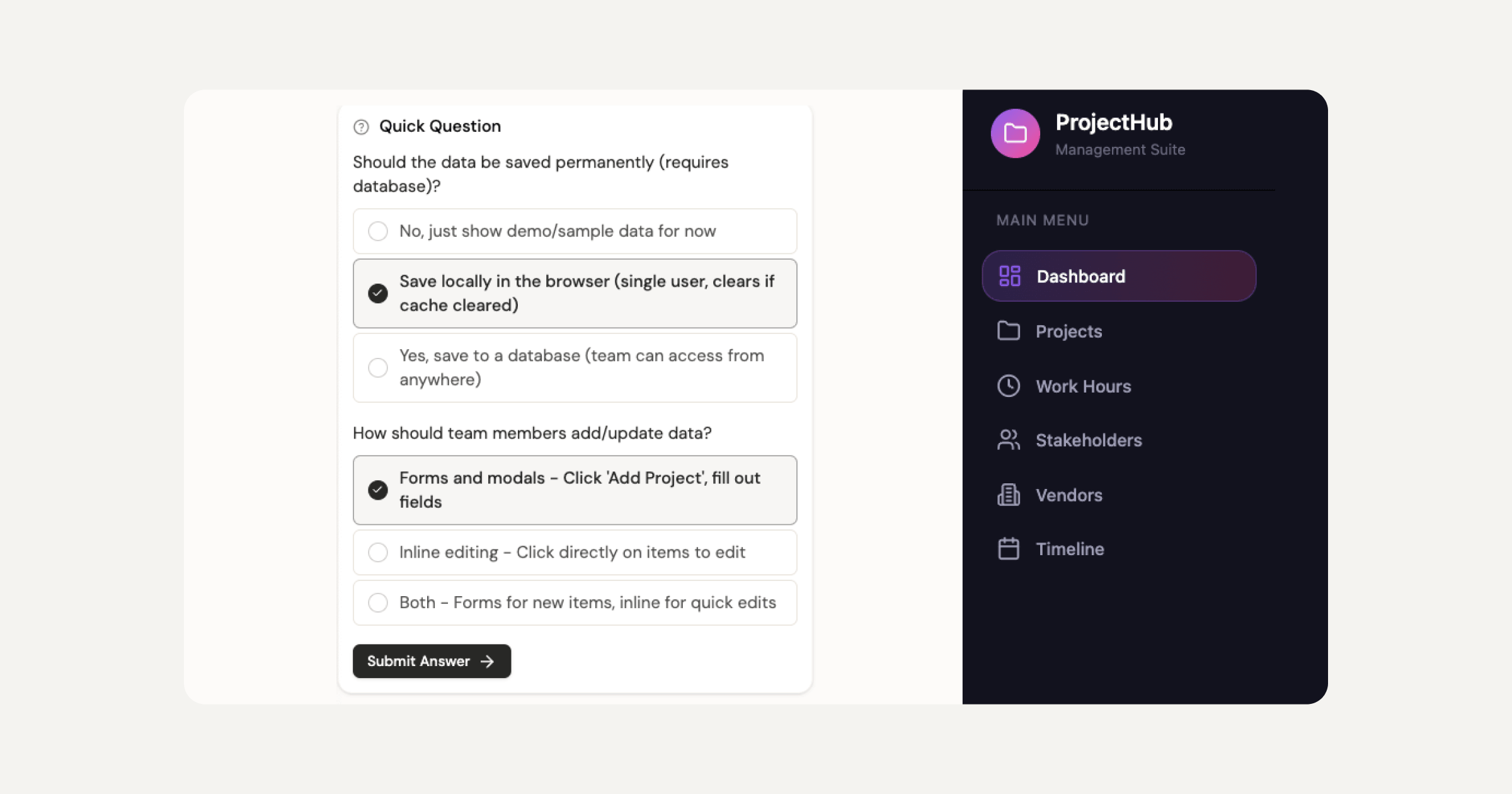
It works alongside the tools you already know rather than replacing them. Elementor and WordPress remain strong choices for content-driven sites and marketing pages, and Sticklight adds a faster path for the application layer of a SaaS idea, from the first working prototype all the way to a polished dashboard your users will actually log into every day.
Frequently asked questions
What is SaaS?
SaaS, or software as a service, is software you access over the internet through a browser and pay for by subscription, instead of installing and maintaining it yourself. The provider hosts, updates, and secures it.
How does SaaS work?
You sign up, log in through a browser, and use the software hosted by the provider. Your data lives in the cloud, updates happen automatically, and you usually pay a monthly or yearly fee.
What are examples of SaaS?
Email tools, document editors, CRMs, project management apps, accounting tools, and design platforms are common SaaS products used by individuals and businesses.
What is the difference between SaaS and traditional software?
Traditional software is installed on your device and updated manually, while SaaS runs in the cloud, updates automatically, and is paid for by subscription.
What are the benefits of SaaS?
SaaS lowers upfront cost, works across devices, updates automatically, scales easily, and removes most maintenance, so teams can start fast and grow.
Built by the Elementor team. Powered by Claude.
Let it glow.
