
What Is Serverless Computing?

Serverless computing is a cloud model where you write and deploy code without managing the servers that run it. The cloud provider handles provisioning, scaling, and patching the underlying machines, and you get billed based on how much your code actually runs rather than how much server capacity you reserve ahead of time.
The name is a bit misleading, since servers still exist somewhere behind the scenes. What changes is who has to think about them. Instead of sizing a machine and keeping it running around the clock, you hand a small piece of code to the provider, and it runs only when something triggers it.
How serverless computing works.
In a typical setup, you package a piece of code, often called a function, and upload it to a provider such as AWS Lambda, Google Cloud Functions, or Azure Functions. That code sits idle until an event calls it: an HTTP request, a file upload, a scheduled timer, or a message arriving in a queue. When the event fires, the provider spins up an isolated execution environment, runs your code, returns a result, and shuts the environment back down.
Because nothing sits there waiting between requests, the platform can scale from zero to many parallel executions and back down again without any manual configuration on your end. You write the logic, and the platform handles capacity.
The key parts of a serverless system.
- Functions: small, focused units of code that each handle one task, such as resizing an image or validating a form submission.
- Triggers: the events that cause a function to run, including HTTP calls, database changes, scheduled jobs, or messages on a queue.
- Managed backend services: databases, storage, and authentication offered as on-demand services, so you rarely run your own database server either.
- Cold starts: the brief delay when a function runs for the first time in a while and the platform has to prepare a fresh environment for it.
These pieces work together as an event-driven system. Something happens, a function responds, and the result flows on to storage, another service, or back to the user.
Why serverless computing matters.
The main appeal is that you stop paying for idle capacity and stop maintaining infrastructure that has nothing to do with your product. A team can ship a new feature as a function, let it scale automatically during a traffic spike, and pay very little when nobody is using it. That shifts a meaningful share of operational work away from a small team and onto the provider, which matters most for teams without a dedicated infrastructure group.
It is not free of trade-offs. Long-running or highly predictable workloads, where a server sits at steady load all day, are often more cost-effective on traditional infrastructure. Serverless earns its keep on spiky, event-driven, or occasional work, not on workloads that never idle.
Common uses for serverless computing.
- Backend APIs for web and mobile apps, where each endpoint maps to a function.
- Processing uploads, such as resizing images or transcoding video after a file lands in storage.
- Scheduled jobs, like nightly reports or cleanup tasks that run on a timer.
- Webhooks and integrations that connect two services and only need to run when an event fires.
- Lightweight automation, such as sending a notification when a record changes in a database.
Where to start with serverless computing.
Pick one small, self-contained task, something like a form handler or a scheduled cleanup job, rather than trying to move an entire application at once. Most providers offer a free tier generous enough to build and test a first function at no cost. Read up on cold starts and execution time limits before you commit a core, latency-sensitive path to a function, since those limits shape what serverless is a good fit for. Once one function runs reliably, expanding to a handful of related ones is a much smaller step.
Where Sticklight fits
Sticklight is a vibe-coding platform for professional web creators: you describe what you need in plain language, and it turns that prompt into a production-ready result, whether that is a website, an app, a dashboard, a CMS, or a working tool. Wiring up a serverless function to handle a form submission, process an upload, or run a scheduled job is exactly the kind of backend piece Sticklight can generate from a prompt, without you hand-writing the trigger and deployment setup yourself.
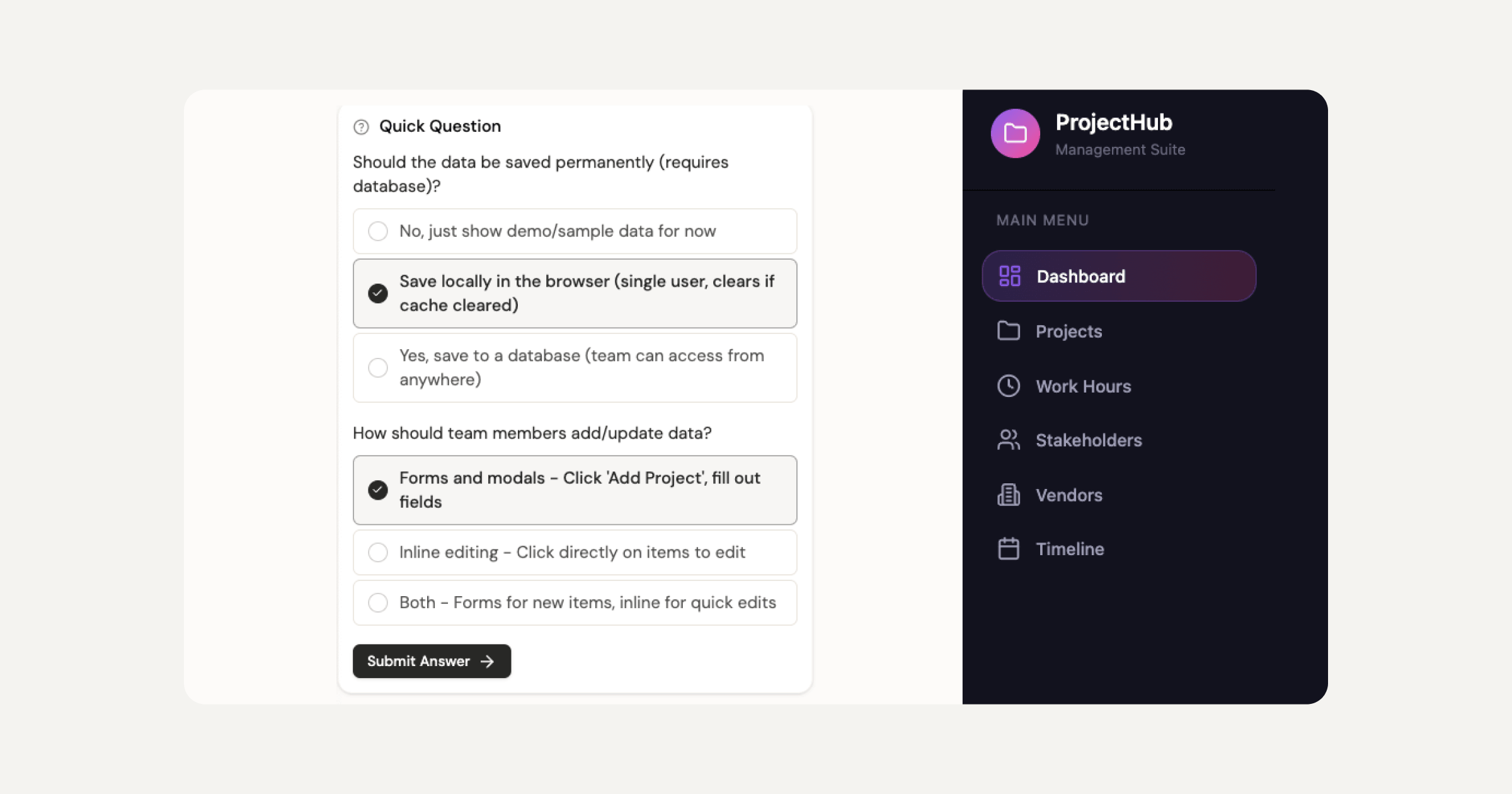
That range is the point. Sticklight is built to go beyond a single website and toward becoming a full-stack creator, so the same prompt that builds your page can also build the serverless logic behind it. WordPress and Elementor remain solid, proven ways to build and extend a site, and Sticklight adds a faster, prompt-first path alongside them for the app and automation layer that serverless computing typically covers.
Frequently asked questions
What is serverless computing in simple terms?
Serverless computing lets you run code without managing the server it runs on. You upload a small function, the cloud provider runs it only when an event triggers it, and you pay based on actual usage instead of reserved server capacity.
Does serverless computing mean there are no servers?
No. Servers still run the code behind the scenes. The difference is that the cloud provider manages, scales, and patches those machines, so you never have to provision or maintain a server yourself.
What is a cold start in serverless computing?
A cold start is the brief delay that happens when a function runs for the first time in a while, since the platform has to prepare a fresh execution environment before your code can run. Functions that run frequently tend to see fewer cold starts.
When does serverless computing make sense compared to a traditional server?
Serverless tends to fit spiky, event-driven, or occasional workloads, such as handling form submissions or processing uploads. A workload that runs at steady, predictable load all day is often more cost-effective on a traditional server.
What are common examples of serverless computing in use?
Common examples include backend APIs where each endpoint maps to a function, image or video processing after a file upload, scheduled jobs like nightly reports, and webhooks that connect two services together.
Built by the Elementor team. Powered by Claude.
Let it glow.