What Is TypeScript?

TypeScript is a programming language that adds static types to JavaScript. You write code much like you would write JavaScript, but you can describe the shape of your data, such as what a variable holds or what a function expects and returns, and a checker flags mismatches before your code ever runs.
It was built as a superset of JavaScript, so almost any working JavaScript file is already close to valid TypeScript. You adopt it gradually, adding type information where it helps most, rather than rewriting a project from the ground up.
What TypeScript actually is.
TypeScript sits on top of JavaScript rather than replacing it. Every browser and every version of Node still runs plain JavaScript, so TypeScript code goes through a compile step first, one that strips out the type information and produces ordinary JavaScript underneath. The types exist to help you while you write and to catch mistakes early, and they leave no trace in what actually runs.
Because of that relationship, you can introduce TypeScript into an existing JavaScript project file by file. A project can mix plain JavaScript and typed files while you convert things gradually, which is part of why it spread so widely without forcing teams into a full rewrite.
How it works, step by step.
You write code with optional type annotations attached to variables, function parameters, and return values. The TypeScript compiler reads that code, checks whether the types line up consistently across your files, and reports an error at the exact line where something does not match, long before that mismatch could turn into a runtime bug.
Once the check passes, the compiler emits plain JavaScript, targeting whichever version your browsers or server runtime need. Your editor uses the same type information live, as you type, which is why autocomplete, inline documentation, and “jump to definition” tend to feel noticeably more accurate in a typed project than in an untyped one.
The parts you will actually use.
A handful of pieces cover most day-to-day TypeScript work:
- Type annotations, marking what a variable, parameter, or return value should be, such as a string, a number, or a boolean.
- Interfaces and type aliases, describing the shape of an object so every part of your code agrees on what fields it has.
- Generics, letting a function or component work with different types while still keeping the checking that types provide.
- Union and utility types, for values that can be one of several types, or for deriving a new type from an existing one instead of writing it twice.
None of these are required everywhere. Most teams start with basic annotations and interfaces, then reach for generics and utility types once a codebase grows large enough that they start paying off.
Why it matters, and where you will meet it.
The main draw is catching mistakes at write time instead of after deployment. A typo in a property name, a function called with the wrong argument, or a value that turns out to be undefined when your code assumed it was not, these show up as a red underline in your editor rather than a bug report from a user. Types also make large-scale changes safer: if you rename a field or change what a function returns, the compiler points to every place that now disagrees, so a refactor that once meant carefully searching through files becomes a list the compiler hands you directly.
TypeScript shows up across most of the modern web. Frontend frameworks such as React, Vue, and Angular all support it directly, and many starter templates default to it. On the backend, Node projects use it for APIs and services, and it appears in mobile development through React Native as well. If you already know JavaScript, the fastest way in is to rename one file, add a basic configuration, and let your editor start showing you where types could help, starting with function parameters and the objects you pass around most.
The old fear of wasting a whole afternoon on the wrong direction is mostly gone from my process now, because trying a different direction costs me minutes.
Itamar Haim
Where Sticklight fits
Sticklight is a vibe-coding platform built for professional web creators: you describe what you want in plain language, and it turns that prompt into a production-ready result, whether that is a page, a full site, an app, a dashboard, a content system, or a working tool. The typed, structured code that a project like this produces behind the scenes is exactly the kind of output Sticklight is built to generate directly from a prompt, so you get the benefit of that structure without hand-writing every interface and function signature yourself.
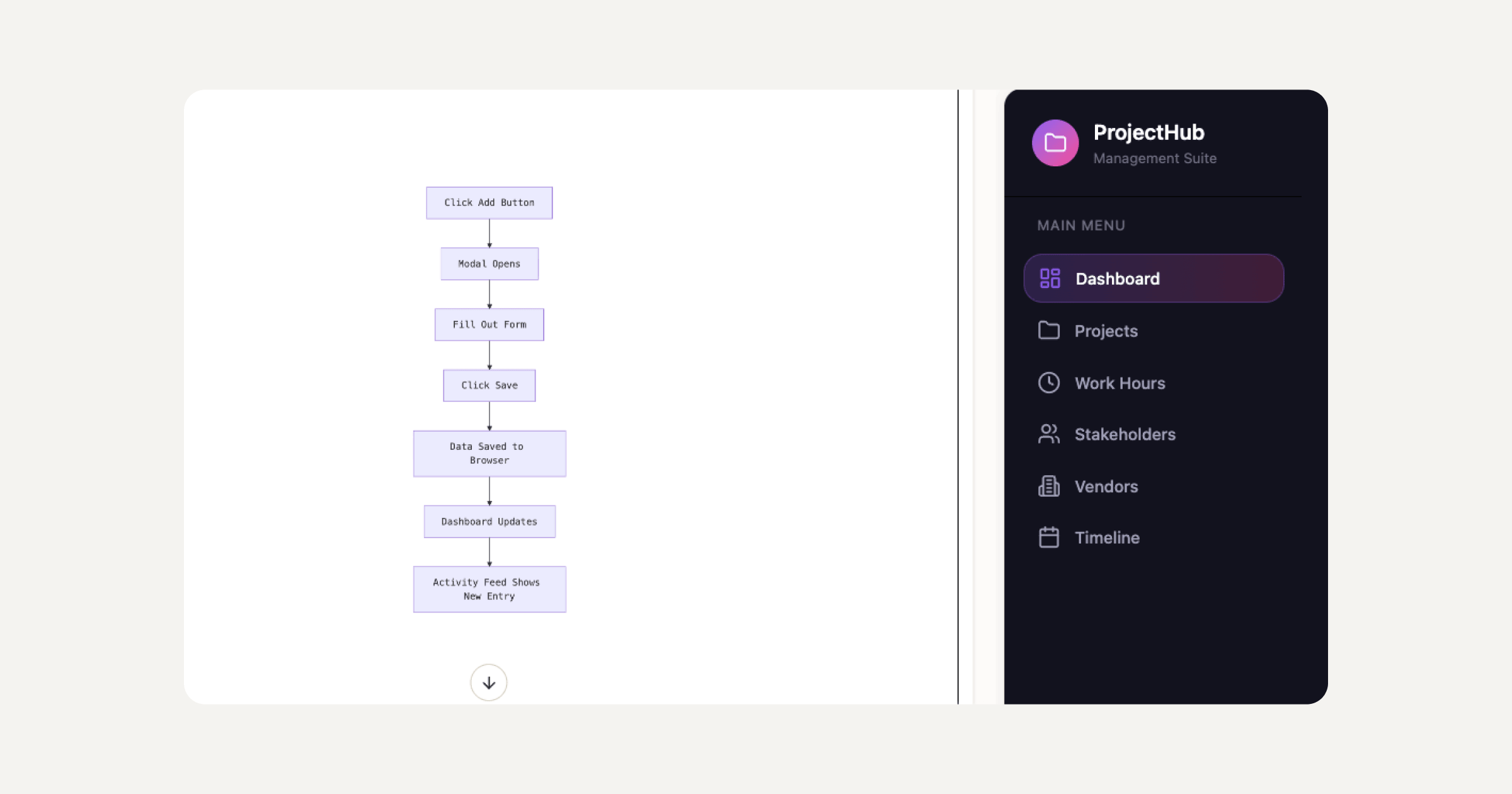
That range is the point. Sticklight is built to go beyond a single website and toward being a full-stack creator, so the same prompt-driven approach can shape the data model behind your app just as easily as the page you see. WordPress and Elementor remain solid ways to extend what a site can do, and Sticklight adds a faster, prompt-first path alongside them for building the tools, dashboards, and systems around your site.
Frequently asked questions
Is TypeScript a different language from JavaScript?
Not entirely. TypeScript is a superset of JavaScript, meaning it adds optional type checking on top of the language you already know. Every TypeScript file compiles down to plain JavaScript before it runs in a browser or on a server.
Do I need to rewrite my JavaScript project to use TypeScript?
No. You can rename files one at a time and add type annotations gradually, letting plain JavaScript and typed files sit side by side while you convert a project at your own pace.
What is the difference between an interface and a type in TypeScript?
Both describe the shape of data, such as the fields an object should have. Interfaces are commonly used for object shapes and can be extended, while type aliases can also describe unions, primitives, and other combinations that interfaces cannot.
Does TypeScript slow down my code at runtime?
No. Type checking happens only during the compile step. Once your code is compiled to JavaScript, the types are stripped out entirely, so the code that actually runs has no added overhead.
Do I need TypeScript for a small project?
Not necessarily. Its benefits show up most clearly as a project grows, more people touch the same files, or the codebase is expected to stay in use for years. For a very small or short-lived script, plain JavaScript is often enough.
Built by the Elementor team. Powered by Claude.
Let it glow.